
48. Voice Notes: Three Yeses and a Disappointment
Three things I can’t stop recommending — and one celebrity who lost me this week.
This week kept circling the same idea: the difference between real intellectual curiosity and the performance of it. I get into the new The Curiosity Shop podcast with Brené Brown and Adam Grant and why I look forward to it every Thursday; the tradwife thriller Yesteryear that half the internet seems to have misread; season two of The Four Seasons on Netflix and the kind of grief it’s brave enough to be honest about; and yes, my growing disappointment with Gwyneth Paltrow. Four things that felt unrelated when I started talking, and turned out to be the same conversation.
Listen to the full episode on your favorite podcast platform.
Subscribe and leave a quick rating or review if you enjoyed it.



“There is an intellectual curiosity and authenticity that resonates. And when people are performing authenticity and not truly engaging with it, it’s obvious.”
In This Episode, You'll Learn
Why The Curiosity Shop scratches an itch nothing else does — and the AI episode where Brené keeps digging until she finds what’s actually underneath the thing bothering her
Where Gwyneth lost me, and why “I don’t feel anything, I’m very centrist” landed as tone-deaf, for a slightly different reason than the viral take
What the discourse around Yesteryear got wrong about the culture the book is actually about — and why the ending is earned
Why The Four Seasons is the most honest thing I’ve watched about being 46: friendship, change, and grieving someone complicated
The through-line: curiosity and authenticity you can feel — and how obvious it is when someone’s only performing it
Transcript
-
I have four things that I can’t stop thinking about, and they all make sense in my head — so stick with me, and I’m going to try to bring all of them together.
-
One of the first things I’m absolutely loving — and I’ve been looking forward to it every week since it launched — is the new Curiosity Shop podcast with Brené Brown and Adam Grant. I find it so intellectually curious, honest, raw. I love that they don’t always agree, and that they approach things from — I love Venn diagrams, apparently, because I keep using these in a lot of analogies when I’m talking to people — but if there’s a Venn diagram of how Brené Brown thinks and how Adam Grant thinks, where they overlap in the middle is really interesting. They’re coming at things from very different points of view sometimes.
And in this last episode, they were talking about a problem Brené was asking Adam for help with, regarding her reaction to what she termed AI work slop. She asked the question, they work through it, and they keep digging deeper and deeper, coming to some fundamental understanding that it wasn’t just about the AI work slop or AI — it was a much deeper, more interesting, nuanced, complex problem, and it had a lot to do with how she perceived not being valued. I thought that was such an interesting way of going beyond the issue.
I find their conversations so engaging, so educational. They can be very shop talk for people who are in this intellectual space — maybe it’s not for everybody — but my brain, it really scratches an itch, and I’m fascinated by these conversations. I genuinely look forward to them coming out every single week. Love it.
-
On the flip side of that intellectual curiosity and search for meaning and truth behind things, I want to talk a little bit about when celebrities disappoint us. I know celebrities aren’t there to make our lives better, and I really don’t try to put too many of them on pedestals, because they tend to get knocked down. But I have to say, I’m really disappointed in Gwyneth Paltrow this week, for many reasons.
The one I want to highlight right now: I feel like she was the opposite of intellectually curious in many ways by platforming Trae Stephens — who’s involved in many things, but AI defense systems, and is a close ally of Peter Thiel. And I understand intellectually that she prefaced the whole conversation by saying, you know, we probably don’t agree on a lot of things, and people would be surprised I’m talking to you. But she went on to have this conversation with him without really pushing back — I don’t think — very much on how he reconciles his so-called Christian faith with what he does for a living. So that’s one level of it.
-
But there’s a clip that’s gone viral this week, with Gwyneth saying that her husband is very progressive and really cares about people — and that she feels nothing, and sees herself as very centrist. I understand why people are upset. It didn’t sit well with me either, but for a slightly different reason than I think people are calling out. The way she phrased it — that “I don’t feel anything” — yes, that’s probably what she’s really saying. I think she probably meant to phrase it somewhat differently, but it comes off as incredibly tone-deaf and entitled.
I’ll drop back to my own relationship with religion and politics. Twenty years ago, on Facebook — when I was still really on Facebook — there was a field for your politics, and I put “apathetic.” Because I was so disenchanted, and I hadn’t fully reconciled the way I was raised politically with where I was politically at the time. It just felt like a lot of noise. That was me in my mid-twenties, feeling apathetic.
And I feel like anybody with a platform, with a voice as loud as hers, has a responsibility to be more careful with what they say — and to be more intellectually curious. To say “I don’t feel anything,” when what you’re probably feeling is “I don’t fit into a system, a binary” — and I know that’s probably where she was going; she did say something akin to that in the larger context — but you have to be so careful with your words. You could say, “I’m having a really hard time finding myself in our political binary system, because I don’t feel like they’re addressing the root causes. The Republicans aren’t doing what I think is right, and I don’t think the Democrats are approaching it the right way. I feel like there’s some other way to approach it.” There’s an intellectually curious and honest way to approach that, and that’s not what she did. And that feels very disappointing.
I’m sure there are people who are going to say, “Well, this is who Gwyneth has always been, and she’s shown herself to be that.” And I can understand — I do get it. I think sometimes we hold women to a different standard, and I’m really not trying to do that here with her. But I will say, I found it extremely disappointing — especially when there are such interesting, vibrant, resonant conversations happening with people like Brené Brown and Adam Grant.
-
On this whole intellectual-curiosity thing, the other thing that’s been sticking with me is the book Yesteryear. I picked up Yesteryear because I’d seen — as so many people probably had — that it’s the book of the spring/summer, and that Anne Hathaway is producing and starring in the film adaptation. Yesteryear is by Caro Claire Burke, and it follows the trajectory of this tradwife influencer; it’s sort of a psychological thriller. She ends up finding herself in this 1855 kind of place, where all the values and things she’s been espousing are the reality — but it feels like a horror movie, and she can’t quite figure out what’s going on. The book deals with her whole trajectory, and how she came to this place, through flashbacks. It’s very interesting.
I loved the book, and I very purposefully did not look for any commentary on it until I’d finished, because I really wanted to form my own opinion. Then I went looking — I wanted to listen to some podcasts about it. And with the podcast that came up, I realized there was a lack of journalism, of research, about the process the author had taken to get to this point. They were making assumptions about how the book was written, and how it must have been changed because Anne Hathaway had been signed on early to produce and star in it — and that could’ve changed the book, whatever. And other people were saying how the last couple of chapters feel like they come from a different place, like they must have been tacked on.
I want to just say: I did not feel that way at all. I’m not going to give away spoilers, but having been raised in the culture that produced what are now tradwife influencers, I very much understood where this person was coming from and how she got to where she was — the narrator in the book. And I think it was so smart of Caro Claire Burke to intentionally leave her religion, and who exactly she is, a little bit vague, so you can project onto her — because there are so many: whether you’re a traditional Christian influencer, a Mormon influencer, Catholic, whatever. The fundamentalist ideas that come from these cultures — the extremes of them — have a lot in common, even though they’re diametrically opposed to understanding that about each other.
I thought the ending was so well earned. I completely understood it — I’m really trying to be careful about not giving away plot — but I understood it completely, and I was bought in hook, line, and sinker. I cannot wait for this movie to be made. I almost want it to be a limited series, because there’s so much in there. I’ll be really interested to see how they make this into a screenplay, and I’ll be first in line to see it, because I love the book so much. I highly, highly recommend it.
-
The other thing I’m watching — and I’ve found it, again, to be so true to what I’m experiencing in life right now, as a 46-year-old living in this world of adulthood, with children, dealing with life and loss, navigating this midlife transition to whatever’s next — is The Four Seasons. I loved the first season of The Four Seasons on Netflix, but I really, really, really loved this second season that just released. If you don’t know the basic premise, it’s a group of friends who meet up, and you see them through four seasons of their life — spring, summer, winter, fall. It was based on a 1980s movie with Alan Alda, and it’s got — you know — Tina Fey, Steve Carell, Colman Domingo, just a really great cast.
I found this show so heartwarming, so funny. I found this season even funnier than the first, but also, at the same time, incredibly heartbreaking and real. The premise of season two — and this isn’t giving away too much — is that one of the characters dies in the first season, and season two is the group figuring out how to deal with the aftermath of that death. This person wasn’t always a good person. They’d failed their family and their friends in so many ways — had affairs, another family, kind of just moved on with their lives — but they were still loved by this group.
I’m trying to be really careful about spoilers, in case you haven’t watched, because I really do think it’s worth watching. And I’ve experienced very similar themes in my own life — friends who’ve lost a significant other and had to deal with the aftermath of that, betrayal and divorce, all of these kinds of things. The Four Seasons deals with it in such a lovely way: it’s honest, but it sees the humor and the absurdity, and it’s just really well crafted. I highly, highly recommend it — especially if you’re a 40-ish, 50-ish person going through this midlife transition, trying to figure it all out. It’s messy, and it’s not always something that completely makes sense, and The Four Seasons does a really good job of putting that on display in a way that feels very welcoming. I thoroughly, thoroughly enjoyed it, and I can’t recommend it enough.
-
So I think the overall theme with these things I’ve chosen this week is that there’s an intellectual curiosity and authenticity that resonates. And when people are performing authenticity, not truly engaging with it, it’s obvious. I think that’s kind of what happened with Gwyneth this week — there’s a real lack of authenticity. And for somebody — I’ve stuck with her through a lot of things. The whole raw-milk thing, everything — not cosigning that at all, because that’s just silly — but I could wrap my head around some of it. And for some reason, this lack of empathy, from somebody who’s built a brand on it, and then platforming somebody whose very ethos is the antithesis of empathy and compassion and intellectual curiosity — I just find it so hard to take.
We’ll see what happens. I’m going to keep my mind open to how she might resolve these things, but it’s not looking good in my mind. But I do have these other things that are making me incredibly happy. If you haven’t checked out The Curiosity Shop with Brené Brown and Adam Grant, I highly, highly recommend it. Read Yesteryear, watch The Four Seasons — it’s all worth it, and it gives me just a little bit of hope in these crazy times we’re living in.
So until next time: let me know what you’re watching, listening to, reading — what’s making you intellectually curious. Because I genuinely want to know. Until next time.
Know someone who hates resolutions but loves a fresh start? Send them this episode.
Key takeaways
The good stuff goes past the headline. The conversations I love don’t stop at the issue — they dig for what’s underneath it.
You can talk to people you disagree with. What matters is whether you can meet them with facts, research, and a real “I see this and I raise you that.”
Lived experience changes how you read a story. Being raised adjacent to that world is exactly why Yesteryear’s ending made complete sense to me.
Being an adult is messier than anyone tells you — and the art that admits it is the art worth your time.
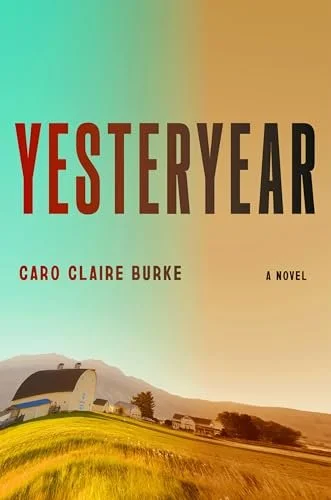
A gripping, electrifying novel that is as darkly funny as it is frightening, Yesteryear is a gimlet-eyed look at tradition, fame, faith, and the grand performance of womanhood.
Pop culture as a lens on who controls the narrative.

A deep read on a cultural moment everyone thought they understood.

Admiration, celebrity, and what we project onto the people we love from afar.
Resources
The Curiosity Shop Podcast with Brené Brown and Adam Grant



Three things I can’t stop thinking about this week: the Obama Presidential Center, an AI thriller that called this moment years early, and why Meta — of all companies — is the one giving me life right now.