46. She Nearly Died in a Houston ER. Now, Rayna Reid Rayford Is Building the App Every Black Mother Needs
Rayna Reid Rayford was sent home from a Houston ER twice while suffering from acute necrotizing appendicitis — and it took five physician family members to save her life. Now she's building the app she wished had existed.
In this episode of Inside the Design Studio, David sits down with Houston-based maternal health advocate and nonprofit founder Rayna Reid Rayford, whose near-death pregnancy experience became the origin story for Pregnant and Black — a free mobile platform launching April 11th during Black Maternal Health Week. Together they trace the through-line from a dismissed ER visit to a tech solution designed to put a real healthcare advocate in every Black mother's pocket, exploring why Harris County is the most dangerous place in America for Black women to give birth, what it means to be educated and resourced and still not be believed, and why restoring joy — not just safety — is the right goal for Black maternal health.
Listen to the full episode on your favorite podcast platform.
Subscribe and leave a quick rating or review if you enjoyed it.



“Being pregnant and Black is a dangerous combination — but it doesn’t have to be.”
In This Episode, You'll Learn
Why Harris County has the highest Black maternal mortality rate in the nation — and what's being done about it
How the Pregnant and Black app works and what happens when a woman needs advocacy in real time
Why representation inside the medical system isn't symbolic — it's life or death
What it costs personally to build something on top of a trauma
Why fighting the system and building around it aren't mutually exclusive
Transcript
-
Rayna Reid Rayford: the US is one of the most dangerous countries for people to give birth across the world, no matter what race you are. Then when you're getting down to the racial components, yes, black women are dying at three to five times the rate. And then even more disturbing in Harris County where we live right now, it is literally the deadliest place for black women in America to give birth. But what is hopeful for me and what really kind of drives my mission forward is that we know that 80% of pregnancy related deaths are preventable.
-
Description tDavid Peck: My guest today is Rayna Reid-Rayford, and she is a Houston-based maternal health advocate and founder of Pregnant and Black, PAB, a nonprofit mobile platform connecting Black expectant mothers with culturally competent health care advocates. The app, which will launch in April of 2026 during Black Maternal Health Week, lets users text, call, or video chat with advocates who can liaise with the medical system in real time, including being virtually present during OB-GYN appointments. PAB also trains family members to become medical advocates. Her origin story is quite harrowing. At 30 weeks pregnant, she was sent home from a Houston ER twice. It was only through the intervention of five family members, all physicians who happened to be in town for her baby shower, that she received an MRI and an emergency surgery that likely saved her life and her daughter's. She's been covered by Essence, Afro Tech, Capital B News, and the Houston Defender. Her work sits at the intersection of tech, health, justice, and community empowerment.ext goes here
-
David Peck: Thank you so much for being on Inside the Design Studio. I am really excited to hear more about your story. I read about you and I'm just so inspired by what you were doing. And why don't you just to get us started, let us know what got you to launching an app when you really just started with a kind of a troubled pregnancy
-
Rayna Reid Rayford: Yes. So when I was 30 weeks pregnant, I went to the ER. I was in so much pain and the doctors there told me, you know, you're just dehydrated. And I thought, hmm, that's odd. I drink a gallon of water a day. How is this possible? But I was told pregnancy is just painful. So a week later I was back in the same ER that my OB had told me to go to if anything happened before 34 weeks and they were still trying to stick with the same diagnosis of dehydration. But this time around, my family was in town for what was supposed to be our baby shower. Fun fact about my family, everyone went to medical school and is a doctor except for me, who was the odd one out who went to law school. So because of their advocacy, I was able to get an MRI. And then they found out I had acute necrotizing appendicitis and I was rushed into surgery immediately. And so I am extremely grateful that everything went well, that me and my daughter are here. But in the aftermath, I was exclusively pumping for a year. And for anyone who's exclusively pumped, you know about those 2 AM pumping sessions. And I was really angry about being up at 2 AM and pumping and thinking, I want to reframe this because I'm very fortunate to be here. And thinking about it really reminded me of how one of my former colleagues from when I was working on the Hill actually didn't make it from the childbirth of her baby. And she died during giving birth to her son. And I was thinking, you know, what if she had been in my situation and happened to have family members who were part of the medical system in the waiting room? I'm here because I had five doctors, but not every other woman has that. But what if they could? And so immediately at that moment, I texted my family and I said, this is an idea that I have. I don't think there's anything else like that out here. And I think we need to start building this now. And that's what really was the kind of birth of the nonprofit. And then we've come such a long way in the past year and the app is getting ready to launch this April 11th during Black Maternal Health Week.
-
David Peck: Yeah, which is so exciting. I want to go back a little bit because I think you come from a family of doctors. You're highly educated. You're a lawyer. You, in theory, had the support system you needed. So many people, especially people of color, do not have that support system in this country. It's just not readily available. What did it make you feel like when you were in the situation when you're somebody who supposedly should have the answers and access to the resources that you need, and you didn't and you weren't believed.
Rayna Reid Rayford: It's kind of a surreal moment when you're in those situations. And I don't like to use the term gaslighting because I feel like it's definitely being overused these days. But you feel like, am I crazy? Because all I could think about was there's no way this many people are having this many babies if pregnancy is this painful. Yeah, because I have people that are on their fourth or fifth and I'm like, how?
David Peck: Right. We would be done with this a long time ago. Yeah, I mean, this is not the same thing. But I know when I lived in Paris, my flatmate was sick and he was like on the couch and he just kept, you know, he was in such pain and he was not a wimp. And very long story short, I was like, I think you have appendicitis. And we ended up going to three hospitals in Paris because we didn't go to the right hospital. We had to go to one for gastric emergencies and they basically saw him and wheeled him right into surgery because his appendix was perforated and leaking. And so I knew at that moment, I had no idea that something like that was so life-threatening. Like, you hear about people having appendicitis and it's like, are their appendix out? And it just seems like, whatever. But in this case, especially not just being appendicitis, but also being pregnant while going through all of this, you would think that the doctors would have delved a little bit deeper into what was going on rather than just dismissing it as dehydration.
-
Rayna Reid Rayford: Mm-hmm. You really would. I do recognize that it is probably a difficult diagnosis given all of the things that are going on in one's stomach during pregnancy. But like you mentioned, it's something where you can be doing all of the right things, think you have the right team around you. But look at Serena Williams, look at Beyoncé. This isn't something I necessarily wanted to be in their company with, but it comes down to it doesn't matter how rich you are. It doesn't matter how much money you have. At the end of the day, there are still medical disparities that need to be addressed in this country.
-
David Peck: Yeah. Do you think that in your time with this organization developing it, do you see it as being a systemic problem for people of color, or especially women of color throughout the US, or does it seem to be more concentrated regionally?
Rayna Reid Rayford: So first of all, just nationally in the US, the US is one of the most dangerous countries for people to give birth in around the world, no matter what race you are. Then when you're getting down to the racial components, yes, black women are dying at three to five times the rate of white women. And then even more disturbing in Harris County where we live right now, it is literally the deadliest place for black women in America to give birth and that data was just released. But what is hopeful for me and what really kind of drives my mission forward is that we know that 80% of pregnancy related deaths are preventable. So that's four out of every five. And so I really feel like there's such a big gap and that's what I'm hoping that my nonprofit can step in that gap and really start to close those numbers.
-
David Peck: I think it's so important to have a community around you no matter what's going on, but especially when you're going through something as precarious as pregnancy can be, where you feel loved and supported and you have a system around you that is there to catch you. And you were fortunate to have family in town when all of this happened and kind of help with that. So many women, especially in Texas, do not have that. And so many laws right now feel like they are being legislated against women. Do you feel like it's especially challenging right now because we're not believing women?
Rayna Reid Rayford: Yes, and I think it goes back to what you were just saying about community. I think that especially back in the day, giving birth and family used to be such a communal aspect. You had all of the women from the town in the room helping during pregnancy, labor, delivery, and afterwards. And I think now it can almost feel like you're in a silo. And so that's another exciting part of the app. There is that community feature where users can communicate with one another. The healthcare advocates will also have the ability to chime in on those chats and threads within the app. So I really hope that it will help people feel less alone, especially during such a — I like to call it just randomness — because anything can happen during pregnancy. I read about one symptom where the toilet seat can turn blue because of some sort of hormone. So after I found that out, I was just, you know, people need to be talking about all of these things because if my toilet seat turns blue, I would be freaking out.
-
David Peck: Yeah, I think we have a big problem in general of saying all of these things out loud. There's been a stigma in general. But then I think especially women have — I mean, just even medical research is not as heavily focused on women as it has been traditionally on men's health. And we don't even look at disease and illness rates in the same way, because we base a lot of our research on what happens to men and women are sort of left out. And then I can't even imagine what those rates are for marginalized communities. So what is really exciting is that — I'm not wrong — April is Black Maternal Health Week? And the app, is it officially launching during this time?
Rayna Reid Rayford: Yes, April 11th to 17th. Yes, we're supposed to officially launch on April 11th and it will happen at our advocacy and action benefit brunch. It's the inaugural fundraiser for Pregnant and Black and it is going to be here in Houston at the Westin Houston Downtown. And tickets to this fundraiser are now on sale and we are excited to announce that LeToya Luckett will be our honoree and speaker. And she is one of the founding members of Destiny's Child and also a maternal health advocate. And we are really excited to have her there.
-
David Peck: That's so incredible. And I want to talk a bit about how do you go from this kind of harrowing situation to getting into tech? Because that's not always the direct leap. I can understand the need for community and support and awareness and the nonprofit. But what in your mind really connected the dots to say, the way we need to help fix this issue is to find a tech solution?
Rayna Reid Rayford: I was just trying to think about how I could easily replicate something that I have been doing my entire life. Usually when I go to the doctor's office, I have my sister with me on speakerphone because she's a doctor and so she can understand the lingo. She can text me and say, you should ask about this. Has the doctor run these tests? And she helps me really liaise with the medical system. And so that's what I am hopeful that PAB will turn into for this tech aspect. It will be like for any pregnant woman who logs in, it's free of charge, no insurance required, and they'll be able to essentially talk to my sister. Not really my sister, but someone who has a clinical background who can help you understand what's going on, what the doctors, nurses and medical team around you is saying and really be that kind of backup for you.
-
David Peck: Yeah, so walk me through a little bit like when somebody downloads the app, what is the experience like?
Rayna Reid Rayford: It's going to be an amazing experience free of technological errors. But essentially you will log in. If you haven't already, you're going to have to create your username and password, and then there's going to be those two prongs. So you'll either be able to schedule your appointment. So you know when your regular appointments with your OB or midwife are. And so then you'll be able to book time with your healthcare advocate in advance. And then one of the features that we're hoping to unroll sooner rather than later as more funding comes in is that 24-7 advocacy support. So if you're going to the ER in the middle of the night, you'll be able to essentially click the Need Advocacy Now button and you'll be immediately connected with one of our healthcare advocates.
David Peck: That's amazing. And if I'm not wrong, are you also figuring out how to include family members and your extended community into this app as well?
Rayna Reid Rayford: Yes. So this app is for anyone. You do not have to be pregnant or black. You can be any pregnant person or any person supporting a pregnant person, or even if you just want to learn more about the pregnancy process, you can become a user. All people are 18 and up and then just download the app and you'll be able to be there. So you can be part of the community forum that I was mentioning earlier, or you can click on that advocacy and schedule it or advocacy now for that pregnant person in your life.
-
David Peck: That's so cool. One of the questions I'm sure that people will have in terms of using any sort of tech when it comes to their health is privacy. How are you dealing with that issue?
Rayna Reid Rayford: Yes, so I am fortunate to have a legal background and I'm working with a team of healthcare lawyers to make sure all of our PHI, HIPAA and everything is protected as well as on the tech side to make sure that everything is remaining as protected as possible. And another thing is that we are trying to not right now take as much data as possible. We're not asking you the date of your last menstrual cycle. We don't need to know what's the date of anyone's last period. We are here in this moment for you while you are interacting with the medical system. The data will be stored as long as it needs to and then will be removed from the system.
David Peck: That's incredible, because I think there's, just in my own friend community, a lot of friends who had been using period trackers and things like that are very much concerned, especially in a state like Texas, that that information will be used against them. And so the fact that you're dealing with this head on and really thinking about privacy is an incredible asset.
-
David Peck: It feels like, in general — you may or may not agree — but there's an increasingly hostile political climate when it comes to health and health equity right now. And how do you feel like in the midst of launching an app that is specifically targeted to black women, do you feel like you have the support you need? Do you feel like you're being taken seriously?
Rayna Reid Rayford: Yes, to be candid it has been more difficult, especially with even just having black in the name. But I've tried to be very clear in all of my messaging that we're like HBCU — so historically black colleges and universities. Anyone can use the app and log on, but we know that there are disparities that exist when it comes to black women. So my hope is that this will definitely be used widely by anyone who is pregnant, but by targeting the communities who are impacted at the highest rate, we will then rise the tides for everyone. And so, yes, in terms of even funding for founders of color, especially even women of color, I think the statistics are around less than 1% of that funding goes to black women. So, yes, it has been a challenge, but I've been very grateful to people like you who are working with me to help spread the word and then partnering with us for the advocacy and action brunch. It's hard work, but there are still people who believe in supporting good causes and I think this is an especially important one because it's literally — I can't believe I'm about to quote the Lion King — but the circle of life.
-
David Peck: So this is really funny. We were just talking about the Lion King in our team meeting this morning. So there's something in the air.
Rayna Reid Rayford: Yes, yes, but it's literally the circle of life. It's something that, you know, if you do want children, there's a lot of things that women have to go through these days, whether that's deciding surrogacy or not, if you have to go through IVF or IUI or experience any fertility problems. And I just think it's part of the conversation that we should be having. And I think we should be having it — well, yes, all the time. I think men need to be a part of the conversation because you might only be a part of the beginning deposit, but the woman doesn't need to do 100% of the work for this group project.
David Peck: No, that's 100,000% correct. Just thinking and hearing about you talk, I feel like somebody needs to connect you to Kara Swisher. If you don't know who she is, she's a journalist who covers tech. And I feel like she would be a really good advocate for what you're doing and would be connected to all the right people who could help get you the funding you need. I do not know her, but we should figure that out.
-
David Peck: You've been very intentional about the word joy, and you want to restore joy to the Black pregnancy experience, not just safety. Why is joy the right word right now, not something like dignity or equity?
Rayna Reid Rayford: I think just because when I talk with my friends who are black, a lot of times we aren't even referencing the word happiness during so much of our pregnancies. I think terrified is probably one of the most common words. And I have other friends who are saying, OK, I just found out I'm pregnant. I need to put together my will. And that, to me, is just a very surreal thing. And even during appendixgate, as I like to call it, one of the first things that did pop in my mind was, I should have gotten my will together. I can't believe I was being so cavalier with my other friend who told me that. And so that's contrasting to some of my other friends who found out they're pregnant and it's just such a time of extreme happiness. And they're so excited. And you're talking about this pregnancy glow — and no shade Kim K — but I feel like I just had a very Kim K pregnancy, just feeling horrible the whole time, and then appendixgate, and then I didn't even technically get to have a baby shower. So I don't know if joy is the word that I would use to describe my pregnancy, but I am extremely grateful to be here and to have my healthy daughter as well.
-
David Peck: Yeah. If you could change one thing in how ER physicians are trained, is there one thing that you would say, tomorrow, do this?
Rayna Reid Rayford: Yes, I think it's important to recognize that everyone has biases. It doesn't matter who you are, it's just based on the environment that you were raised in and that's via social media, your parents, your friends, your location. There are so many different things. I personally had biases about Texas before I moved here. And it's been interesting to confront those notions and realize that not everything is a monolith. So yes, certain symptoms can present as such, but during one of my master's classes at the University of Houston, I took a healthcare communications class and I was reading about the story about a patient who was working with a doctor for their carpal tunnel syndrome. And there was going to be a simple fix that involved surgery, but it would hinder the use of their fingers. And the patient was very resistant to this mode of treatment. And the doctor couldn't understand why until another doctor said, well, have you asked this person what they do for a living? And turns out the patient was a classical pianist. So maintaining the extreme dexterity and use of their fingers was of utmost importance to them. And so that then helped the doctor to start thinking about other modes of treatment that would allow for the continued playing of the piano at that skill. And so I think it's just important for everyone to communicate, check your biases, and ask the why and the how, not just the what.
-
David Peck: Yeah, I think that's so important. And you've talked about the role of a black physician that finally played a role in you being heard. What do you think that tells us about representation inside the medical system itself?
Rayna Reid Rayford: We need to do better. There needs to be more access, I think. One of the big personal motivators for me is — Marion Wright Edelman once said, you cannot be what you cannot see. So I think it's extremely important for — we need to get more people of color into the medical field at all levels of the system. And then, you know, they don't need to be the paragons of representation like this one black doctor doesn't mean that we've made it. We need to have a full basketball team, for better words. And I think one of the shows, The Pit, does a really good job of representation. So I think when you're walking around within, for example, an emergency room, and you have a diversity of people that are in the room, that's also creating a diversity of thought and that can literally help save lives.
-
David Peck: That's incredible and so true. I know from personal experience how hard starting a business is and it takes a lot from you on a personal level. But my business was not built on a personal trauma. It was very different. Is there something that's extra taxing or something that you feel like doing this work has taken from you? I know that so much of it is probably very uplifting because you know you're making a difference, but I also know the personal cost and I would love to hear your take on that.
Rayna Reid Rayford: Yes, I use the analogy of giving birth earlier. And so I think it's only appropriate to go back to the birth of my daughter. I basically started PAB about seven or eight months after I gave birth. So I literally had a newborn. I mentioned I was just pumping for a year. I was pumping every couple of hours. And then now I'm dealing with the chaos of what comes with having a toddler who has just started running around and wants to get into everything. So I think it's just doing that mental math, the calculations of, okay, she's now in school from nine to three, so let me try to truncate my workday between those hours because I want to spend as much time with her as possible. And then after bedtime, it's okay, maybe I can't watch an episode of The Pit. I have to be spending time on my laptop doing work to get things done. But as you did reference, I don't think of it so much as a sacrifice because I think that everything happens for a reason. And I want to make sure that more lives are saved given that I've seen it happen to friends and colleagues. And we know that some of these deaths are preventable.
-
David Peck: Yeah, 100%. OK, so now before we end — I could talk about all these issues forever, but I know you have an app to go launch — I ask all my guests, we have a lightning round of 22 questions. So this is just first thing off the top of your head. Don't think too hard about it.
When are you most yourself? Morning, afternoon, midnight?
Rayna Reid Rayford: Morning.
David Peck: One tiny daily ritual you guard.
Rayna Reid Rayford: Pilates.
David Peck: Good one. Your current anthem in one word.
Rayna Reid Rayford: Believe.
David Peck: What are you optimizing for right now?
Rayna Reid Rayford: Being a successful co-founder, MILF, Pilates passenger princess, home chef, everything.
David Peck: A belief you've retired.
Rayna Reid Rayford: That age means limitations. I used to think that I would be married by 27, have my first kid at 30, all of these things. Well, none of that happened, to be clear. But you aren't too old to chase your dreams and there shouldn't be limits on what you're going after because of how old you are.
David Peck: Favorite humble tool of your craft. I'm assuming it's the app because it's going to be free. A constraint you keep on purpose.
Rayna Reid Rayford: Do not disturb at 10 PM.
David Peck: Good one. A risk you're glad you took. Five words max.
Rayna Reid Rayford: Moving to Texas.
David Peck: I did that too. A place that resets you, name it.
Rayna Reid Rayford: IHOP.
David Peck: Comfort rewatch or reread.
Rayna Reid Rayford: Rewatch. Gosh, I don't think I can name just one thing on TV, but I have a couple books on rotation. Sammy's Hill, Bergdorf Blondes, and Harry Potter.
David Peck: A sound you love.
Rayna Reid Rayford: Hamilton soundtrack.
David Peck: Ooh, love that one. Sound you loathe.
Rayna Reid Rayford: The toilet seat flushing if someone has not put the lid down first.
David Peck: A word you overuse.
Rayna Reid Rayford: Actually.
David Peck: Word you wish we used more.
Rayna Reid Rayford: I wish more people admitted that.
David Peck: Finish this. Done is better than —
Rayna Reid Rayford: Late.
David Peck: Recent no that made room for a bigger yes.
Rayna Reid Rayford: One law firm offered to give me pro bono services, but I needed to change the name and ended up saying no to their services, but ended up finding out about another group that was willing to work with me and help move everything forward.
David Peck: I have an imaginary board of people that I like to think guide me. Oprah, Ralph Lauren, Martha Stewart are on them. Add one person to your imaginary board.
Rayna Reid Rayford: Oprah.
David Peck: Cool. She can help both of us. How do you take your coffee or tea?
Rayna Reid Rayford: I don't like coffee and I love green tea with honey and lemon.
David Peck: What do you collect accidentally or on purpose?
Rayna Reid Rayford: Books. It's not an accident. I like big books and I cannot lie.
David Peck: Fight the system or build around it.
Rayna Reid Rayford: Fight and build simultaneously.
David Peck: Your favorite swear word or a PG-13 substitute.
Rayna Reid Rayford: I don't actually curse, but I say the letter, so I would have to say F.
David Peck: And lastly, what's one five-minute action that somebody could take today to move forward with their dreams?
Rayna Reid Rayford: I think just set a mini goal and start. I started doing something every morning, but right before I try to leave the house, it's five pushups, 30 second plank, five toe raises, five squats, then five lunges.
-
David Peck: Perfect, simple. Love it. So tell people, where can they find you? Where can they support you? Where can they go to find the app when it launches on April 11th?
Rayna Reid Rayford: Yes, so our Instagram is pregnantnblack. You can go to our website, www.pregnantnblack.com. Both of those locations have all the information about tickets to the brunch, supporting fundraising. And yes, my personal Instagram is raynareidrayford, and that will also link you back to Pregnant and Black as well.
David Peck: Perfect. Because you are a 501c3, people can donate directly to Pregnant and Black and help you in your mission.
Rayna Reid Rayford: Yes, all tax deductible.
David Peck: Perfect. Well, thank you so much for being here and for your story and for taking something that could have, I think, crippled a lot of people and turning it into something that's going to help so many women. And not just women — I think the families that are going to be supported by this app are going to be extremely grateful for the work that you are already doing and will continue to do with the app. So thank you so much. And I can't wait to see what happens with the launch.
Rayna Reid Rayford: Thank you.
Know a Black woman who deserves better than "it's just dehydration"? Send them this episode.
Key takeaways
80% of pregnancy-related deaths are preventable — that's the number that drives Rayna's mission.
Individual preparation isn't enough. Being educated, insured, and aware doesn't protect Black women from medical bias.
Community is the original healthcare system — and technology can rebuild it at scale.
Checking your biases means asking the why and the how, not just the what.
Joy is a higher bar than safety — and it's the right one to aim for.
Guests Appearing in this Episode
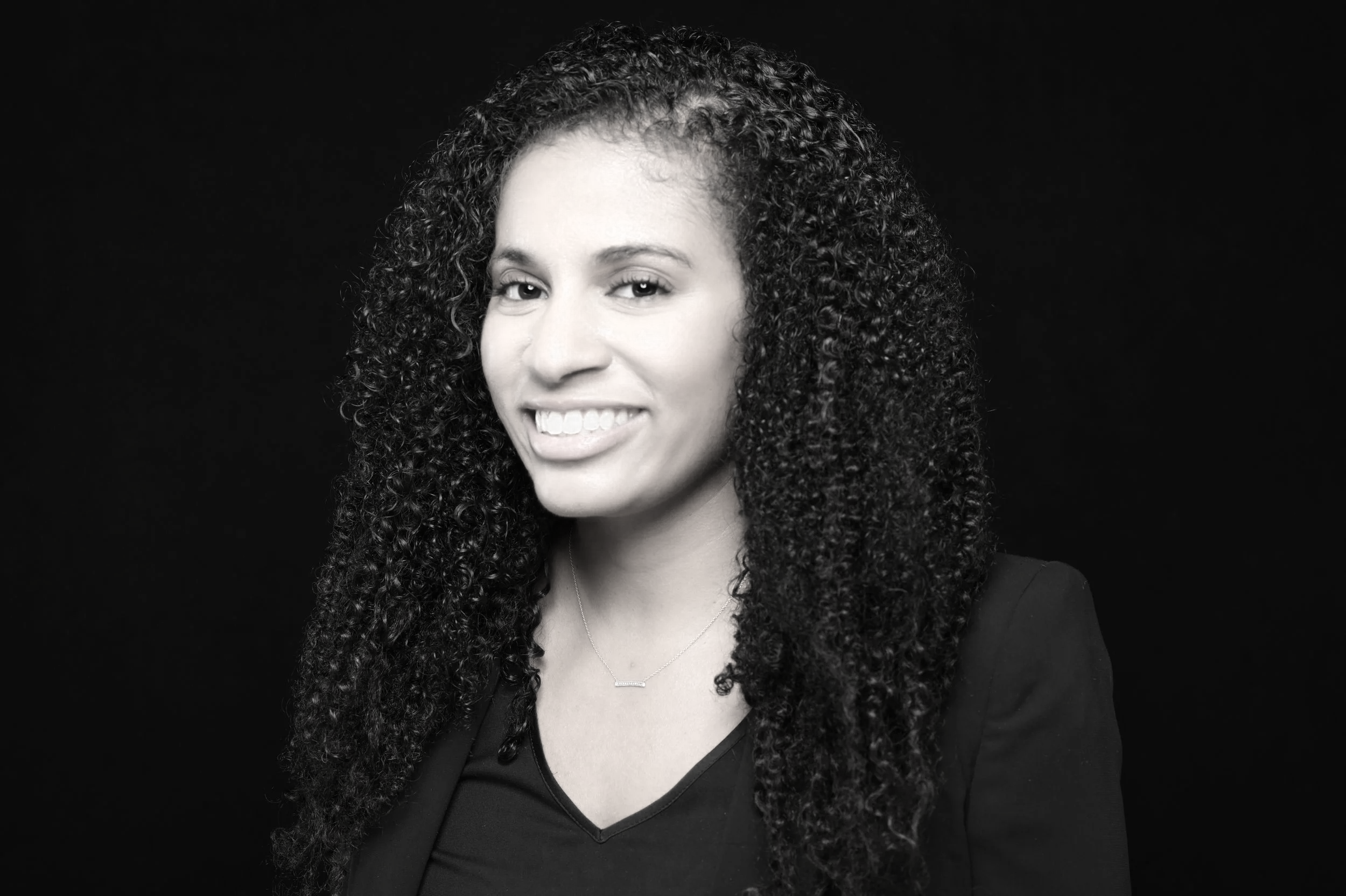
Rayna Reid Rayford
Rayna is an attorney, legal and social issues commentator, and maternal health advocate whose work intersects reproductive justice, storytelling, and systems change. With over a decade of experience spanning education, policy, HR, law, and media, she brings both analytical depth and narrative fluency to her advocacy.
A former Editor at ESSENCE, Rayna covered reproductive health and women’s issues long before they became personal. After studying reproductive justice at Columbia Law School, she understood the statistics surrounding Black maternal health. But when she nearly lost her life during her own pregnancy, those numbers became urgent. That experience solidified her commitment to ensuring that no Black woman navigates pregnancy unheard, unsupported, or unprotected in the healthcare system.
Her work is driven by lived experience and a mission to bring equity, dignity, and accountability to Black motherhood. Beyond her advocacy, Rayna is an endurance athlete who has completed multiple marathons, triathlons, and an Ironman. She is also a former state and local titleholder within the Miss America and Miss Earth organizations.
Rayna holds degrees from Cornell University, the University of Pennsylvania Graduate School of Education, the University of Houston, and Columbia Law School, and is admitted to the New York State Bar.
Follow Reyna on Instagram

— Maya Dusenbery
The definitive account of how medicine has systematically failed women — and why being dismissed in a doctor's office is not an accident.
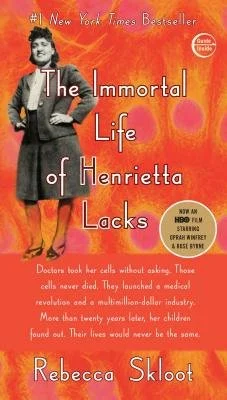
— Rebecca Skloot
The story of a Black woman whose cancer cells were taken without her knowledge and became one of the most important tools in medicine — a landmark book about race, ethics, and whose body gets to matter.