
My book arrived, and it's been so long in the making. Not only this year that I've written it, edited it, produced it, all of the things, but a lifetime of work that I've tried to distill into something that is really practical, actionable, and funny, I hope.
The short version: for the past ten years, I've had the title of a different book in my head, and as I was working on that proposal, I realized there was a gap between who I was in that moment and the author that I am becoming. That's exactly where ARTful came into being. The ASSEMBLE phase happened really quickly; by the beginning of May I had a pretty solid first draft. The REFINE phase, working with my editor, Amy Hackworth, took so much more time, effort, and thought than I anticipated. Now I'm in the TRY phase, and I gave myself a really unreasonable deadline. A traditionally published book can take two, sometimes three years. To get this done in nine months or less was completely crazy, but it's done.
Listen to the full episode on your favorite podcast platform.
Subscribe and leave a quick rating or review if you enjoyed it.


“I think especially creative people have this tendency to blow up their lives and start over. And we kind of feel like if something big doesn’t happen, it didn’t happen.”
In This Episode, You'll Learn
Why the book I'd had the title of for ten years isn't the one coming out first
Where ASSEMBLE, REFINE, TRY came from, and the Your Word workbook it started with
The warning I wrote myself in that other book's introduction
How a first draft came together between the end of February and the beginning of May
What editing actually involved: restructuring, moving stories from the front to the back, and rewriting the introduction and first chapter more times than I can count
Why I picked 11/11, and what nine months looks like next to the usual two to three years
Who I wrote ARTful for, and why it's built to be a gift
Transcript
-
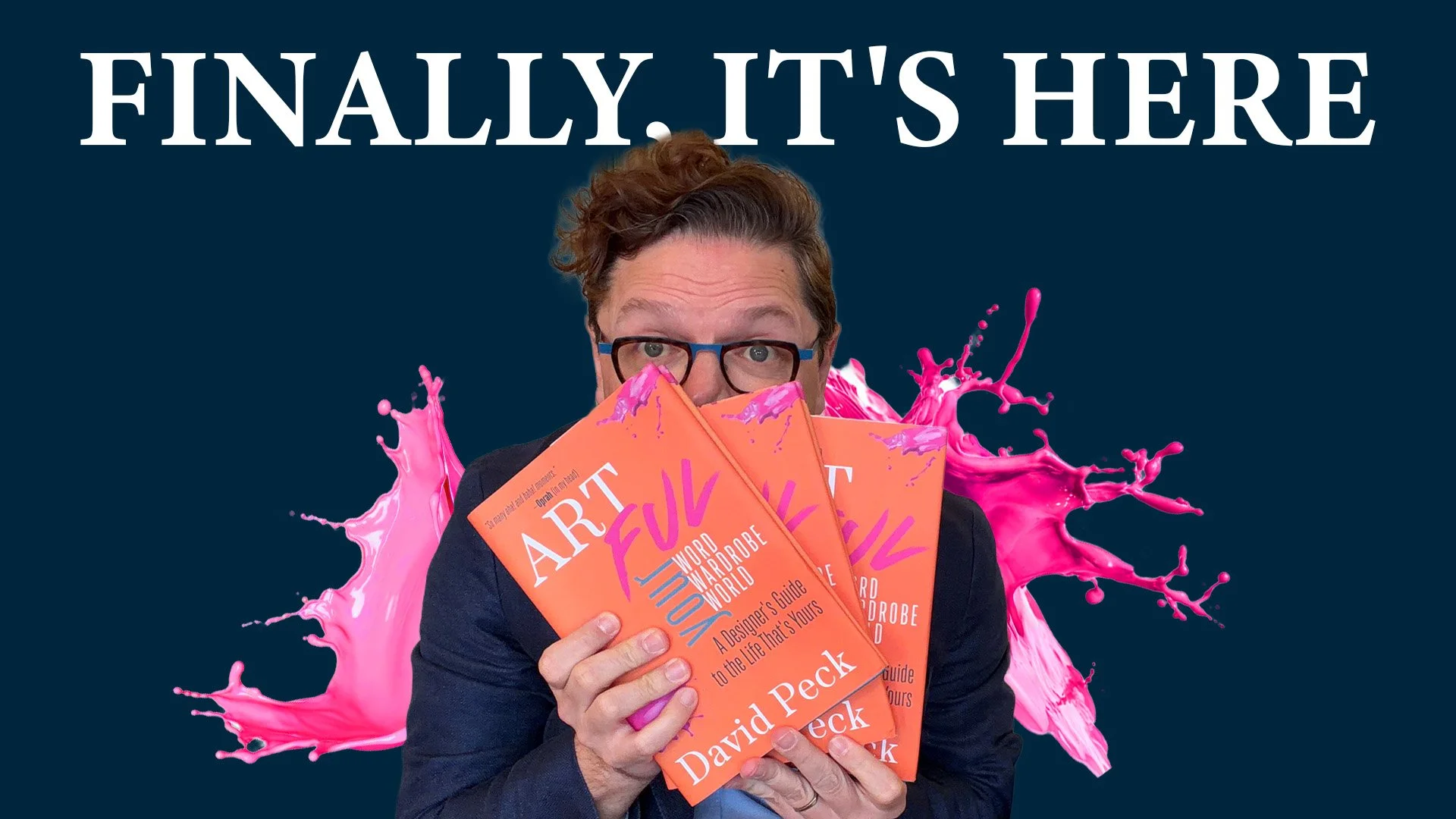
It's here. I have been waiting for this for a long time, and this is the first time I'm seeing the book. I have no idea what this is going to look like. It could be a disaster. I have no idea. So we're going to open this together. And it's here. It looks great. I am so excited.
-
My book arrived and I am so excited to share it with you, because it's been so long in the making, not only just this year that I've written it, edited it, produced it, all of the things. But I feel like it's a lifetime of work that I've tried to distill into something that is really practical, actionable. Funny, I hope. I wanted to just talk a little bit off the cuff today about why I wrote this book and what it means for me, and a little bit about why I think it might be the perfect thing for you, or as a gift for somebody that you know and love. So, a little bit of backstory about how the book came to be.
-
I have been working on writing a book for a very long time. I've known that I've wanted to write a book for probably most of my life, but for the past ten years, I've had the title of a book in my head, and I had started writing it. I have a book proposal for that book. It's, for all intents and purposes, pretty ready to go. I have it mostly written, and the things that are not written I've mapped out. But as I was working on that proposal, I realized that there was a gap between who I was in that moment and the author that I am becoming. And I started working on, for lack of a better word, thought leadership ideas. How do I convey these ideas that have sort of transformed my life in a way that helps people understand the designer that I started as, the entrepreneur that I became, and the writer that I am to be?
-
And I was working all last year on how to develop these ideas. And if you've been around listening to this podcast for a while, you will be familiar with my word of the year episodes. I do one every year, and this last year, as a result of that word of the year exercise, I had introduced what I had come up with: this ART idea, this ASSEMBLE, REFINE, TRY methodology that I realized that I had been practicing for most of my adult life, and I had never really put a word to it. And so with that word of the year episode came the idea for the workbook.
-
The workbook really helps. You can go to my website now, davidpeck.co/yourword. It'll be in the show notes, and you can go there. And it's this workbook that walks you through the idea of choosing a word intentionally that helps you design the next era of your life. It could be for the next year. It could be for the next stage in your life. A lot of people are familiar with the word of the year as an impetus for the start of a brand new year. You choose it on the new year, and it kind of guides and directs you for the coming year, rather than an intention or resolution. It's an intention.
-
And so as I worked on this workbook, I started thinking about all the different ways I use ART, ASSEMBLE, REFINE, TRY, in my life. And I realized that it has been everything from my word of the year, which I've been practicing for almost a decade now. And I thought about it in terms of my wardrobe and how I get dressed, and especially how I get dressed to travel. And then I started thinking about it and how I related those ideas to how I built the life that I have now. And I do not say that thinking that my life is perfect. It's definitely a work in progress. And my life is something that in many ways is a reflection of who I always was. But also it is in so many ways a 180 from the way I was raised. And I was never a rebellious kid. I was never one who wanted to throw everything out the window. As much as I don't like rules, I like making them. And I didn't know necessarily how I had gotten from where I started to where I am now, and I realized that I am in a very different place.
-
But what was the process that got me there? And I started breaking it down. And in the process of breaking that down, I realized that there was a book in there, that I wanted to write a book, and it wasn't the book that I had been writing for the last ten years, or knew that I had the title of for the last ten years. It was something different.
-
And that's exactly where ARTful came into being. And I realized that that word idea, the wardrobe idea, and my world idea were all things that I could explore in more detail and in depth. And what's really funny is that in the introduction to the book that I was writing that I have known about for ten years, I said in the introduction, this is not a prescriptive book. I'm not trying to tell you how to live your life. It really is, you know, a book of humorous short stories about my life. But if in the time that this book gets published, I come up with a framework or a way of, you know, trying to work through your life, don't be surprised. And so that's exactly what happened with ARTful.
-
And so I got this idea in my head, and I very quickly realized that I had to get those ideas out as soon as possible. And so I started recording lots of voice notes to myself and transcribing them and trying to develop all these ideas. And it really was the ASSEMBLE phase of the ART method. I started assembling all these ideas, and at first, you know, I knew kind of loosely how they were connected, but not really. And I didn't have a time frame when I first started about how quickly I wanted to get this book done. I just knew I needed to write this book, and it happened really quickly. So at the end of February through March and the beginning of April, I was just collecting ideas, and by the beginning of May, I had a pretty solid first draft. I had assembled everything. I kind of knew a general framework that I wanted the book to be grouped by. I kind of had an idea for the chapter structure. I had an idea for a lot of the stories that I want, and so I had a pretty good idea of the overall book, if you will. And so I tried to assemble all these ideas and edit them as much as I could, make them make sense, put this in this. But I knew that I needed some sort of outside perspective on it.
-
And so I was introduced to a wonderful person, Amy Hackworth, who became my editor. And I don't think I knew really what editing was all about, because in my mind it was like, okay, I put this together. I put together a pretty good first draft, you know, not that it was perfect and ready to go, but I thought, you know, we're pretty good. I've worked really hard at assembling this thing. And what I realized is that the editing process is, in the best possible way, incredibly intense. And Amy helped me to work through a lot of those ideas. We completely restructured parts of the book. We moved stories from the front to the back. We eliminated some things. I completely rewrote the introduction and first chapter, I don't know how many times, really trying to get the right balance of memoir, humor, and teaching, for lack of a better word, into the book. And it was one of those processes while I'm running, you know, a completely different business. And we have so many things going on. We've had one of our busiest years. Actually, it is our busiest year ever, officially. And so I'm trying to write this book in the midst of trying to juggle all of these other things. I also have a family. And the editing process was so much a reflection of the REFINE process that I outline in the book, because I had assembled all these ideas and I hadn't found the through line through all of them that completely made sense.
-
I knew bits and pieces of them. I'm pretty self-aware. I have lots of tools that I've used over the years, including the Enneagram and astrology and Myers-Briggs and Human Design. There's all of these tools that I've used to kind of analyze and dissect the way I think about the world, and I feel like I'm not a stranger to self-reflection. And yet this REFINE phase really took so much more time, effort, and thought than I really probably anticipated. I knew it was going to be hard work. I knew that I was going to have to kill some of my darlings. I knew that not everything was going to make it, and I knew that there were going to be holes in the book that I needed to fill, but I had no idea how much that process would take, both mentally and timewise.
-
And so Amy was incredibly invaluable in that process. And so now we've gotten to the next phase, I feel like, where it's the TRY. So the TRY has been putting it all together, designing the cover, obviously, and figuring out, you know, what the book is going to look like both inside and out, designing how the chapters are going to look, and all of the little pop-outs, designing what the introduction to each section looks like. And I worked with an interior designer who was fantastic, Stephanie. Just a wonderful person to take all of my ideas and kind of make them into something tangible.
-
I gave myself a really unrealistic deadline. So I said at the beginning of writing this book, I didn't have an idea of when it was going to be published. I didn't know how it was going to do it, and I decided, I think it was in May or June, that I was going to publish on 11/11. And you can read about 11/11 in the book, but that's a set of numbers that have followed me throughout my life for the past 25 years or so. About a year before I moved to Paris, I started seeing 11:11 everywhere, and I have so many connections to 11. I start adding numbers up that make 11. Like, it just happens in my head, and I am not necessarily a numbers person. Math was not my favorite subject in school, and yet I find myself compulsively adding numbers. My birthday is January 11th, so I have 1/11 in my birthday. Long, long story short, I decided that 11/11 was going to be the day that this book was launched into the world, and that was unreasonable. That was a very unreasonable deadline. It was a lot of work, both in the writing and the editing, and then the designing of the book itself, to get done in a very short period of time.
-
Just to give you a little context, you know, if you're doing a traditionally published book, it can take two, sometimes three years from start to finish for a book to actually hit bookstores. So to get this done in nine months or less was completely crazy. But it's done. And, you know, yesterday I received the first six copies of the book from the printer, and I'm so happy with the way it turned out. It's happy. It's fun. I think it's, you know, easy to read in terms of just the visual look of it. I feel like it's very easy to read.
-
So, coming November 11th, so very, very soon, this book is making its way out into the world. And over the coming weeks, I'm going to have discussions with people in my life who have helped get this book into place, into existence. And I'm also going to start exploring a lot of the ideas in the book in depth, and I think I may even read a chapter or two on the podcast, just so that you get an idea of what it is that I'm talking about in this book.
-
So all that being said, I designed this book to be something, yes, for you. I mean, I ultimately wrote it for myself. It was really sort of my way of kind of distilling a lot of who I am now as a person into written form, and kind of facing a lot of the decisions and, I don't know, changes I've made in my life over the past 30-ish years that have brought me to this place in this book. So I wrote this book for anybody, particularly who is in a time of transition, who is maybe, maybe life hasn't quite blown up. Maybe it has. But you're kind of feeling stuck. You're feeling like you have accomplished a lot, or you have completed one era of your life and you're ready to move on to the next, but you don't really know how to get there.
-
I think especially creative people have this tendency to blow up their lives and start over. And we kind of feel like if something big doesn't happen, it didn't happen. And one of the things that I have learned is that edits over overhauls makes a lot of sense, at least for me. So making small, sometimes larger, intentional edits to your life can help you get to a place where you are actually living and designing a life that is reflective of you as a person.
-
So all of that being said, it is for you. But I've also designed it for a gift. I wanted it to be a hardback. I wanted it to be beautiful on the inside and out. You can see, like, the inside cover is this beautiful blue. So if you don't want the orange on yourself, you still have a beautiful cover. And I wanted it to be something you could gift. So buy one for yourself, buy one for a friend or two. It's a great gift for the holidays, but it's also a great gift if you have any graduates who are coming up in this next year, as they're kind of reflecting on either life after high school or college and thinking about what is to come. Sometimes knowing the way somebody else has done it, or tried and failed, because there's a lot of that. There's a lot of stories about how I didn't always get it right. And this book is definitely not about getting it right the first time. It really is a practice that I believe that we can intentionally kind of start on any time. And it starts with your word. It's a really simple way of taking something so simple as a single word and letting it define the next part of your life. It talks about how you present yourself to the world, and then it talks about the world that you live in, and how maybe you can make intentional changes to that world so that it better reflects you.
-
So thank you very much for bearing with me, as this podcast this year has become very spotty. It's not been consistent. And, you know, that's a word I'm considering maybe for 2027, is figuring out the consistency behind this artful life. But for me, this year has really been a lot about exploring these ideas and putting them out into the world. My word for the year was Amplify, and I think I did that. I kind of codified and put a lot of my thoughts and ideas into something that can be broadcast out into the world, not just on a podcast, but in a physical book.
-
So you can go to davidpeck.co/artful to find all the ways that you can buy the book. You can buy it directly on my shop website, where you'll get a signed copy. You can buy it on Amazon, Barnes & Noble, Bookshop.org. So please get a copy for yourself and some friends. Makes a great holiday gift. Perfect as we're heading into the holidays and the new year, thinking about what does 2027 look like for you and what you want it to look like going forward. It's a process, and it's not going to all happen in one go. And I hope you find it funny. I want to hear your stories. I want to hear how you relate to it. I'm really, really proud of it. And I thank you so much for supporting me over the years in all my various endeavors. If you're a newer listener, you may not know all the various iterations of my career, and if you've been around for a while, I thank you for being there for me. So get artful. It's out November 11th of this year.
Know someone who's completed one era of their life, is ready for the next, and doesn't know how to get there? Send them this one.
Key takeaways
The book I'd planned for ten years wasn't the one that needed to come first. There was a gap between who I was in that moment and the author I am becoming.
ASSEMBLE went fast because I didn't put a limit on it. I collected ideas from the end of February through the beginning of April and had a pretty solid first draft by the beginning of May.
REFINE is where the book got made. We completely restructured parts of it, moved stories from the front to the back, eliminated some things, and I rewrote the introduction and first chapter I don't know how many times.
Being self-aware doesn't shorten the REFINE phase. I'm not a stranger to self-reflection, and it still took so much more time, effort, and thought than I anticipated.
TRY is where the ideas become tangible: the cover, the chapters, the pop-outs, and how each section opens.
A deadline can be unreasonable and still work. A traditionally published book can take two, sometimes three years; this took nine months or less.
Edits over overhauls. Small, sometimes larger, intentional edits get you to a life that's reflective of you, without blowing it up to start over.
OUT NOVEMBER 11 · Order a signed copy at davidpeck.co/artful
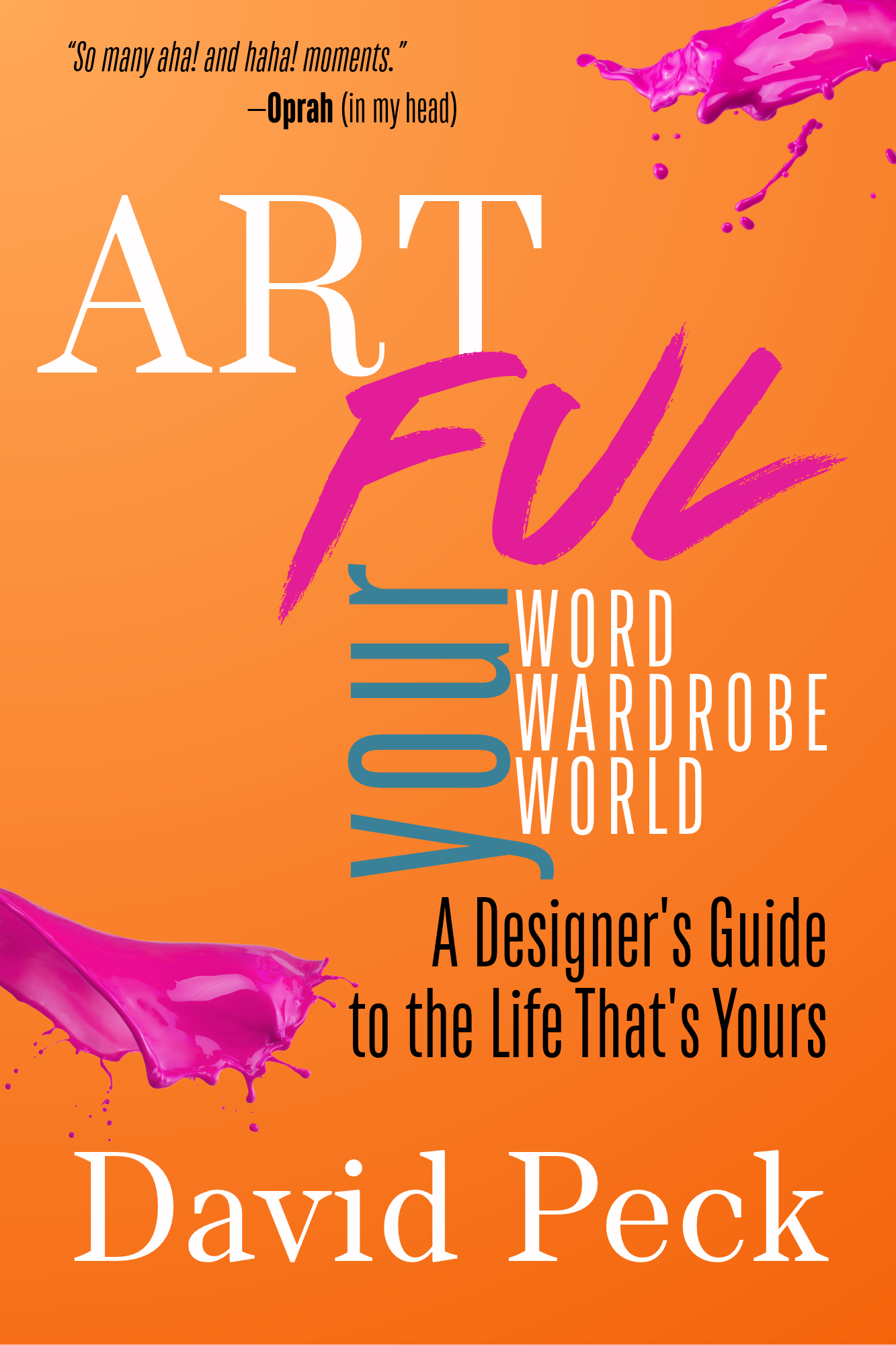
ARTful: Your Word, Your Wardrobe, Your World, A Designer's Guide to the Life That's Yours. Out November 11. Order a signed copy at davidpeck.co/artful.

Three things I can’t stop thinking about this week: the Obama Presidential Center, an AI thriller that called this moment years early, and why Meta — of all companies — is the one giving me life right now.