One of the smartest people in finance reveals why the personal finance industry got money wrong—and how to fix your relationship with it.
Kelsa Dickey is one of the smartest people David knows when it comes to finances. But unlike traditional financial advisors, she's not your typical "in the box" accountant or CPA. She's super creative about it. In this conversation, David and Kelsa dive into why so much personal finance advice is rooted in binary thinking—and how that's perpetuating the problem people are experiencing. They talk about the trauma of witnessing her mother's bankruptcy in middle school, how that experience shaped her mission to help people, and why emotional connection to your money is just as important as the math. From managing two homes between Michigan and Arizona to designing a life you truly love, Kelsa shares her philosophies on creativity, money, and what it actually means to be "good with money." Plus, they explore the CEO Squad mastermind that brought them together two and a half years ago.
Kelsa Dickey's journey into finance wasn't paved with family wealth or financial privilege. Watching her mother struggle with bankruptcy in middle school—seeing the stress, the unopened mail, the despair—planted a seed: there has to be a better way. That experience became her north star, driving her to become a financial advisor, then eventually founding Fiscal Fitness, where she coaches individuals and trains other financial professionals on a completely different approach to money.
What sets Kelsa apart is her refusal to accept that financial advice has to be rigid, binary, or soul-crushing. The traditional personal finance world (think Dave Ramsey) tells you there's one right way to manage money. Kelsa says no—there are many ways, and the best one is the one that works for you and gets you bought in. She's learned that people don't know how much they spend, yet they shame themselves for overspending. They obsess over $5 lattes while ignoring larger financial leaks. They internalize failure because the advice doesn't match their personality or values.
In this episode, David and Kelsa explore the toxic myth that "emotion has no place in money." They discuss why the personal finance industry is rooted in patriarchal, binary thinking (it's math, right? So it must be simple). They laugh about the misconception that you need to track every dollar to be "good with money." They share how Kelsa uses the Financial Wheel of Life—18 areas of your money—to help clients discover what actually needs attention, rather than forcing everyone to focus on expenses first.
Beyond the philosophy, Kelsa shares her personal story of designing a life she loves: becoming a "snowbird" living between Michigan and Arizona, challenging the status quo by asking "why not?" instead of accepting "you can't." She talks about her Financial Coaching Academy, where she trains other professionals to understand that money is deeply tied to identity, values, and well-being. And they discuss the CEO Squad mastermind—a group of six people in completely different professions—that brought them together 2.5 years ago and has become a pillar in both their lives.
If you've ever felt shame around your spending, struggled to stick to a budget that doesn't fit your personality, or wondered why personal finance advice feels so one-size-fits-all, this conversation is for you. Kelsa reminds us that there's a way for you to manage your money that feels amazing—you just have to discover what it is.
Listen to the full episode on your favorite podcast platform.
Subscribe and leave a quick rating or review if you enjoyed it.



“There is a way for you to manage your money in a way that feels really great for you, that fits with your personality and your current skillset. We just have to find out what it is.”
Transcript
-
David Peck (00:00)
I am so excited today to welcome my friend, Kelsa, to the podcast. And what I love about Kelsa Dickey is that not only is she one of the smartest people that I know when it comes to finances, but she's super creative about it. And she's not your typical in the box accountant or CPO or CPA. I don't even know the titles. You can tell what sort of brain I normally use. But I want to talk to Kelsa today about how we can infuse more creativity in our life and have fun with our money because I don't know about you, but so much of all of this budget culture type stuff can get really overwhelming and feel a little daunting. If you know anything about the personal finance world, you may have heard of somebody like Dave Ramsey and Kelsa, think has a completely different view than somebody like Dave Ramsey in the best possible way. So Kelsa, welcome inside the design studio.
Kelsa (00:53)
Thanks David, it's so good to be here to talk about creativity and money together. I can't believe it, but we're gonna we're gonna do it. I know. I'm excited -
David Peck (00:59)
I know, I love having our conversations because you always bring such like insight and also you're not worried about trying to do things the way that they've always been done. Yet you always base your answers in fact and reality and research. So it's not like you're just coming up with things out of the blue. They actually are really sound pieces of advice. Give me an idea. and our listeners an idea of how did you even come to be interested in finances? Because I know that your background, you didn't come from a family that kind of supported you in that way.
Kelsa (01:34)
No, yeah, I actually feel like I came into this work because of what I experienced and witnessed growing up, but in a bad way. So my mom, when I was in middle school, filed bankruptcy. And of course, as a middle schooler, I didn't know what bankruptcy was. I didn't know what that meant. All I knew was that it was a really stressful time of her life that I remember sitting on the couch and somebody knocked on the door and my mom opened the door and it was my aunt who lived nearby, my mom's sister. And my aunt came in and I remember them hugging and my mom was crying and just saying to my aunt, I had to file bankruptcy. And my aunt just kind of calming her and saying, it's gonna be okay, it's gonna be okay. And so at the time and really growing up, my mom had a really good job. She worked really hard. She was a really good person. She tried so hard to make good financial decisions. She would sit at our dining room table for hours sometimes. And I just have this very vivid memory of her sitting at the dining room table. There was a stack of papers that was like opened mail. And then there was a stack of unopened mail. And then she was sitting there with like a legal pad and a pen and her calculator just trying to figure it out, you know, and feeling so conflicted and full of despair. I remember seeing despair on her face, you know, and just thinking like there's got to be a better way. Why is this so hard for somebody like her?
And my mom now, I mean, that was a long time ago, but she's retired now and doing very well financially in retirement. So in I like people to know that because it wasn't the saving for the future. She had money automatically deducted from her paycheck. So she was investing and do a 401k at her work and like those types of things. It was the money here and now, you know, she was a single mom raising three girls, trying to give us the things that we wanted to make our life better and fulfilling and also just being like, but how do I make my car payment next week? Right? Like it was that type of thing. -
When I was a senior in high school, a recruiter came to our school and said, like, what do want to do when you're older? And I said, I want to help people with their money. And he said, you should become a financial advisor. So I went to school, got a degree in finance, became fully licensed. I actually hated my accounting classes in college. So I know you're talking about like, she's not like a typical CPA. And I always tell people when you're in college or you're learning about money, it's very much through the lens of like, what's the right answer? And there's one right answer because the teacher, the professor needs to grade everybody fairly. But one thing with accounting in the real world application of accounting is that it's actually a very creative process, that there's probably 10 ways to do any one thing, right? And so if you give 10 accountants one person's tax return, they can analyze it in a bunch of different ways.
But in school, that's not how it's taught, right? It's taught in a very linear right or wrong fashion. And I really struggled with it in college, but I loved my finance classes. And so I became a financial advisor, did that for three years. But when a client would come in who was struggling with debt, or those types of issues versus the clients who came in that were doing well financially, so they were considered wealthy and they were like, okay, I got to buy a new car. Which account do I get it out of? And how do we change your asset allocation to make this the best decision? That was so boring to me. But the clients who came in that were like, I've got debt, help me get out of it, I was like, yes, let's roll up our sleeves. Let's do this. This is going to be fun, that kind of thing. But as a financial advisor, I wasn't getting paid to help those individuals.
That was when fiscal fitness was born shortly after that, where I really decided that instead of having all of these licenses and looking at investments and risk tolerance and insurance products and that sort of thing, and really like the long -term planning, which I do think is very necessary too. So this is not to throw shade at that. It's very needed. But really the part of money that I wanted to help with was the very practical day -to -day, the money coming in out of your checking account. How do you know if you're doing the right things with it? What are the right things to do for you? All of that. And at the time, know, really Dave Ramsey, Susie Orman, these were the people who existed in the space. So of course, when I first started, that's sort of like who I look to. But very quickly, and I mean within the first five clients I had doing this work. I started venturing off of that path that they were on, you know, and really seeing just the nuance in different people's lives and situations and skill sets and even goals, right? So I would have some clients that wanted to get out of debt really quickly and they were willing to do whatever it took to get out of debt, right? They would sacrifice just like Dave Ramsey sort of preaches. And then I would have other clients that were like, If you tell me that's the only way to do this, then I'm just not going to do it. So let's, we got to come up with a different plan and we would, we would come up with a strategy that would work for them. Maybe it would take three years, but we would optimize their situation in the process that they felt really good about it. So it costs them the least amount of money so that they could make progress, but also feel good about the way they're living their life at the exact same time. And very quickly, I just started to see like, there is not just one right way to do this work. There is a lot of different ways to manage your money. There's so many different ways to get ahead financially and to me, money is a very creative endeavor of like, how can we make it work for you in the way that's gonna bring you the most fulfillment and that kind of thing. So that's essentially what I do now. -
David Peck (06:50)
love that. And it's really interesting because I didn't plan it this way, but my last episode was about binary thinking and why we tend to think things as good or bad or positive or negative. And it feels like the money and accounting world is very much based on that thinking. I mean, binary, it's like zeros and ones. It's like either or. Why do you think that a profession that is as creative as you've found it to be is rooted in such like old -fashioned thinking.
Kelsa (07:22)
Okay, well, how much time do we have? Because we could go through like the patriarchy and how so much of this is built around that. And also though, in the most simplest way, it's because people see it as just math. That because money has numbers that are attributed to it, it's easier to assume that, well, if it's just math, it makes it easy for people, right? But to me, it's the exact opposite. Where those the focus so heavily on mathematical calculations and things needing to balance. And here's the biggest thought that has, I think, caused the biggest issue in the world of personal finance. It is this thought that the best solution is the best one financially. That whatever looks best on the spreadsheet is the best decision. That that is the right choice, right? And in my mind, that assumes that money is the most important factor that we're considering, not the person's health, not the person's time, not the person's future and goals and other priorities in life, right? Where in my mind, we have to weigh all of those things against each other. And there are lots of times where the best decision for the client is not the one that looks best on the spreadsheet, but it still looks good, right? Not only that, but if you think about this, and this is something that I've proven time and time again with working with as many people as I have, to me, the best solution is the one that the client feels most buy -in for. Because if I give you the spreadsheet and it projects out, like, here's this plan and here's a strategy that will work for you, and this one looks the best on paper, financially this one's the best, but a client's not bought into it, it's not gonna go that way. So it's actually not gonna look that good at the end of the day. But the solution that on a spreadsheet maybe doesn't look the absolute best financially, but it gets them ahead and it still solves the goal or the problem that they're after and they're bought into it, it's gonna go even better. They're gonna be more creative, they're gonna be a better problem solver, they're going to stay more committed, like all of those types of things and it's actually gonna look better. no one's talking about it in that way because all people look at is just the math behind money because there's numbers attached to it. -
David Peck (09:41)
I think it's so interesting because I mean, we make all these jokes as parents, think, because Kelsa also has two children, similar ages to mine. And I don't know if you've experienced this in school, but there's different ways of looking at math. And I think our education system is a little bit better now about looking at different learning styles and patterns and how you can learn how to add two plus two. You can do it visually. You can do it kinetically. can do it like there's not just the traditional way of learning it. And I feel like the personal finance world maybe hasn't caught up to that yet, understanding that people need to approach learning about their money in a way that works for them, in a way that they can wrap not only their brain around, because I think sometimes we can understand something intellectually and not fully internalize it. And it really has to come from like a gut feeling of like, you're so internally connected with it for it to stick and become something that's a healthy part and a healthy habit in your life if you're making these choices about money. And it seems like the way you're approaching it is really looking at the individual and not what should be.
Kelsa (10:46)
Yeah, and I would say, you know, 16 years ago when fiscal fitness was born, I would get messages all the time from people that would say, you can't bring emotion into money. There's no feelings in personal finance, you know, and like that kind of thing. And I am happy to report that I think there has been a shift. in that time. It's definitely still necessary that we go in that direction. There's more work to be done and like that kind of thing. But letting people know that there are many ways to do this money stuff right, right? And that there is not one way to manage your money that will work for everybody. We just have to find the way that will work for you. I always say that if I have two clients back to back, one session and then another, they could have the exact same goal. And the strategy we use for one client is the opposite of what we do for the next client. And that's not because I'm not good at what I do. That is actually because I'm very good at what I do, right? That there are different ways that we can pull it. I'll give you just a really simple example. Some people love detail and they actually do better with a level of specificity with a financial plan that's like really detailed. So it's like they've got, you know, very detailed to almost to the penny or almost to the dollar, I would say, plans mapped out of what they need to do. They actually love that. Right. And then I have other clients who if I were to give them that level of specificity, it would actually overwhelm their brain. They would find it too daunting. They wouldn't enjoy it. They wouldn't be able to even see it clearly. It would almost be like too much. Right. And they do better with a lot less compartmentalization. We might have like a three bucket system versus like a 20 bucket system for this other client. Right. Or we might have their goals might be more of like a feeling. This is another thing that a lot of times people think that if in order to have a financial goal that it has to have a number attached to it. And I completely disagree with that. A financial goal can be a feeling like I want to end the week and feel as if I was really good with my money this week, that I feel proud of how I thought about my money this week or like those types of things. It can absolutely be a feeling as well. Now there are times where it can be a number, of course, but for those people who actually do better with big picture thinking, the more detail we get, the harder that whole process is going to be. And again, that then affects their buy -in. It affects their problem solving abilities and their creativity, like you're saying. And it's really just because we gave them a strategy that is not going to work. -
David Peck (13:19)
Yeah, it's interesting that you're talking about this feeling that they have. And I've been learning a lot this past year, especially as you know, about manifesting and making things happen. The my woo comes out a lot. Anyway, a big part of manifesting the idea is that when you can actually feel something really truly deeply inside is when it's true, and when it becomes real. And so it feels like to me what you're making people connect with is that feeling that is ultimately manifesting the financial health and wealth that they desire. Not because it's a specific number per se, but because they've connected with the feeling that that number is going to give them or that, you know, the freedom that they have with a certain number of zeros, it is that in their bank account. And so it's an interesting thought that it's connecting to that deeper emotion inside of them and not just what you can see on the paper.
Kelsa (14:15)
Yeah, I love that. And I will also say, just to bring a little bit of nuance to that conversation, I always joke that I'm like 50 % aspirational and 50 % practical. And the reality is, affirmations are important, the way we feel about our money and those types of things are important. And there's just really simple practical things you can do with your money right away to have that proof that what you're doing is working, right? Whether that is cutting your expenses, increasing your income, feeling so many times a client will start. And of course, the initial month, right, can be pretty, we're looking at a lot of things. We're turning over every rock. We're sort of seeing like, what is happening here? Where can we optimize the most? And there are times where we look at something and we decide no changes are needed here. Everything is really this is a strength that you have you're doing this really well and even just Proving that seeing that and having that clarity like we didn't make any changes You're doing everything you've done for years But instead of doubting yourself and thinking that what you've been doing isn't good enough or you probably could do better We're actually giving you the validation that like actually this I've been good at this part of money I've been rocking right and so it's another area that maybe I can focus on and improve but we actually can look at very specific financial strategies and really point to like, one's actually, you're making a lot of money on this one, or this is a category you're actually spending a lot less than most people, or wow, you've really optimized this part of your life already. -
David Peck (15:42)
Mm I think that's really interesting and it goes back to that whole idea of binary thinking. We tend to think of we're either good with money or bad with money on a whole. And I love that you're breaking it down and saying, actually, this part of your life, you're nailing it, like really great. It doesn't mean that there aren't other parts that need some work or that we can focus on, but it's giving people nuance and balance in a conversation that doesn't typically have a lot of nuance. Because I know that you're not the type of person to say that what you need to do is stop buying your $4 or $5 lattes at Starbucks, and that's how you're going to get out of debt. So because that's a very, I think, the zeitgeist of personal finances, that's a very simplistic way of looking at how do you manage your money and how do you take control of your finances. For somebody who has felt shame because they've not been able to do that, because maybe that latte is really what helps them get through the day. Like that like ritual is something they need in their life. And the idea of giving it up is actually feels more challenging than than saving four dollars somewhere else. What advice do you give to them or where do you start them?
Kelsa (16:53)
Yeah, I mean, I totally get that. And this is one of those things where it's like, which came first, the chicken or the egg? Because are people saying, here's how you curb your spending and that kind of thing, because they know people are concerned with their expenses and how they're spending their money. Or in general, are people consumed by the thought of their spending and am I overspending and like the expense side of things? because of all these messages that exist in the world around trimming expenses and again a perfect example David of who decided that Spending the least amount of money possible was the right strategy, right? Like I really don't know where that came from and I have so many clients where it's like We'll have a week or two where I say here's your money go spend it. However, you want you don't have to track it. You don't have to keep receipts. And they come into their next coaching session, let's say it's two weeks later, and they're like, okay, so I know you said don't track it, but I really want to be able to show you where this money went. And I'll say, did you go over the amount that you had allotted? And they're like, no. And I'm like, then it doesn't matter. It really does not matter if you want to buy that coffee and that gives you something. If it gives you that boost to your day or if you sort of enjoy it, Grant yourself permission to let that go. And as soon as you do that, it then frees us up to focus on something else that we can be focusing on, right? When it comes to your money. We have an exercise that we do with our clients. called the financial wheel of life. And we look at 18 different parts of your money. Okay? So different areas, whether it's long -term versus short -term, it's your family finances versus your individual finances. your business finances versus your personal finances if you own a business and those types of things. And we score your satisfaction and confidence in each one of those 18 areas in order to figure out which one should we be focusing our attention on? Because it's not always expenses and it's not always spending. And yet I will also say that so many people when they first come to me, one of the things I hear all the time is, I'm sure I'm spending too much or I know I should do better with my spending. And then when we look at it, there, I sometimes they are overspending and sometimes they're not, but it's not always the case, right? The reality is too, is most people, if you were to ask them, how much did you spend on groceries in the past week or how much in the past month did you spend on coffee? They don't actually know the answer to that. It's not a number. They might give you a range. They might have a guess or an estimate, but they can't actually tell you. So keep in mind what I just said, David, is most people don't know what they're actually spending, yet they've convinced themselves that they're not doing good enough and they could do better. Right? So there's a disconnect there that for whatever reason, we're told that we shouldn't be spending money on the things that actually make our life a little bit better. And my thing is if that's the... Every client's a little different. So there might be some clients who really do want to hunker down and get their spending under control and that sort of thing. Other ones, like, this is what you're going to spend. This is what you've been spending. build a plan where that is easy to do, right? So maybe there's something else that we need to look at in order to make that more possible. -
David Peck (19:58)
Why do you think this is a much bigger topic and kind of age long thing, but there's always been so much shame around money. think money and sex and politics have these sort of built in stigmas to them and we're not as open and honest about it as maybe as healthy. Why do you think people have these ideas about money and the way they spend it and that they automatically go to this place of I'm not good at it when Sometimes even just flipping the switch and seeing where they actually are doing well helps unlock places where they can even do better.
Kelsa (20:35)
Yeah, where does that come from? I think, especially in America, money is such a pervasive problem. It is so vast as far as the number of people who would describe themselves as having financial stress or living paycheck to paycheck and those types of things. And Studies show and I don't have the numbers off the top my head I could pull them up because I have a presentation where I share these statistics but that a lot of people hear that you know 80 % of people live paycheck to paycheck in America what is often glossed over people aren't aware of is that it's like 40 some percent I want to say it's 46 or 48 percent of High -income earners would also describe themselves as living paycheck to paycheck and then 38 percent of super earners. So people and super earners are described as people who earn more than $250 ,000 of income per year or more. Okay. Even one third of those people would say that they are living paycheck to paycheck, that they have financial stress. Okay. So this is a pervasive problem and it is not a broke people problem. I always like to make that known that just because you are struggling financially does not mean that you are broke. Okay. But because it's such a pervasive problem, I think no one's talking about it, right? Like people aren't sharing with their friends and that sort of thing. And that makes the problem bigger or worse for longer, right? Which is, I do think one of the benefits of sort of online and social media and like that type of thing is we do have better awareness now of how unique our world is and also how much we have in common, you know? And I do think there's a lot more talk now where people are sharing their numbers more openly. You can see that there is still a conversation shift that needs to happen because there's still a hyper focus on spending as opposed to driving income or aligning your spending with your values versus just trying to spend as little as possible sort of thing. There's a hyper focus on frugality, I think, that I think stresses people out because you can only live in that way for so long. So you can only sacrifice for so long. You can only track pennies for so long and that kind of thing. And then it's a natural thing that we can't adopt that hyper focus for our lifetime. So then when we stop, we immediately internalize it and say, I know I'm supposed to do it that way, but because I can't do it that way or I've like exhausted that way of doing it, something must be wrong with me. So I'm bad with money kind of thing. When this all plays together, this entire conversation, I think David, the more binary talk there is about money, the greater that encourages, the internalization that people experience when they're not doing it exactly the way the world is saying you're supposed to manage your money, right? Like you're supposed to have a budget, right? You're supposed to track every penny. This is one of those sayings that has been going around forever and ever and ever, which is to be good with your money, you need to know where every dollar goes. I can honestly tell you. I do not know where every dollar of mine goes. I do not. And I am really good with my money. You do not have to know where every dollar goes in order to be good with your money. So then when people don't know where every dollar goes, they think, well, so I'm not good with money. It's like the messaging around money is perpetuating the problem people are experiencing. Then the problem people are experiencing and how they're internalizing it is then perpetuating the messaging, if that makes sense. So it's a bit of a vicious cycle. -
David Peck (24:10)
Right. Yeah, we work with clients whose income ranges greatly, but I would say many of our clients are in those super earner category. And I will say that the ideas that they have, I should say negative ideas that they have about money are still there. And so those statistics that you're stating do not surprise me at all because I'm constantly a little surprised by people not knowing how much they can spend on a gown for their daughter's wedding, or being surprised, or, I couldn't possibly spend that on myself, when maybe their husband's like, you should spend that and double. They're very unaware of sometimes even the value of money. But yet you look at maybe their jewelry or accessories or something like that, and you can tell that they're very willing to spend in other areas. And so I think there's a general unawareness that comes across as being maybe bad with money and maybe it's just, it is that binary thinking that's coming back to bite us.
Kelsa (25:14)
I also think what you just said is a woman or a person coming in and trying to decide how much to spend on something, considering that a financial and mathematical decision is flawed, right? Like in her mind, her husband could tell her the number, right? And give her the answer, a mathematical answer and say, here's exactly how much you can spend. That doesn't mean that she's going to have an easy time spending it or that she's okay with that. And this is where bringing how we feel about ourselves and our experiences in the world and what we think about things into the conversation of money is essential. And like this idea that like there's no, don't bring emotions into money. Money is just math or like that type of thing is to me so damaging and so toxic because then we're not giving people the tools of like, how do I think through this decision based on what is most important to me? to determine the answer to the mathematical calculation.
There's no one "right way" to manage money—and that's good news.
Financial coach Kelsa Dickey on why binary thinking is ruining your finances, and how to align your money with your values instead. Listen on @ItsDavidPeck.
Key takeaways
Watching your mother struggle with bankruptcy as a middle schooler doesn't make you "bad with money"—it can motivate you to find a better way for others.
The biggest myth in personal finance: "The best financial decision is the one that looks best on the spreadsheet." Actually, the best solution is the one the client feels bought into.
Binary thinking (good/bad, right/wrong, all budgeting/no budgeting) is perpetuating the financial shame cycle. There are many ways to manage money well.
You do NOT have to track every dollar to be good with money. Most people don't know what they spend anyway—yet they shame themselves for overspending.
Different financial goals and approaches work for different people. Some thrive with detailed budgets; others feel overwhelmed. Customization is key.
A financial goal doesn't always need a number attached to it. "I want to feel proud of my money decisions this week" is a valid goal.
The "do not bring emotion into money" advice is damaging and toxic. How you feel about yourself and money is essential to making good decisions.
High earners experience the same financial shame and stress as lower earners. The paycheck-to-paycheck struggle is a pervasive problem across income levels.
The Financial Wheel of Life (18 areas) helps identify where to focus, rather than assuming everyone should tackle spending first.
Challenging the status quo—asking "why not?" instead of accepting "you can't"—is how Kelsa became a snowbird living between Michigan and Arizona.
You don't have to know how to do something before you try. Figuring it out as you go, with good planning, builds self-trust and resilience.
Planning for 80% of life's financial scenarios gives you the stability to respond thoughtfully to the remaining 20%, rather than react to everything.
Aligning your everyday money decisions with your values means big financial decisions are easier—your priorities are already front and center.
The goal of managing money is so you can focus on what's really important: being present with family, pursuing joy, and living intentionally.
Guests Appearing in this Episode

Kelsa Dickey
Kelsa Dickey is a financial coach, founder of Fiscal Fitness, and creator of the Financial Coaching Academy. With over 15 years of experience helping individuals and families navigate their finances creatively, Kelsa has pioneered an approach to money management that blends emotional intelligence, personal values, and practical strategy—rather than relying solely on math and spreadsheets.
Kelsa's journey began with witnessing her mother's financial struggle after bankruptcy, which shaped her belief that there's no one "right way" to manage money. Her mission is to help people find their own path to financial freedom, free from shame and binary thinking. She founded Fiscal Fitness to focus on the practical, day-to-day money decisions that impact quality of life—and later launched the Financial Coaching Academy to transform how financial professionals talk about money.
Based in Phoenix, Arizona (with seasonal time in Michigan), Kelsa lives what she preaches: she's designed a life that aligns with her values, including running two homes, building a thriving business, and maintaining deep family connections. She's also part of the CEO Squad, a mastermind group of six entrepreneurs across different industries.
You can find Kelsa at **fiscalfitnessphx.com**, subscribe to her newsletter for daily insights on money and life design, or search "Kelsa Dickey" to learn more about her coaching and training programs.

Mike Michalowicz's system-based approach to business finances challenges the traditional accounting mindset. While Kelsa's philosophy is more flexible, this book offers concrete strategies for entrepreneurs who want structure and accountability in how they manage business revenue versus personal expenses.

Morgan Housel explores how behavior, mindset, and emotion shape financial decisions. This aligns perfectly with Kelsa's philosophy that money is not just math—it's deeply personal. Understanding the psychology behind money choices is key to designing your own path.
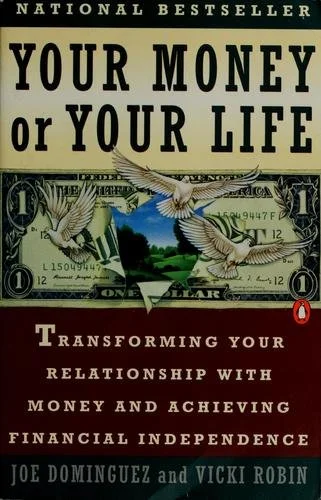
Vicki Robin's classic reframes money as a tool for living the life you want, not an end goal. This foundational text encourages readers to question the status quo and design lives aligned with their values—core themes in Kelsa's coaching philosophy.
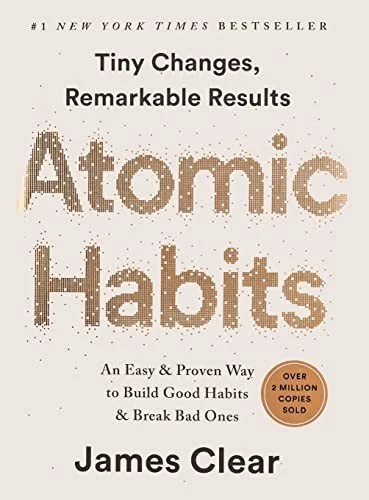
While not directly about money, James Clear's habit framework is invaluable for creating sustainable financial behaviors. Small, systems-based changes (rather than radical overhauls) align with Kelsa's approach of meeting clients where they are and building from there.
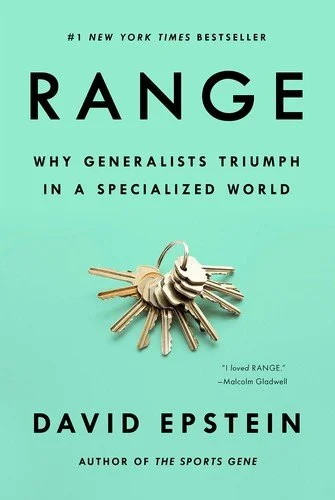
Whatever itDavid Epstein's exploration of diverse thinking and flexible approaches reinforces Kelsa's belief that there's no single "right" path to success. For entrepreneurs and creatives designing their own financial lives, this book validates the power of exploration and adaptability. is, the way you tell your story online can make all the difference.
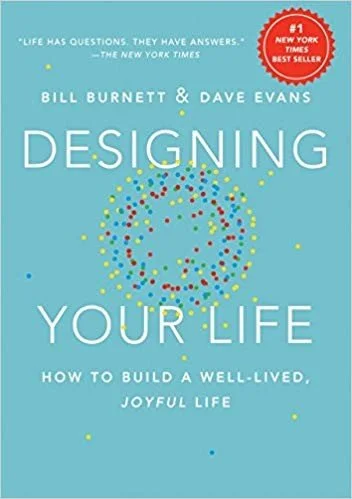
Bill Burnett and Dave Evans' design-thinking approach to life planning mirrors Kelsa's philosophy: creative exploration, prototyping, and alignment with values. For those ready to ask "why not?" and challenge the status quo with their whole life—including finances—this is essential reading.
Resources
Fiscal Fitness: https://fiscalfitnessphx.com
Kelsa Dickey Newsletter: https://fiscalfitnessphx.com (subscribe at her website)
Financial Coaching Academy: https://fiscalfitnessphx.com/academy
Inside the Design Studio with David Peck: https://www.davidpeck.co/podcast
CEO Squad (mastermind group)
Theater Development Fund (10% of Fiscal Fitness proceeds support accessibility in theater)
David Peck on Instagram: https://www.instagram.com/itsdavidpeck/
David Peck on TikTok: https://www.tiktok.com/@itsdavidpeck