
Break free from the limitations of binary thinking and unlock a more creative, empathetic approach to life, relationships, and problem-solving.
In a world increasingly divided by political polarization, ideological extremes, and black-and-white thinking, David explores how binary thinking stifles creativity, limits empathy, and prevents us from seeing the full complexity of the world. He shares practical strategies for breaking out of either-or thinking and embracing a more nuanced, creative approach to life.
Binary thinking—the tendency to see things as right or wrong, good or bad, black or white—has become a dominant pattern in how we approach relationships, politics, religion, and even personal identity. But while some situations clearly have right and wrong answers, most of the issues we face are far more complicated and nuanced.
In this solo episode, David explores what drives our tendency toward binary thinking and why it's so difficult for us to exist in the gray areas where most interesting and important conversations happen. He reveals how breaking out of binary thinking is not just about being more open-minded—it's about unlocking the kind of creativity that makes life richer, more textured, and infinitely more interesting.
Discover three powerful strategies for escaping the binary trap: challenging assumptions with curiosity, embracing the power of "and" instead of "or," and viewing conflict as an opportunity for creativity and growth. Whether applied to politics, interfaith dialogue, or personal relationships, these approaches help you think more creatively and connect more authentically with those who see the world differently.
Listen to the full episode on your favorite podcast platform.
Subscribe and leave a quick rating or review if you enjoyed it.



“It’s very difficult for us as humans to exist in the gray. But what if we could embrace the power of “and” instead of “or”? That’s where the real creativity happens.”
Transcript
-
David Peck (00:00)
Welcome back to Inside the Design Studio. Today I want to tackle something that's, I feel, squeezing the life out of our conversations, our relationship with other people, people we love. I feel like this topic is something that's especially relevant as, at least here in America, we are entering into election season and
it gets a lot of people, myself included, thinking very binarily. So binary thinking, I feel, has really done a number on the world because we tend to see things as right and wrong, black and white, good or bad. And you you may
say, well, that's true. Like, there are right things and there are wrong things and there are good things and bad things, but while that may be true in some extreme cases...
many times the issues that we're dealing with are way more complicated and nuanced. And sometimes the answers live in the gray. -
And it's very difficult for us as humans to exist in the gray. And what I want to talk about today is what causes us to think about our life, gender, politics,
religion in a simplified way? Why don't we have a more nuanced approach to it? And is there a way in our quest for infusing our life with more creativity to break out of this binary thinking? And what would that do? Because if you think about it, your favorite art, your favorite book.
maybe even maybe your favorite TV shows. There may be good guys and bad guys, but more often than not, what makes those things so interesting is that not everything is cut out to be exactly what it seems to be. Where we find things intriguing, where we find things captivating is usually because we can't quite put our finger on something. -
So I wonder, and for me this has been something that I have worked on for many many years, is breaking out of the box of thinking about things as being either or. It's either this or that. But what if it's more of a yes and, or and or type of...
approach to life. You know, there's so much we've talked about, especially in the last episode, about how can we infuse our life with more creativity. The what if example, if you haven't listened to that episode, I challenge you to go back and listen to it. It's 10 minutes and it's super easy and it's three ways where we can get more creative with our life, especially if you don't think of yourself as a creative person.
So one thing that we can do to break free from binary thinking is challenge any assumptions that we may have with curiosity. This leads right back to that what if. -
So you may have an initial reaction to a world event, something a politician is saying, something a religious leader is saying.
that reaction may be positive, you may be agreeing with them, and the reaction may be negative. you have a very hard stance against it. Now, what if you challenge those assumptions with curiosity?
And I think a lot of people are afraid to do that because they think it's going to weaken their position or make them weak as a person. But here's what I can tell you. If you approach and you challenge any assumptions you may have with curiosity and you really truly try to see what is that person coming from,
challenge my preconceived notions. What if they were right? And I'm not saying you have to agree with them. I'm just saying go through the thought exercise of saying, what if they were right? What would it be like if they were right? -
Now, you may go through all of this and you may come.
out of this whole exercise more firmly convinced that the way you originally thought was right. However, I think many times when we start to challenge those assumptions and those ideas, we become more empathetic. And I feel like, especially, and I'm talking to Americans here and going into this election cycle, it is so easy to dismiss.
one political group or ideology. And, you know, I do think that there are some very real issues at stake and that's an issue for, those are many issues for many other podcasts. However, the danger lies in that we stop to see people as people and we start to see them as only their political ideology. And so in our quest for
trying to find a little bit of balance and maybe break out of the binary. Can we say, what if what they were saying is right? Can I view them differently? -
Now in some cases, you're going to come out of this and you're going be like, no, absolutely not. That is just pure wrong, pure evil. This is not. No, absolutely not. And you're to put your foot down and that is totally fine.
But what happens, think, especially on some of these more nuanced issues, and many issues are, we start to think and find out that the answers maybe aren't as clear as we thought that they were. And maybe that there is a way of approaching an issue or a topic with a little bit more...
nuance. mean, after all, if we were only meant to think in binaries, we wouldn't have so many shades of nail polish. We would just have, you know, two colors, right? So.
Thinking of politics, maybe we can start thinking of the and instead of the or. So, especially this year, but you know, I think we just tend to think this way in general. We like a team blue or a team red, conservative or liberal. -
And what if we embrace the power of and instead of or?
And what if we looked at political beliefs like ingredients in a recipe rather than ingredients in a toxic stew? You know, it is very possible to be pro -environment and pro -business. The two don't necessarily have to cancel each other out, but in today's environment, they seem to be on polar opposite ends of the spectrum. Or what about people who are fiscally conservative and socially liberal?
They seem to be diametrically opposed, but what if they existed together? Embracing the and allows us to find common ground and mix up the recipe, if you will, and create something that everyone wants to taste. And
I feel like that is a very creative approach to problem solving that we're not always willing to do or willing to take the time. -
It's so much easier to talk in sound bites, especially with social media, especially with how quickly the news cycle changes. it's not even a day. It's what by the hour, sometimes it's by the minute. And
Having a nuanced conversation or a really creative and constructive conversation about ideas and coming at it with completely different points of view, we don't seem to have the time for that. But what if we embrace the and instead of the or?
And then sometimes, and this is a big one, conflict is an opportunity for creativity. And I'm especially thinking about this in the context of religion, because we love to be able to explain things. We love to be able to put things in a, you know, believer, non -believer, heaven, hell, sinner, saint. But what if...
Instead of seeing these differences as a dividing line, what if we saw them as points on a map that lead us to a deeper exploration? -
So creativity invites us to see conflict as an opportunity for growth, and it's not looking at it as a zero -sum game. So if we're thinking about this, for instance, interfaith dialogue doesn't have to mean debating who's right.
doesn't, you know, whether you're Baptist or Catholic or Hindu or Muslim or Jewish, a dialogue does not have to mean that one faith group comes out on top, but it can mean creating something new, like an interfaith community project or maybe even a shared art installation. Suddenly we're not tearing down walls, we're building bridges.
So in my business, we help with a lot of weddings. And so you could kind of think of this a little bit like planning a wedding. So sure, you know, the bride's side and the groom's side may have very different dance moves. And especially if it's a multicultural wedding, you're going to have very different ideas of what dance is. -
But think about it. That is just what makes the electric slide more interesting. So.
Breaking out of binary thinking isn't just about being more tolerant or open -minded. It's about unlocking the kind of creativity that makes life richer, more textured, and infinitely more interesting. So next time you catch yourself thinking in black and white, remember there's always room for a little glitter.
Thank you so much for joining me today. If you liked this episode, please share it with a friend who could use a little bit more color in their life. And don't forget to subscribe for more ways to design a life you love to live. And hey, why don't you leave a review? Unless of course you're thinking of a binary one -star or five -star review. In that case, feel free to get creative and just leave a five -star review.
Know someone who hates resolutions but loves a fresh start? Send them this episode.
Key takeaways
Binary thinking—seeing everything as right/wrong, good/bad, either-or—limits creativity and prevents us from understanding complex issues and different perspectives.
Challenge your assumptions with curiosity: When you have a strong reaction, ask "What if they were right?" This doesn't mean agreeing, but rather understanding the other perspective and becoming more empathetic.
Embrace "and" instead of "or": Many seemingly opposite beliefs can coexist (pro-environment AND pro-business, fiscally conservative AND socially liberal). Nuance creates better solutions.
View conflict as an opportunity for creativity and growth, not as a zero-sum game. Build bridges through shared projects and dialogue rather than trying to "win" arguments.
Nuanced thinking makes life richer and more interesting. Your favorite art, books, and stories are compelling precisely because they embrace complexity and ambiguity.
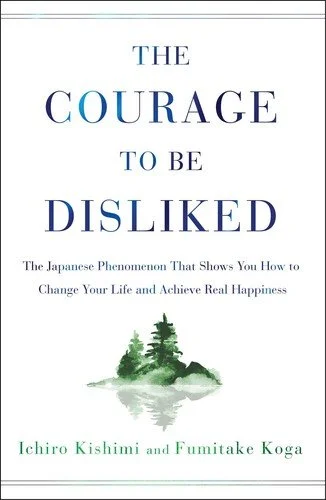
A provocative dialogue about finding freedom and happiness by letting go of others' approval. Explores how fear of rejection drives binary thinking about ourselves and others.
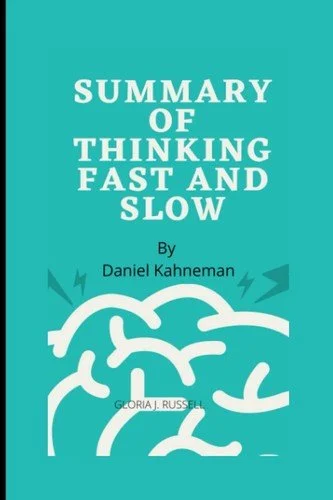
Daniel Kahneman's groundbreaking exploration of cognitive biases that lead to black-and-white thinking. Essential for understanding why binary thinking feels so natural.
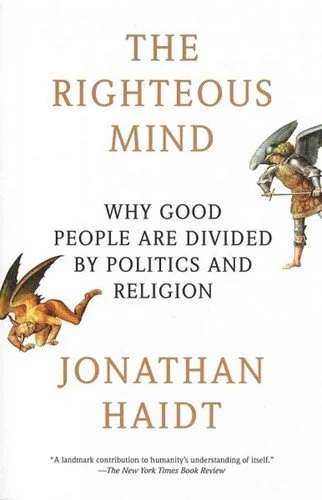
Jonathan Haidt examines why we're so divided and how we can bridge moral divides. A powerful examination of the psychology behind ideological polarization.
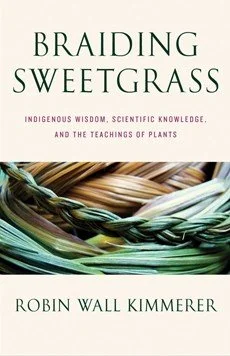
Robin Wall Kimmerer's lyrical exploration of seeing the world through multiple lenses—scientific, indigenous, and poetic. A beautiful example of "and" thinking in action.
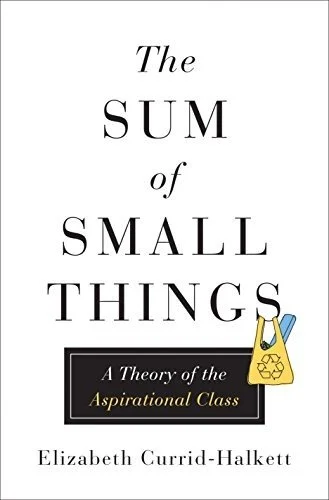
Elizabeth Currid-Halkett explores how consumerism and status-seeking create binary in/out groups. Helps understand the psychology behind us-vs-them thinking.
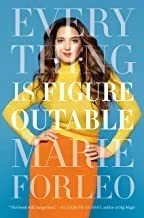
Marie Forleo's guide to creative problem-solving that embraces "and" thinking. Moving beyond limitations to see possibilities in complex situations.
Resources
Episode 17: "The What If Mindset" - A companion episode exploring how curiosity drives creativity
David Peck on TikTok — https://www.tiktok.com/@itsdavidpeck
David Peck on Instagram — https://www.instagram.com/itsdavidpeck/
Inside the Design Studio Podcast — https://www.davidpeck.co/podcast

Three things I can’t stop thinking about this week: the Obama Presidential Center, an AI thriller that called this moment years early, and why Meta — of all companies — is the one giving me life right now.