
44. Voice Notes: Rewriting the Script - Taylor Swift, Winter Olympics, and Bad Bunny
This week I'm thinking about Taylor Swift, the Winter Olympics, and Bad Bunny. The unexpected through-line? Rewriting the script—whether it's your own narrative, a national identity, or a story we've been telling wrong for 70 years.
What I explore:
Taylor Swift released "Opalite" when everyone expected "Elizabeth." She filmed in England (where her famous ex-boyfriends are from), reclaiming a narrative that could have haunted her. The meta-ness of getting the idea on Graham Norton and casting everyone from that couch shows true creativity—making art with what you're given, not waiting for perfect conditions. She broke her own pattern, playing a lonely woman instead of playing "Taylor Swift." She's rewriting her own script—and showing us we can change our plans mid-stream when we're confident in our vision.
Winter Olympics athletes are navigating an impossible position. These are my kind of sports—I love the individual aspect and creativity of figure skating, speed skating, skiing. Sports that don't normally get the spotlight but for two weeks we celebrate them. This should be something we can come together as a country to celebrate. But when the country is so divided because of our leaders, it feels especially hard to root for a country. Athletes spoke about being proud to be American while not co-signing everything happening right now—and were called un-American for it. They can't fully rewrite this script. They're stuck representing something larger. But competing with integrity despite the conflict is its own form of reclaiming the narrative.
Bad Bunny performed the Super Bowl halftime show almost entirely in Spanish (except for Lady Gaga's section, "God Bless America," and the powerful line "the only way to combat hate is with love" in English). This forced America to confront something we've been struggling with for over 100 years: Puerto Rico IS America. West Side Story's characters were singing "I Want to Be in America" without realizing Puerto Rico already was America—and 70 years later, we're still having the same conversation. Bad Bunny rewrote the script about what "American" looks and sounds like. Even performing at Levi's Stadium—another immigrant story with Levi Strauss. The layers were so deep.
They're all about taking control of narratives—whether personal, national, or cultural—and telling the story your way.
Listen to the full episode on your favorite podcast platform.
Subscribe and leave a quick rating or review if you enjoyed it.



“She really was a true artist and creative and was like, this was what I was handed and I am going to make art with it.”
In This Episode, You'll Learn
How Taylor Swift reclaimed England by filming there—and what it means to create with what you're given
Why breaking your own pattern shows creative confidence
What it means for athletes to represent a divided country with integrity
How Bad Bunny forced a 70-year-old conversation about Puerto Rico and American identity
The difference between rewriting your own script vs. being stuck in someone else's
Why visibility doesn't equal community
Transcript
-
These are the three pop culture things that I can't stop thinking about this week and they all have something in common, which is rewriting the script. And sometimes the script is something somebody else wrote for you and sometimes it's your own script that you've decided to change. And sometimes it's a narrative that we've been wrestling with as a nation for over 70 years. Let me explain.
-
Okay, so you knew that I couldn't let Taylor Swift's Opalite music video not be one of this week's pop culture items. I'm slightly obsessed. And so what I loved about Opalite is that it was unexpected. A lot of people were thinking that Elizabeth Taylor might've been her next music video just because it's the first three songs in the album and after a fate of Ophelia, you know, but she decided to release Opalite.
And what's interesting to me about that video is that it's a completely different tone than Fate of Ophelia. Fate of Ophelia is super produced and like it's choreographed and there's something very naive, almost Napoleon Dynamite about Opalite. There's also slightly like chaotic Wes Anderson vibes to it too.
And I think what I'm most obsessed about is how it shows how Taylor's brain works in real time because she got the idea for it when she was sitting on the couch on the Graham Norton show. So if you don't know Graham Norton, he's this British TV presenter and he famously always has a couch full of people and they all just kind of talk. It's not individual interviews. And somebody on the couch said he was dreaming about being in a Taylor Swift music video and there's a cutaway to Taylor's face when he says that, like she's got this idea and so a week later she has a script and she's written the guy and cast him and then proceeded to cast everybody who was on the couch with her.
And I think that's really interesting because she didn't go about this music video like casting like the perfect people and what made sense. She really was a true artist and creative and was like, this was what I was handed and I am going to make art with it.
And another layer to all this, which I find also a little meta is that it was all filmed in England, which in so many ways reclaims Taylor's narrative about England because she's had these famous British boyfriends and yet she is going back and filming this thing on her own turf and on her own. I mean, she made it her own and she's taking a narrative that could have haunted her. And a lot of people wanted to think haunted her and she has made it something entirely new and reclaim that identity.
She rewrote the script and she plays this very lonely woman completely opposite of her character in Fate of Ophelia. And the settings are very pedestrian normal, like even ugly. It's like she has a brown wig on. It's the biggest pop star in the world exploring how visibility doesn't equal community. And I think there's something really profound to that. And I just think that it's a super charming video. And I'm sure there's tons of Easter eggs and layers to unpack and all of that. I just can't stop thinking about it.
-
Speaking of being stuck in somebody else's script, I think what is really interesting is the Winter Olympics. So I am an Olympics person. I famously am not very much into team sports. And I love watching the Olympics. And I love watching sports that I wouldn't normally watch, kind of obscure ones. I mean, like, you know, curling is somehow interesting to watch during the Olympics. Am I gonna go seek it out outside the Olympics? Probably not.
But there is something really very special about these two-ish weeks of highlighting athletes that don't normally get the spotlight. And so many of them have trained their whole lives for this and they don't have the big platform that, you know, NFL star, basketball player, NBA, like they just don't have that and the Olympics gives that to them. And I really, really love that. It's like years of individual hard work and artistry and dedication.
What is interesting to me about that is that there was a whole dialogue about what it means to be an American athlete and representing America in a time where what America is and what it values is maybe let's say under attack, but at the very least conflicted.
So, you know, there were these athletes who were asked what it meant to represent America. And they said, just because I am proud to be an American supporting my country doesn't mean that I co-sign all of what is going on right now. And that was sort of blown up by certain people and said to be un-American.
And I think that that is something that we all need to or have been, at least I have been grappling with, is what does it mean to be American right now when maybe there are things going on in this country that don't represent your values and you don't want to be conflated with some of those things but at the same time you can truly appreciate and value being an American and like love the idea of your country and that is patriotic, but you don't have to go down with the ship, essentially.
And I think these athletes are in a really interesting position because they are sort of stuck for lack of a better word, representing something larger than themselves. And, you know, they can't compete—they can compete, but there's a conflict with the narrative, if that makes any sense. And it's this idea of having to continue to do the work that you were set to do and something that you've trained your whole life to do, yet the circumstances are not those that you dreamt of.
And I think rewriting that script is something that is especially challenging. And I really applaud the athletes who have spoken up and I think done it in a really respectful way, in a very thoughtful way, without, you know, because the Olympics is not about politics. It's really famously anti-political.
-
o speaking of politics and rewriting the script, how can we not talk about Bad Bunny at the Super Bowl? So if you've been living under a rock, you may not know that Bad Bunny did the halftime show at the Super Bowl halftime. That was very redundant.
Entirely in span... Well, I shouldn't say entirely in Spanish. Actually, there's a whole section by Lady Gaga in English. It was a huge cultural moment. And I don't know about you, but my social media feed has been just inundated with, you know, people's reactions.
I think what is what I immediately thought about, which I haven't really heard a lot of people talk about, is that this Puerto Rican narrative that we have about Puerto Rico not being a part of America is something that has existed for over 100 years. But I'm thinking back specifically in pop culture about West Side Story. There's this whole song, America, about these people singing about, want to be in America, everything's free in America, not really understand, confronting the idea that Puerto Rico is actually in America. It is a part of America. It may not be a state, but it is a territory.
And so here's this huge pop culture moment from 70 years ago that was wrestling with this narrative. And then we're still wrestling with this narrative with Bad Bunny, all these years later. And Puerto Rico has been a part of America for over 100 years.
I think it was so interesting and fascinating that he performed in English, or that he didn't perform in English, he performed in Spanish, except for a few select words, and then highlighting Lady Gaga in English. It wasn't the script that everyone thought that he should follow, and he kind of rewrote that, there was something so powerful about that. And then the line about the only way to combat hate is with love is in English on Levi's Stadium, another immigrant story, Levi Strauss, it's, you know, who, the layers were just so deep and I don't have time to go into all of that today.
-
But I think, like Taylor reclaiming her narrative, like these Olympic athletes reclaiming their narrative, this week has really seen I think so much of what is expected being flipped on its head. I mean, there are so many things we could talk about and I don't have time, but that's what I can't stop thinking about this week in terms of pop culture.
So I'd love to hear what you are thinking about this year, this year, but this next week, because this week has felt like a year. There is so much and it has felt like a year.
Know someone who struggles with what it means to be American (or patriotic) right now? Send them this episode.
Key takeaways
1. You can change your own script when you're confident in your vision. Taylor Swift broke the expected pattern (everyone anticipated "Elizabeth") and released "Opalite" instead. Creative confidence means you don't have to follow even your own established pattern.
2. True creativity means making art with what you're given. Taylor didn't cast the "perfect" people for the video—she cast everyone from the Graham Norton couch. That's working with the ingredients you have, not waiting for ideal conditions.
3. Reclaiming a narrative that haunts you takes intention. Taylor filming in England (where her ex-boyfriends are from) is about taking control of a story that could have defined her negatively and making it her own.
4. You can love your country without co-signing everything it does. Olympic athletes showed that patriotism and criticism can coexist. You don't have to "go down with the ship" to be proud of where you're from.
5. Some scripts we've been telling wrong for decades. West Side Story wrestled with the Puerto Rico/America narrative 70 years ago. Bad Bunny forced us to confront that we're STILL getting it wrong. Puerto Rico IS America.
6. Visibility doesn't equal community. The biggest popstar in the world playing a lonely woman in an ugly house exploring isolation—that's a profound statement about what fame and visibility actually give you (and what they don't).
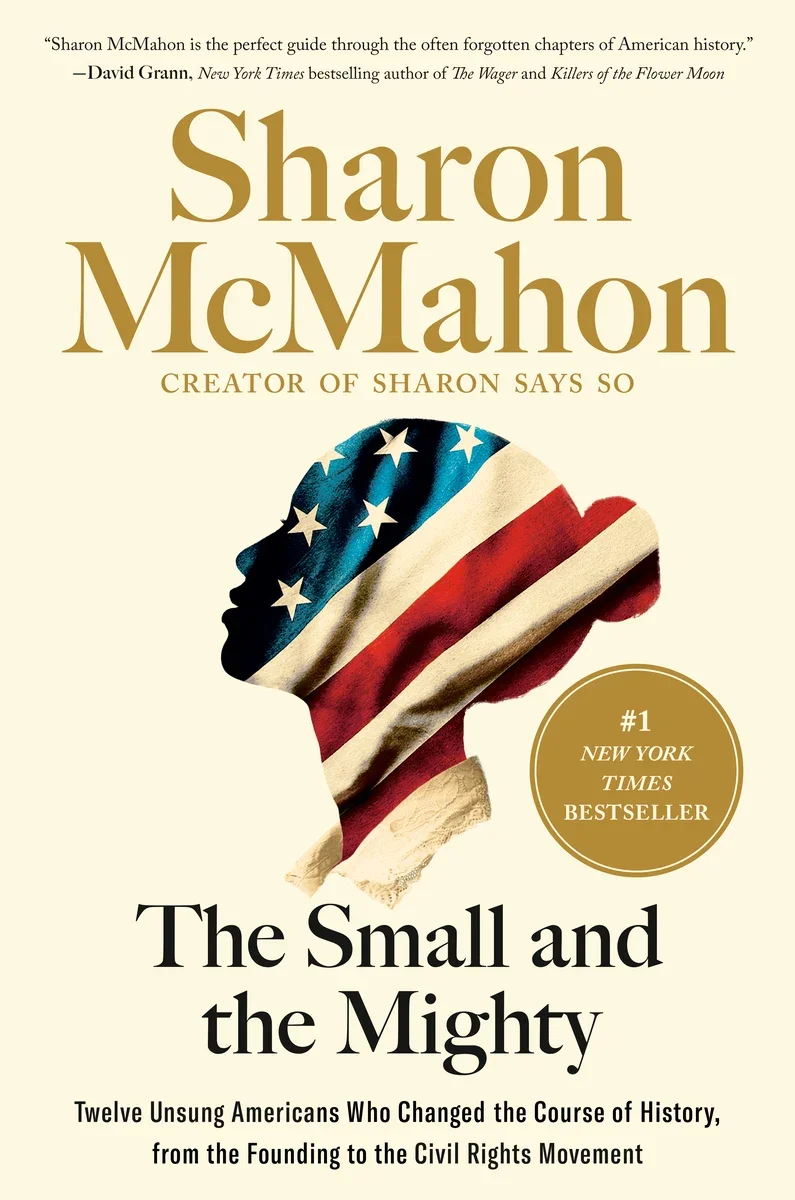
by Sharon McMahon
Sharon McMahon (aka "America's Government Teacher") uncovers the stories of twelve ordinary Americans whose courage and conviction shaped our nation's history—people whose names you won't find in textbooks but whose impact echoes through generations. This book is about rewriting the American narrative to include the voices that were left out, the small acts that created mighty change, and what it really means to be American. If you're grappling with what patriotism looks like right now, this is essential reading.
Resources
Watch:
Explore:
West Side Story - "America" - The 1961 film that wrestled with this narrative 70 years ago
Winter Olympics 2026 coverage
Context:
Puerto Rico became a U.S. territory in 1898
Puerto Ricans have been U.S. citizens since 1917
Levi Strauss: German-Jewish immigrant who founded Levi's in San Francisco



Three things I can’t stop thinking about this week: the Obama Presidential Center, an AI thriller that called this moment years early, and why Meta — of all companies — is the one giving me life right now.