
43. Voice Notes: Things That Matter - Catherine O'Hara, Mattering, and the Roseberrys
This week, I'm thinking about Catherine O'Hara, a conversation on Oprah's podcast, and the Roseberry siblings. The unexpected through-line? Performance versus being performative—and why some art sticks with us while everything else disappears.
What I explore:
Catherine O'Hara has this uniquely Canadian empathy in her comedy. She never fully makes fun of people—her characters are funny, but she's laughing with them, not at them. From Waiting for Guffman to A Mighty Wind to Moira Rose, there's an underlying humanity that makes her work endure. I didn't grow up with her in Home Alone, so my first encounter was watching Waiting for Guffman while living in Paris. There was something about how she made these characters so earnest and human—you're laughing, but you also feel seen. That's the brilliance of what she does.
Jennifer Breheny Wallace's new book "Mattering: The Secret to a Life of Deep Connection and Purpose" explores why we're struggling with meaning right now. The core insight from her conversation with Oprah: when our intrinsic values (internal meaning, connection, purpose) and extrinsic values (status, validation, external approval) are aligned, there's unstoppable coherence. When they're misaligned, we get chaos. Our motivation for what we do is fundamentally tied to how we treat other people. When extrinsic values dominate—which is what's happening in society—that's when we run into trouble.
The Roseberry siblings—Daniel (creative director of Schiaparelli) and Liz (jewelry designer in Austin)—represent what genuine creative partnership looks like. They operate in completely different worlds but are genuinely excited for each other. Liz is so personal and real on social media, talks about running a business, has a wonderful connection to her customers, and radiates genuine joy when she talks about her brother's work. She recently followed Daniel around Paris for the Schiaparelli haute couture shows, going behind the scenes. The show made me feel like I was seeing true art—Daniel is a complete artist whose work transcends fashion. Fashion hasn't inspired me in years, but this did.
When performance isn't performative—when genuine care and alignment drive the work—that's when art lands. That's what I'm looking for.
Listen to the full episode on your favorite podcast platform.
Subscribe and leave a quick rating or review if you enjoyed it.



“If we’re doing the work because it genuinely matters to us, if what we’re doing adds value and is rooted in kindness, and it’s not about external approval, that’s where the truth is.”
In This Episode, You'll Learn
Why Catherine O'Hara's comedy feels different—and what Canadian empathy has to do with it
The difference between intrinsic and extrinsic values, and why misalignment creates chaos
How the Roseberry siblings model genuine creative partnership across completely different industries
What makes some art stick with us while other work disappears
The distinction between performance (moving, authentic) and performative (hollow, for external approval)
Why making people feel like they matter is at the heart of great art
Transcript
-
There are three things in pop culture this week that I can't stop thinking about, and they have an unexpected through line. And it's really about the difference between performance and being performative. And I think once you see it, then you're going to understand a little bit why some art sticks with us and other stuff just disappears.
-
I couldn't let this week go by without talking about Catherine O'Hara. She has this uniquely, I feel Canadian, empathy in her comedy. She never fully really makes fun of people. She has genuinely funny characters, but she's never laughing at them. She's laughing with them.
And I didn't grow up with Catherine O'Hara in Home Alone like so many people. I had no idea who she was until I first saw her in Waiting for Guffman when I was living in Paris. And I remember seeing that and never having seen it, I just, there was something so unique about that. And so, I felt so seen, in a way, by that movie. They're so earnest and yes, you're laughing at them, but there's something so uniquely human and beautiful about these characters. And that's just beautiful and she was such a big part of that.
And then watching A Mighty Wind—if you haven't seen the clip of her singing with Eugene Levy "A Kiss at the End of the Rainbow" on social media this week, please go search that out. It's one just a beautiful song in general. I believe it won an Oscar. But to their performance is just so completely heartbreaking and funny and poignant it's the best of humanity.
Really, I can't think of anything better at this moment to watch, to kind of give your heart a hug. And then of course, who can forget Schitt's Creek? I mean, Moira is so theatrical and over the top, but there is this humanity that shines through in the ridiculousness that makes her so human and so understandable.
I think there's a reason why Moira as a meme has had such a big impact. It's really a testament to the way Catherine O'Hara portrayed her and how she imbued her with so many unique, very funny qualities that also make her completely endearing and you just want Moira in your life.
And I am going to very much miss the new things that Catherine O'Hara would bring to the table if she were still with us, but I'm very much going to continue to enjoy what she has brought to the table. And I really do feel like she's the embodiment of being aligned with what you're doing and who you are and being so clear, there's a kindness that shines through in her comedy, even though it's obscenely funny at times.
-
And that leads me to this next element. And I think what Catherine did with her characters is she made them matter, that it was so important. And they made us feel like we mattered in the way she portrayed them.
And Oprah's podcast this week. She had a journalist and New York Times bestselling author Jennifer Breheny Wallace, and her new book, Mattering, the Secret to a Life of Deep Connection and Purpose. And the thing is we're all searching for meaning and feeling like we matter and that's core to our survival as humans.
And I think so much of what we're struggling with as a nation, as a world with mental health is intrinsically tied to not feeling like we matter. And this book explores that. And one of the things, there was a clip that really stuck with me, is that there's a difference between our intrinsic values and our extrinsic values.
And it's when those values are aligned that there's an unstoppable coherence. And when they're misaligned, we focus more on this external validation, these extrinsic values like who has the bigger house or bank account or social media following. If those values and those things are not in line with the intrinsic values, those internal striving for meaning, then that disconnect is what's going to cause chaos.
And I think we're seeing that play out in real time with what's happening in the world. There is such an extreme disconnect between what we say we want and the values that we hold. And it's not until those values are aligned that we're going to find healing. And that's because our motivation for what we do is fundamentally tied to how we treat other people. It's when those extrinsic values dominate, like which is what's happening in society, that's when we really run into trouble.
And we can see it so clearly right now. And to me, that's the same thing as performance versus performative. A performance can be moving and breathtaking and make us see parts of ourselves that we never thought we could see. And I think that's what Catherine O'Hara did.
And then there's performative, which a lot of people would think a character like Moira Rose is performative. But because Catherine O'Hara gave us performance, we feel the humanity. And I think if we're doing the work because it genuinely matters to us, if what we're doing adds value and is rooted in kindness, and it's not about external approval, that's where the truth is.
-
And then I... this last one kind of surprised me. I have been following these two people for a while on just their careers, but fashion, I will be honest, has not inspired me for a very long time. I felt very bored by it. Even though it's what I do every day, I help people get dressed. Fashion itself as an industry has just kind of, I just don't, it's not for me right now.
But there's two people who I can't stop following and that is Daniel Roseberry and his sister Liz Roseberry Fox. And so if you don't know who Daniel is he is the creative director of Schiaparelli in Paris and his sister Liz is based in Austin and is a jewelry designer. In fact, she's very specifically an earring designer that's what she does right now she designs earrings.
And the talent runs obviously so deep in the family. If you follow Liz on social media, she's very active. Daniel is not, except for if you watch the Schiaparelli main accounts, but she is so personal and so real and she talks about running a business and she has such a wonderful connection to her customers, but she also loves and appreciates her brother so much and she's just so genuinely excited for him and so grateful that she gets to, you know, wear his clothes or borrow them for events or like for a wedding and there's just a genuine joy that radiates from the way she talks about not only her work, but his work.
And she was recently in Paris for the Schiaparelli haute couture shows. And she followed Daniel around for the first time and went behind the scenes of how the clothes were made. And it was just the most heartwarming and inspiring thing. The Schiaparelli show is probably one of the few shows that has made me feel like, wow, this is something happening. That is true art. I feel like Daniel is just a complete artist and it transcends fashion and it's genuinely exciting. Whereas I feel like there's so many other brands that make pretty clothes, but it's not that exciting.
-
So those are the three things this week that are making me think in pop culture. So let me know, like, do you have favorite memories or performances of Catherine O'Hara? Like share them because I feel like we need more Catherine O'Hara's in our life.
This world is so heavy and being able to laugh is gonna be one of the things that helps bring us together as is art. You know, when we see actual beautiful art and people creating it and finding joy in creating that art. And when all of that is truly aligned with genuine care and kindness and making people feel like they matter, that is what's getting me through the week. So let me know.
Know someone who needs a reminder that kindness and humanity can coexist with excellence? Send them this episode.
Key takeaways
1. Empathy doesn't diminish comedy—it deepens it. Catherine O'Hara never laughs AT her characters. She laughs WITH them. That's why we feel seen rather than mocked, and why her work endures.
2. Alignment between intrinsic and extrinsic values creates unstoppable coherence. When what you value internally (meaning, purpose, connection) matches what you're pursuing externally (status, recognition, achievement), you find flow. When they're misaligned, you get chaos and burnout.
3. Genuine excitement for others' success is rare—and magnetic. The Roseberry siblings operate in completely different creative worlds but are authentically thrilled for each other. That generosity of spirit makes their individual work even more compelling.
4. Art that matters comes from genuine care, not external approval. Performance (authentic expression) connects. Performative (doing it for validation) falls flat. The difference is intention and alignment.
5. Finding what inspires you matters—even if it's been missing for years. Fashion hadn't inspired me in a long time. Watching Daniel Roseberry's work and his relationship with his sister reignited something. Sometimes you need to wait for the right thing to spark that feeling again.
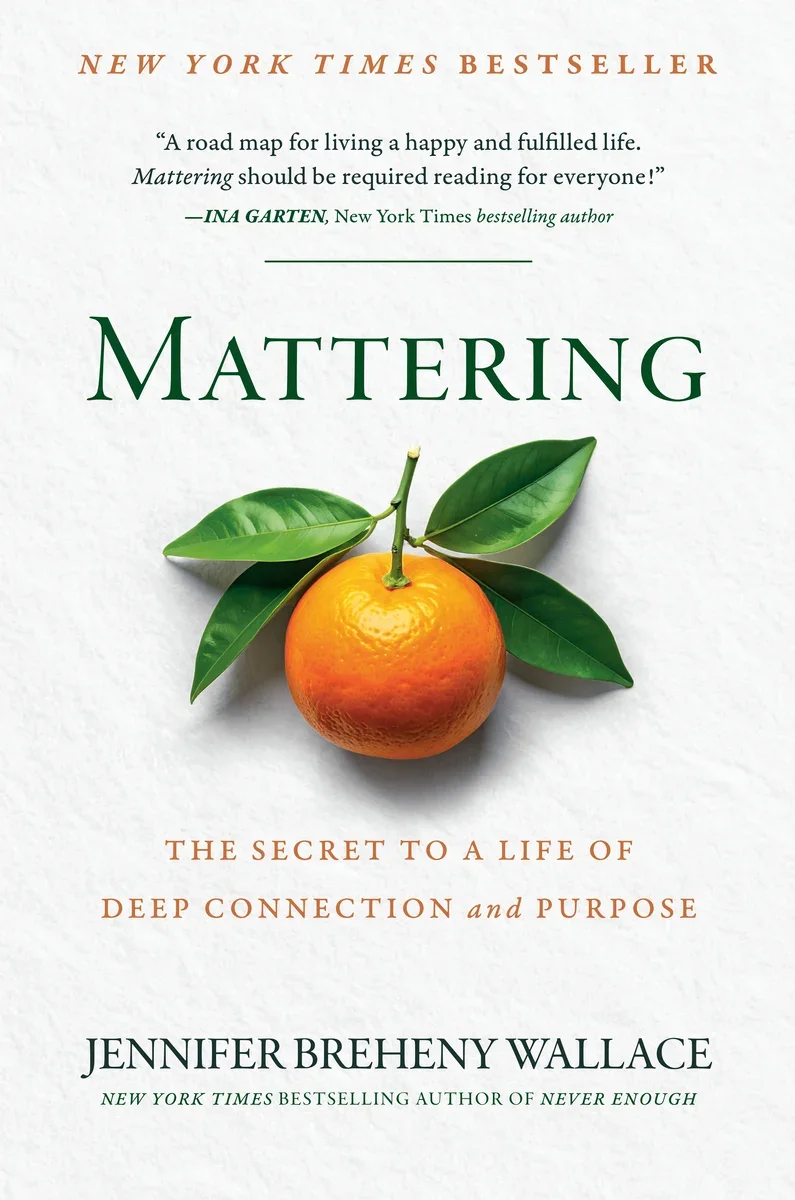
by Jennifer Breheny Wallace
We all want to feel like we matter—to be valued for who we are and to know we're making a difference. But when our intrinsic values (meaning, connection, purpose) become misaligned with our extrinsic values (status, achievement, external approval), we experience profound disconnection and chaos. Jennifer Breheny Wallace explores how building our "mattering core"—feeling recognized, relied upon, prioritized, and truly known—helps us reconnect to purpose, deepen relationships, and navigate uncertainty with resilience. In a world struggling with loneliness and burnout, Mattering offers both diagnosis and remedy for restoring what makes us feel alive.
Resources
Watch/Listen:
Catherine O'Hara & Eugene Levy - "A Kiss at the End of the Rainbow" (from A Mighty Wind)
Explore:
Schiaparelli Official - Daniel Roseberry's haute couture work
Liz Roseberry Fox - Follow her jewelry design journey on Instagram
If You Enjoyed This Episode:
Waiting for Guffman (1996) - Christopher Guest film
A Mighty Wind (2003) - Christopher Guest film
Schitt's Creek (2015-2020) - Full series




Three things I can’t stop thinking about this week: the Obama Presidential Center, an AI thriller that called this moment years early, and why Meta — of all companies — is the one giving me life right now.