Your Paris is your permission slip. Everyone has a Paris. At least I think they should.
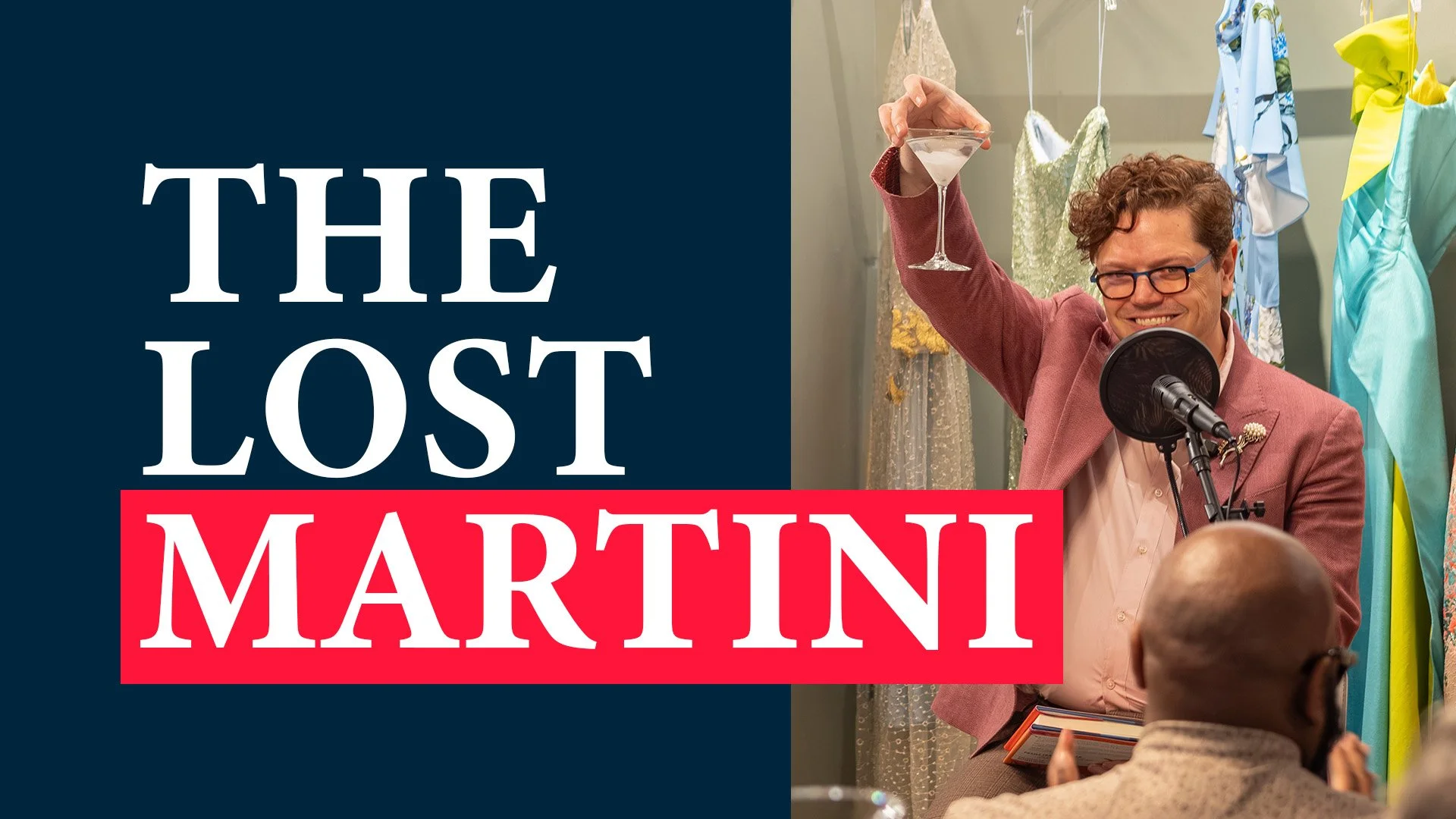
The short version: this is the live recording of my ARTful book launch on November 11, where I read the bonus chapter, Paris Is Always a Good Idea, and then took questions from the audience. I wanted to share such a special night with the people who were not able to make it in person. So many of my closest friends are scattered across the globe, and I want you to walk away with a feeling of having been there in the room where it happened. What are the moments or places or rituals that bring us back to ourselves?
Listen to the full episode on your favorite podcast platform.
Subscribe and leave a quick rating or review if you enjoyed it.



“Your Paris is your permission slip. And maybe your Paris is wrong. Maybe it’s not a city at all.”
In This Episode, You'll Learn
Why my first apartment in Paris was anything but glamorous
The search for the perfect martini, and why Bar Hemingway is my favorite bar in the entire world
What years of American and British flatmates taught me about empathy (and rinsing dishes)
How to live like a stranger in your own city
Why everyone needs a Paris, even if it isn't a city at all
How one line in the book turned into a Paris Fashion Week trip with eight clients
From the Q&A: why fashion design, why I left Paris, how I wrote ARTful in nine months, and how I fell in love with color
Transcript
-
Your Paris is your permission slip. And maybe your Paris is wrong. Maybe it's not a city at all.
-
Thank you, everybody, for coming. Everyone get a drink. So if you tried the martini, it's our attempt at trying to recreate my favorite martini from Bar Hemingway in Paris. I don't know if it's quite up to par, but you know, it's not Paris, so how could it be? But thank you all so much for coming and being a part of this evening. I am so excited for you to be here. If you, I don't know you, but I think I do know everybody. My name is David. My name's on the door. If you wandered in here and you don't know where you are, I'm so sorry. But this is my first book, ARTful, and I'm very excited to share it. It's been nine months, so I will not equate it to childbirth, because I don't think it's quite the same amount of pain. But it has been a labor of love. And it's really sort of a little bit of memoir, a little bit of self-help, a little bit of humorous stories about how I've gotten to live this crazy, artful life that I live. And I want to read the bonus chapter of this book for you this evening, because it was something that didn't quite fit into the body of the book, but I couldn't quite leave it out. So it is called Paris Is Always a Good Idea.
-
Audrey Hepburn supposedly said, "Paris is always a good idea," in the classic film Sabrina. But it was actually Julia Ormond in the 1995 remake. Details. But what Hepburn actually said in the 1954 original is just as applicable.
[Clip: Sabrina (1954)]
Few places on earth have genuinely captured my heart. Period. And none like Paris. It's been over twenty years since I first said bonjour to Paris, and over fifteen since I said au revoir, and it still feels like home. It's not a vacation destination. I stopped being a tourist there a long time ago. It's a city that shaped me and reveals new depths every time I go back. Less somewhere I visit, more somewhere I return.
-
How it started. Lest you think my first apartment in Paris was glamorous, let me reassure you it was anything but. Located in a lovely neighborhood, very residential, upper middle class, in the 17th arrondissement, to be exact, I knew it would be safe. Back before normal people had Airbnb or rented apartments online, I rented an apartment online because it fit my very limited budget. It was on the sixth floor French, seventh floor American, and a walk-up. I walked up those seven flights of stairs multiple times a day to my eight-by-ten-foot flat, très tiny, with a mezzanine bed, a shower beside the bed, a hot plate, and a tiny toilet tucked in a bit of hall. Not just any toilet, an electric toilet. Let's just say I had adventures with that electric toilet when the power failed. Oh là là. My apartment didn't feel like home, but I knew that Paris was. Three months later, instead of the six I originally intended, I moved out of the apartment to Courbevoie, a lovely little French village still in the metro area and on the train line, where I had a proper home for the next four years.
-
Hemingway's Paris. Once I settled in, I began a search for the perfect martini. This is what happens when you decide to watch every Bond film in order. Just a side note, I just started doing this with Miles, my oldest son, and it hits the spot. But a martini, especially in the style of Bond, my preferred variation, is not a French thing. The French will attempt to serve you a martini, vermouth over ice, and I have never been more disappointed. It appeared my search was in vain, until fate smiled upon me and I visited Bar Hemingway on later travels to Paris. It is my favorite bar in the entire world. Not because it's at the Ritz and I'm bougie like that, but because it's small, unpretentious, unassuming, and perfect. Bar Hemingway at the Ritz is a study in contrast, as is most of my personality. Expensive tastes and not a lot to prove. An unassuming bar at one of the fanciest places in Paris is me in a nutshell, or a stuffed olive. At Bar Hemingway, you can hear yourself think. You can actually have a conversation. Not too loud, not too bright, not too dark. The lighting alone is a masterclass in intention. There, I discovered the Ritz martini. Ordering one at Bar Hemingway became my ritual every single time I visited Paris. The martini itself: gin, not watered down, chipped ice, perfect frozen olives. A revelation. You can, or should, only have one. Before you book your plane ticket, though, I warn you. The Ritz martini has become an elusive white whale, mixing my authors more than my drinks, but you get it. The bartender who created that sublime cocktail retired and apparently took the recipe with him. Even though it wasn't on the menu any longer, for years they were still able to recreate it. The last time I was there, a willing bartender made two attempts. Neither was quite right. The ingredients for the perfect frozen olives are apparently no longer available. The ratio of chipped ice diluted the strength of the drink. It's not the drink I remembered or loved. I fear the art may be lost forever. I will be back, and I will try again, because Bar Hemingway is still Bar Hemingway, even when the martini that helped define it for me has changed. So many formative memories happened over that cocktail. The bar is the world that held them. This is what curated travel actually is. Not the destination, not the itinerary. It's Bar Hemingway, the ritual you return to, the specific thing that makes a place yours rather than everyone else's postcard. And one day, I will figure out how that martini was made.
-
Transportation, transformation. Travel makes us more empathetic because we encounter places that challenge our ideas of living. My second apartment in Paris, in Courbevoie, was about 600 square feet, and I shared it with two or three flatmates at any given time. I had never lived with anyone outside my immediate family, except for two summers at the Aspen Music Festival. We came from different cultures, sharing a small living space with different expectations of what home meant or needed to feel like. Most of us were American or British, which may sound like no gap at all, but there was a giant pond between us. By the end of my time with them, I no longer vacuumed, I hoovered. I took out the rubbish and emptied the bin. The one thing we would never see eye to eye on is whether dishes must be rinsed after they are washed. Americans are firmly in the camp of yes, you rinse off the soap. The British, not so much. We often hear about people who are changed when they travel to impoverished parts of the world. They come back with a completely new outlook and an increased desire to make the world a better place. Those experiences are valid and earn their place in any conversation about travel, but it's equally important to understand how travel on any scale, even closer to home, can make us think differently about the way we live. If you grew up in a rural area and you've never been to New York City without the specific idea of seeing a Broadway show, maybe it's time to take that trip with a different idea in mind. The idea of really getting to know what makes the greatest city in the world, quote unquote. It doesn't have to become your Paris. But I know so many people who value rural life, great, beautiful, and then dismiss New York as too big, unfriendly, and dirty. Have they explored Brooklyn or Queens? Have they seen how real New Yorkers live? Not just the Times Square and Statue of Liberty highlight reel. And it works the other way. I know just as many people who can't imagine why anyone would live somewhere without a direct flight. Have they ever spent a week somewhere quiet enough to hear themselves, where the neighbors know a little too much about everyone's life, in the most charming way possible? Maybe rent a house in a quiet neighborhood with a coffee shop where you can talk to locals. And if you're going to Paris, find a neighborhood where you can rent an apartment and pretend like you live there for the week. Walk to the boulangerie, go grocery shopping, experience real life. But believe me, there's nothing wrong with staying at the Ritz either.
-
Live like a stranger. Here's an exercise worth trying: look at wherever you live as if you've never been there before. Think about all the touristy, big things that are available. Great. We love them. Now think about what it's like to live where you live. Think about why you've chosen to stay, all the little things that make it worthwhile. The quirky little restaurant run by the couple who immigrated from Honduras. The boutique that carries all the curiosities you could ever possibly hope to find. The local jewelry designer whose pieces you could wear instead of, or stacked with, your Cartier. These are the types of things that make your life rich and exciting. So when you travel, why wouldn't you look for those as well? Travel is a gateway that opens the mind to possibility. The possibilities that the rhythms of life, the way we view life, can be equally valid, even if they're extremely different from what we experience in our own day-to-day. I don't expect that everyone who goes to the big city or travels to the countryside will want to uproot their life. But when you've really experienced a different way of life, it makes you think twice the next time you hear a news story about that place you visited, or see a disparaging post about a marginalized group on social media. You'll have a little more empathy and understanding. You'll know that a different approach isn't inherently wrong. It's just different.
-
À la prochaine. Paris is always a good idea. And I don't mean the literal Paris. Maybe you're not obsessed with the City of Light as I am, but everyone has a Paris. At least I think they should. Your Paris is your permission slip. And maybe your Paris is wrong. Maybe it's not a city at all. Maybe it's the little coffee shop around the corner where everyone knows your name. Or maybe it's a library stuffed with stacks and stacks of books that makes you feel like you've stepped into the Beast's castle, all rolling ladders and leather-bound volumes. Whatever it is, it's your job to find it. You've got to find the place that makes you feel alive. Where is your Bar Hemingway? Or your Paris, for that matter? Have you invested some time to figure out where that is for you? Identify the places that refresh your soul and make you want to explore your creative life. Find spaces that get you excited to get away from the day-to-day, the quotidian, if you will. It's important to have as many Parises as you feel comfortable holding, whether they're aspirational destinations you visit once every few years, or maybe only once in a lifetime. And it's equally important to have those places that feel like a return to yourself, not just a destination or a vacation. The coffee shop that feels like home. The destination that's an easy drive for a day trip. Don't underestimate how much travel can fuel how we grow, both personally and professionally.
-
Somewhere in the middle of all those trips back to Bar Hemingway, all those returns to the city I love, I started assembling a new dream. What if I could share those places I love with others? More than an itinerary: designed, deliberately built travel. An early version of this idea was to open boutique hotels that offer curated experiences. Now that I've thought about all the crazy things that happen in hotels, I'm not quite sure. I'm not ready to start building hotels, but I'm in the Assemble phase of that idea. Gathering it, putting it out into the world, seeing what sticks. Sharing the places I love, in person, with the people who want to design a life they love. That seemed like a good place to start. Now it's on the books. By the time you read this, I'll have already done it for the first time. Eight clients, Paris Fashion Week. There's talk of another Paris trip and a tour of Italy, which, Patty, you'll have to read the rest of the book to find out who Patty is.
-
What it predicted. The ART method applies to how you travel, just as it applies to how you dress or how you design your home. Assemble the places that stop you, the highlight reel and the hidden gems both. Refine toward the ones that keep revealing more. Try the ones slightly outside your comfort zone. Return to the ones that become yours. I'm apparently taking my own advice. Find your Paris, and when you do, I'm pretty sure the creative life that you've been searching for will find you too. Cheers.
-
David: Cool. So now it's time for audience questions, but I have a question. Has anybody been to Bar Hemingway besides me? Okay. I would hope. Yeah, well, Elaine counts. Grant, can you take the mic? If anybody has questions, we have the mic because we're recording, so hopefully it records. We tested this earlier, and sometimes Mercury is in retrograde and we have tech issues. So if anybody has questions about anything, life, general, the book. Monica has a question.
Monica: Not a question, more of a... So when you started talking about Paris, I thought you were gonna tell the story about Michelle.
David: Well, that is a big part of the story.
Monica: Sorry. I just clarified why I said that.
David: No, it is. That's where Michelle and I met. Yeah. Not so Texan, sorry.
-
Audience: So why fashion design?
David: Why fashion design? That's a very good question, and I wish I had a direct answer. I was always very, very creative, but I never knew how to channel that creativity. And somehow in high school, I really thought I was going to be a writer. I wanted to go to school for English and graphic design, and I thought I would either be a journalist or go into advertising. But then I ended up getting a scholarship to study cello, and so I ended up doing that. I talk about that a lot, actually, in the book. So if you're really interested and you want the full story, the story of how I got to Paris and to fashion design is in there. But I decided, by the time I was finishing my degree, I didn't want to be a musician. And I had been working for Ralph Lauren at the time and ended up in visual merchandising, and I had some friends who said, "Why aren't you doing something with design?" And I was like, I don't know, let me move to Paris and try.
Audience: True Renaissance man.
Audience: We know that you can write books.
David: Thank you. All right, Grant.
-
Audience: Why did you leave Paris?
David: That is a very good question. Life circumstances. We were getting married. Michelle's mom had been ill. And I think we both knew at a certain point that we had never intended to stay forever, and we were gonna have to move back eventually. And it's, you know, tricky being an expat. In hindsight, when you're older, you're like, wow, it could have been the opportunity to stay. And, you know, I have friends who did, and now they're French citizens and own coffee shops and bike tour companies, and that's very cool. But I think at the time it felt like the best decision, for many reasons, to come back. Houston needed to be a thing.
-
David: I'll just tilt myself. I'm a little crooked anyway.
Audience: True confession, I have not made it to the end of the book yet. So the line "Paris is your permission slip" just really, really struck me. And it makes me think, what else do we need permission for? We can apply that in so many ways. So what else do you want to apply that to? Because I'm sitting here thinking of all the ways that I'm limiting myself without a permission slip.
David: I think that's the whole point of the book, really, is that I think so many of us, not through anyone's fault, have been handed identities that aren't completely our own. Whether that's your community, the religion you grew up in, whether it's even the school environment where maybe there were expectations of you, or even expectations that we put on ourselves just because we're human. And I think our goal in life, I feel, because I think all of us have a trapped creative inside of us, is to find ways to unleash that. And I think for some of us it's harder than others. I think some people appear to be very creative, but then they're limited by... there's always something that limits us. And it's finding really small moments and, for me, places that help to unlock that creativity. The big idea in the book is edits, not overhauls. So I think a lot of times we feel like we've gotta blow up our life in order to create something new. And in fact, my podcast episode that just launched today is all about how small little habits and incremental changes are the things that actually stick and actually cause the most lasting change. And that's really what the book is. It's not, you must do this in order to have a creative and fulfilling life. It's, what are the small, maybe little ways that you've overlooked that can help you unlock that creativity within yourself, and give yourself that permission to be who you want to be in this world, not something that was handed to you.
-
Audience: It may be in the book, but what are the places in Houston that unlock your creativity?
David: That's a really good question. I feel like I don't make it there as often as I would like. I shouldn't say should, as much as I would like. I think the Menil Collection and the Rothko Chapel are both... When I first came to Houston, I honestly did not want to come to Houston. Michelle, when she told me, when we lived in Paris, that she'd always imagined going back to Houston, I was like, that's so nice for you. That's never happening. Cool. But when we came, one of the first places she took me, I think, was the Menil. And it really impressed me that there was not only a building that was dedicated to art that was so thoughtful, but that a family had dedicated so much of their life to curating a really immersive experience, and not just traditional classical art, but modern and contemporary art. And they thought about the environment just as much as the art itself, and then also worked with Rothko to create a chapel so that people of all faiths and beliefs could experience the divine. And for me, that felt like a revelation. So that's probably the one place. And TUTS. As a board member, I have to say that. But it is true. It's true. Well, I think the things that inspire me the most are when I see people on every level, whether it's professional or amateur, attempting to create something artistic. It always chokes me up. I cry very easily, some might say too easily. But that's what really gets me, is when I see people really trying to create something beautiful out of nothing.
-
Monica: I'm arranging to have a signed book. I have to run, but this was wonderful.
David: Thank you for coming. Thank you, Monica.
Elaine: Oh, David, I haven't read the book.
David: How dare you, Elaine!
Elaine: I'm here tonight to get it. But just hearing what you just said at the end, I've always admired how open and vulnerable you are about the gateways toward your creativity, like what allowed you that window in Paris. You know, I feel like I've kind of fallen in love with Paris, because you're one of my dear friends and I listen to all your stuff. But what's interesting is, number one, I wanted to ask you or encourage you, and you might already do this, which I'm going to find out right now, but I would love to go to Paris with you and experience Paris through your eyes. So do you ever do, like, retreats?
David: It's funny you should ask. It's like you were leading the witness.
Elaine: Well, I just recently went on a retreat.
David: Yeah. I saw that. It looked amazing.
Elaine: And the whole time I'm thinking about you, and I'm going to have a conversation with David to hook up with this retreat company and do a Paris trip through the eyes of fashion. Fashion, all that. And anyway, I was gonna talk to you about that tonight.
David: No, but that's actually perfect. Okay, so this is a perfect segue. So I just got back from Paris at the end of September. Jill Reno, who was here earlier, she's a local jewelry designer. She does really beautiful high-end jewelry. We took eight of our mutual clients to Paris for Fashion Week. And we did an immersive experience where we did private dinners. We had a private tour at Versailles. We went to the Moulin Rouge, and then the next day we had lunch with one of the dancers, Allie Goodbun. She's on the podcast, another shameless podcast plug. We went to two fashion shows. We had a dinner cruise on the Seine. So yes, it is very much a part of my plan to do that. And in fact, we're working on a trip to Italy, dates to be determined, where we will do Rome, Milan, and Florence, with a day trip to Solomeo, which is Brunello Cucinelli's little village, where they make everything. But looking at it through the idea of art, fashion, and designing a life that you love.
Elaine: Oh my gosh, I can hold that up in this hand. Okay.
David: Olivia, add her to the list.
David: But no, it's funny. So when I first wrote the Paris Is Always a Good Idea chapter, I was talking about that idea of sharing places I love with people. And I said, don't be surprised if, by the time I publish this book, I find a way to do it. And it literally came out of the blue, like four weeks before we left for Paris. It was this crazy opportunity. I think Jill told me about it on a Monday. We had it all planned by Tuesday, and by Thursday we had eight people signed up and paid and booked. It was nuts. So it literally happened so quickly. And then it was like, okay, well, this is a thing. So now I need to do Paris again. We need to do Italy. But what's funny is, the preface to this book is that I was actually writing another book. If anybody is familiar with David Sedaris, he's one of my favorite authors of all time, and I discovered him while living in Paris, Me Talk Pretty One Day. And that book is a collection of humorous short stories about my life, and especially living in Paris. And in the intro, I had said, I don't have a framework of how to live a life you love or whatever, but if by the time you read this book I've discovered one, don't be surprised. And that's where this came from. So yeah.
-
David: Any other questions? Olivia was doing this, but is that a question? You have the microphone. You can ask a question.
Olivia: About the writing process. What was the most challenging part about writing this book? And maybe what was your favorite part about writing the book?
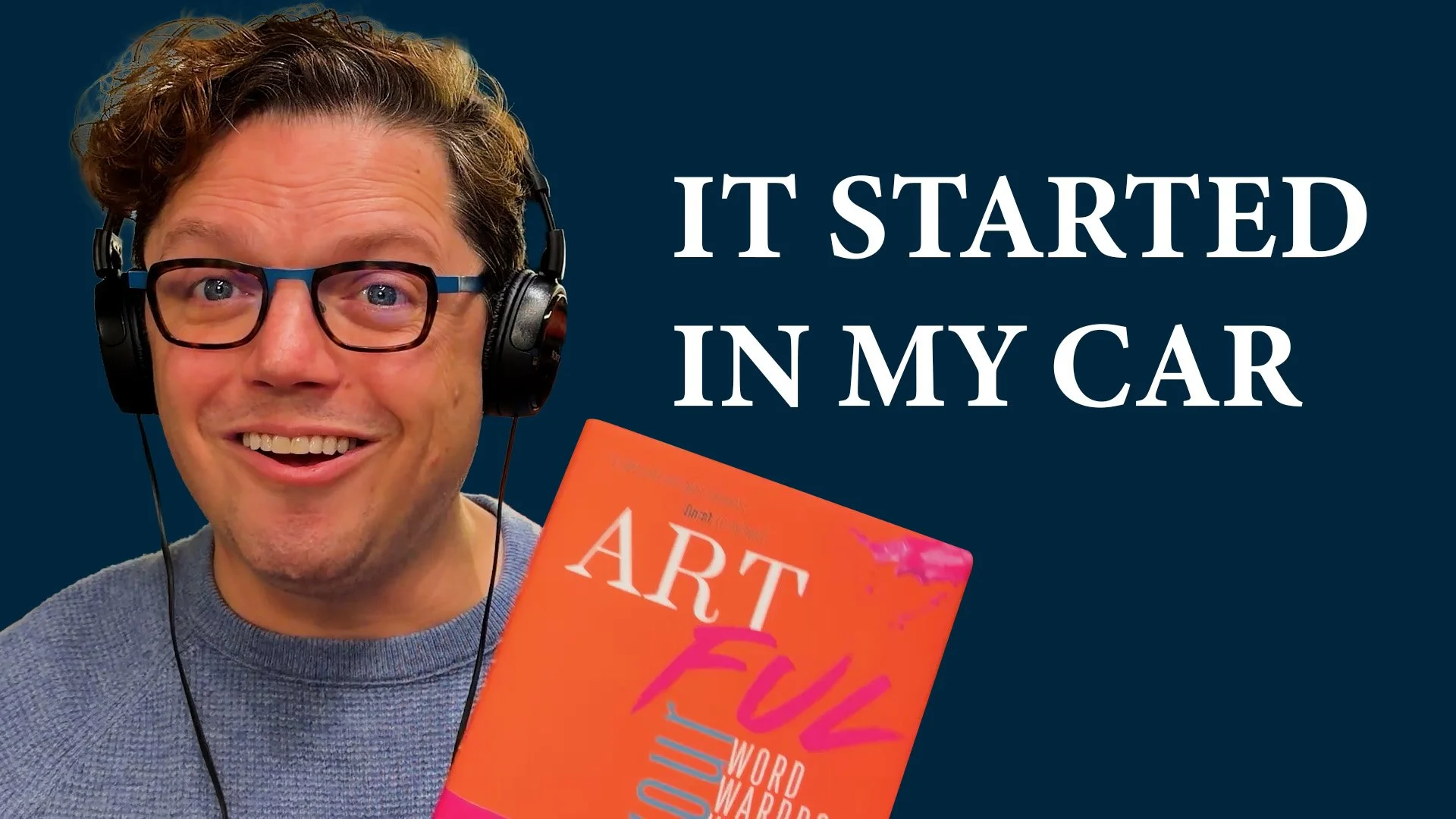
David: I think my favorite part of writing the book was figuring out how to do it. So I've been working with somebody for the past year or so, and she has this whole idea of thought leadership, for people who want to write books and speak and all of that. And she has these archetypes, and one of them is called the Resonant Orator. And Resonant Orators basically speak everything that they think into existence. And so a lot of times, and I know it's very frustrating for Michelle sometimes, she's like, "But you never told me that." And I'm like, well, I didn't know it until I said it. It was all in there, and I didn't realize I thought that until I actually said it. So one of the things that I discovered working with Macy was that I could speak things more easily into existence than sitting down and writing. And so I found little moments, like in the car, to leave myself voice memos, and then I transcribed them. So that was the easiest part and the most fun part, because I discovered a way to get the ideas out of my head that didn't require large chunks of time where I had to sit and stare at a computer, which makes me go to sleep often. The most challenging part, I think, was once I had all of those ideas, assembling them into something that was really coherent and had structure. And so the editing part of the book was really a challenge, in a really good way. But I worked with an amazing editor who was able to look at it from an outside perspective. She had no idea who I was or what I did, but she's very thoughtful about how to structure the book, and what parts could be moved here or there, or, can you strengthen this idea, or does this story really illustrate what you're trying to say? So that part was challenging, but it was also really fun. I feel like I learned the most about being a writer through that process, the editing process, refining all of that stuff. And in case I didn't say, ART stands for Assemble, Refine, Try. So my whole premise is that you assemble a lot of stuff in your life that may seem random, and then you start refining them, and then our job is to try it. So the book was an exercise in ART.
-
Audience: How long did it take you?
David: How long? That's a very good question. So nine months, from start to finish, which is absurd. I mean, I had a lot of the ideas in my head before then, but I had done a podcast episode, like I do every year, about choosing a word of the year, and I decided I should make a workbook for people so that they can do that themselves. And so I wrote the workbook, and in the process of doing the workbook, I was like, this could also apply to how people dress themselves, or how they live their lives, or the world that's around them. And then, I don't know, it was like a week, I was like, I'm writing a book. And then I just started writing the book.
Audience: Fascinating.
David: And he's out. Anyone else? Yes.
Audience: No, go right ahead.
-
Audience: Remind us your word for this year. And also, do you speak French? Because I've never heard you speak it.
David: My French is very rusty. So I moved to France not speaking French at all, and then I went to an American school. So it's very hard to learn French when you're in an American school. And so I didn't take any French classes until my third year. But then, by the time I left, I was working in French. The job I was supposed to get was supposed to be in English, and then they started hiring a lot of French people, and so I sort of had to learn really quickly. So I had very technical vocabulary. If you asked me to have a conversation about French politics, I'm like, what? But I learned things in French that, when I came back to the States, I felt really pretentious, because I'm like, I don't know what this is called in English. In France, we call it this. So that was that. And then what was the other question? My word. My word of the year for this year was amplify. And I'm always interested to see how it shows up. And I think writing this book was really an exercise in putting, not all of my thoughts, because I have way too many in there, some of them very scary, into something people could read. And the fact that we're selling books, I mean, it's an exercise in amplify, kind of coming to fruition.
-
David: Lola.
Lola: What advice do you have for someone who has just graduated college, starting her first career, her first job in fashion?
David: I think you should find a really cool designer who has just written a book, and you should learn everything you possibly can from them. That's what you should do.
Audience: Do everything he says. And don't question. Just do.
David: No, I think it's so important. I think I was always very entrepreneurial in nature, even though I didn't know to call it entrepreneurial. I just was. I always had these ideas. And it was really important for me. When I worked in Paris, I worked for a really large company when I was still in school, Paco Rabanne, and we would do these big runway shows. And actually, it made me think about it today, because I was reading, I think it was in Vogue, and Caroline Trentini, who was a model at the time that I got to work with on her first runway show, it was pretty cool. But the stylist that we worked with, Brana Wolf, was recently in this Vogue article, because the new governor of Iowa was a male model at the same time, and he had done this photo shoot in Bazaar, and Brana Wolf had styled it. And so it was making me think of living in Paris at that time. Anyway, so I worked for a large company that had all the resources to do a show. And then I worked for a very, very small designer, kind of like us, who was going through this process of getting investors and trying to figure out how to grow the business. And being a part of a very, very small team taught me so much. And I think having both of those experiences was invaluable. I didn't need to be there for years and years at the larger company, but understanding what was possible, what happened on one side of the fashion industry, and then also having the reality of a small designer who was struggling to keep it all together, was such a great learning lesson. And I've learned so much since then. But having a variety of different experiences, and always saying yes. When I was living in Paris, I costumed films, I worked for designers, I did a lot of freelance stuff. Getting as much experience as I possibly could, because you never know what's gonna stick.
-
David: Cool. Yes.
Audience: I love your use of color. So was that natural, I guess, the talent that you have to incorporate color in all of your work, or did you have to slowly acquire the skill of incorporating color into all of your design?
David: That's a really good question. I think I've always loved color. I don't know that I always had the most sophisticated use of color. I also grew up in New Mexico and Colorado, which are not necessarily known for their cutting-edge design sensibilities. I mean, New Mexico maybe more so than Colorado. All of the Native American designs are really beautiful, and it actually became very inspiring later. But what's funny is, when I was a musician, for the first couple of years that I was a cellist, my nickname, strangely, was Prada Model, because I only wore black, gray, and white. I wore no color at all, and everything was very minimal. It was the height of the '90s, like '97, Gwyneth Paltrow, Calvin Klein. I was very much into that moment of minimalism. But I worked at Ralph Lauren, so the work I was doing, I was doing all kinds of crazy things, mixing and matching prints and plaids and stripes. So I think I had a little bit of both. But then my first summer at the Aspen Music Festival, I had always wanted to dye my hair, and I came back with very, very bleach-blond hair that I tried to convince my dad was natural. It was in the sun a lot. He was not so happy about that. But it was '99, so it was the beginning of the Backstreet Boys and *NSYNC era. I was very cutting-edge. But then I started wearing really bright orange, like this color, pants and stuff. And so then I never looked back. And then my cello case was bright yellow. So yeah, I think once I discovered color, I was like, black is so boring. And now I'm kind of allergic to it.
-
Cool. Well, thank you all so much for coming and for being a part of this. Thank you all for supporting in so many different ways. You can get the book if you don't have it already. Happy to sign it if you would like. And then the podcast episode today, it's very short, it's like seven minutes, but it's really about how Atomic Habits, if anybody has read that book, kind of influenced how I wrote, in a way that I didn't really fully understand at the time. So yeah. Thank you.
And there you have it, another episode of Inside the Design Studio in the books. If you enjoyed this exploration of life's design, hit that subscribe button so you never miss an episode. And hey, if you're feeling extra generous, leave us a review. Your thoughts fuel our creative journey. I'm David Peck, your design companion on this adventure. Until next time, keep crafting a life that's as captivating as your favorite masterpiece.
Know somebody who might be inspired to find their own Paris? Send them this episode.
Key takeaways
Your Paris is your permission slip. And maybe your Paris is not a city at all.
Travel makes us more empathetic because we encounter places that challenge our ideas of living.
Look at wherever you live as if you've never been there before, then look for those same little things when you travel.
A different approach isn't inherently wrong. It's just different.
Assemble the places that stop you. Refine towards the ones that keep revealing more. Try the ones slightly outside your comfort zone.
Small little habits and incremental changes are the things that actually stick.
Always say yes, because you never know what's gonna stick.
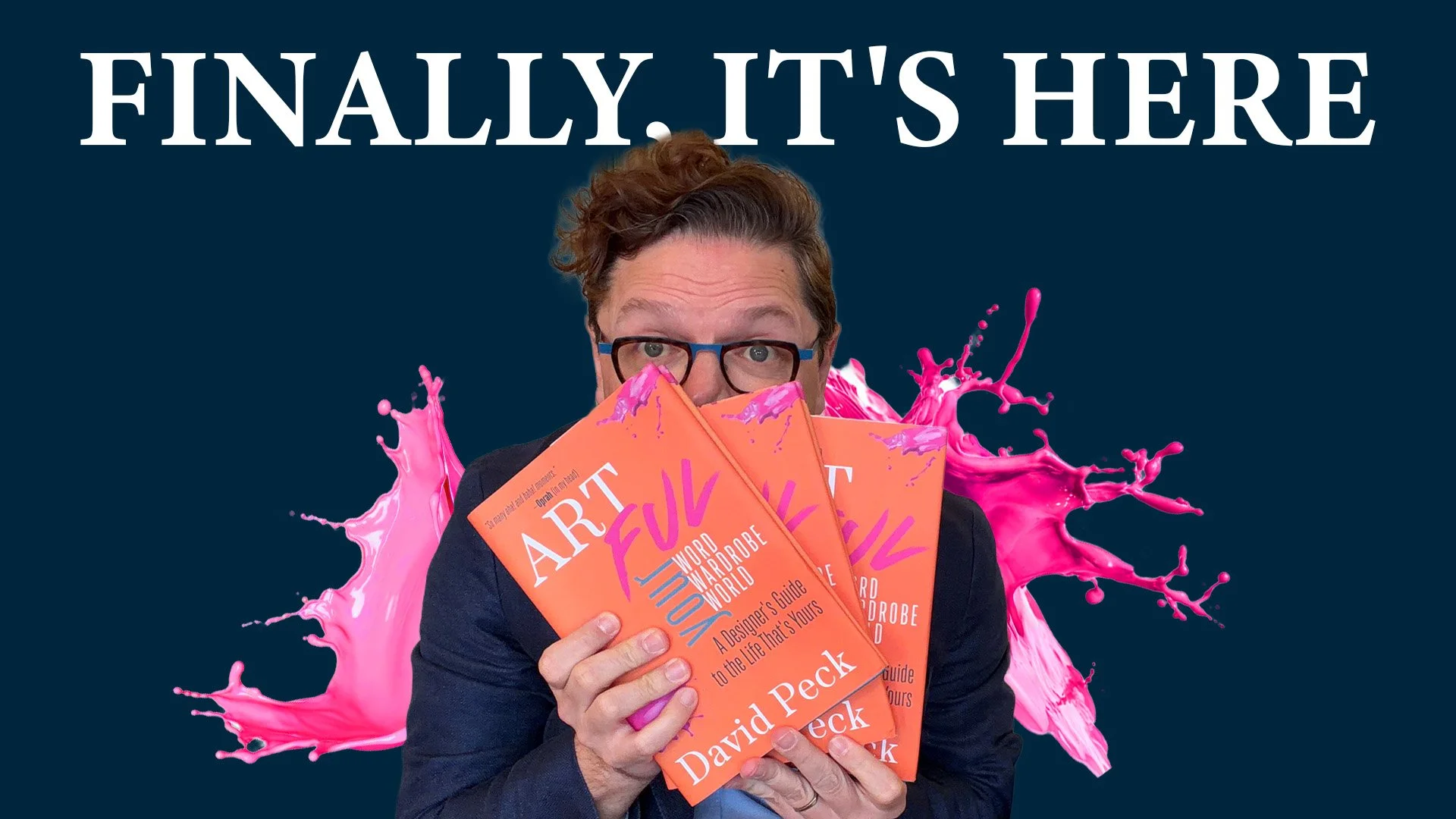
Get your signed copy of ARTful at davidpeck.co/artful
If you're interested in Italy, let me know. Send me a DM and I'll get you on the list.
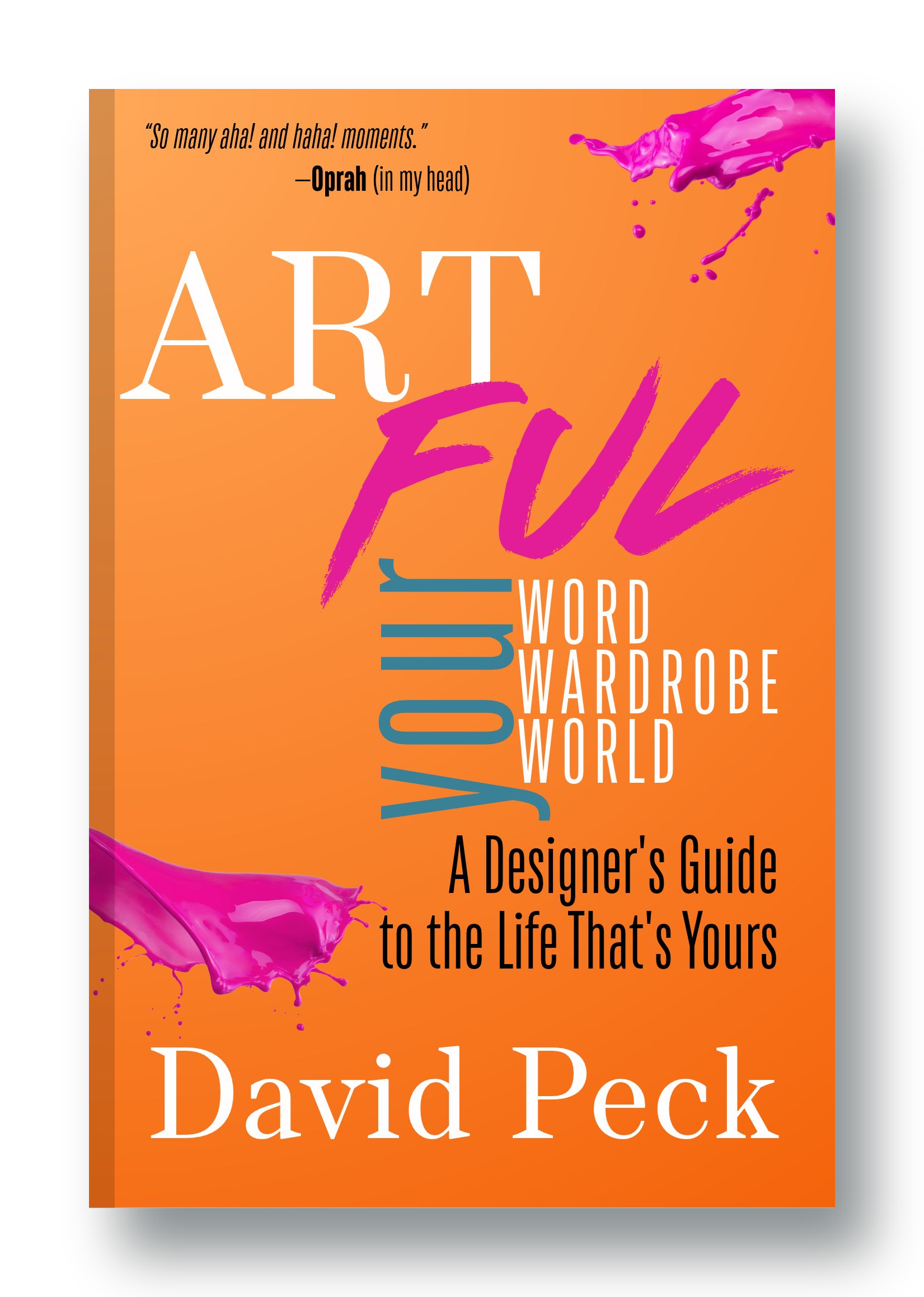
Get your signed copy of ARTful at davidpeck.co/artful