His first collection was set to launch on September 13, 2001.
Fifty-two episodes in, this is the first time I've had another fashion designer in this chair.
Rubin Singer and I have some interesting parallels. He launched his own label in 2007, the year I came home from Paris. We both started lines in New York, inside the traditional structure — market appointments, wholesale accounts, press, runway shows, etc. We've both had to rebuild our businesses over the years and respond to recessions, COVID, and the fickleness of the fashion business.
He's a third-generation couturier. His grandfather, whose name he carries, made clothes for the highest officials of the Soviet Union. His father designed costumes for the Bolshoi. Rubin was born in Vienna while his parents were defecting from the USSR, raised in Paris, and made in New York.
I was thrilled to have him in the store for two days of trunk shows and then a live interview in front of a studio audience. I'm taking a group of eight of our clients to Paris at the end of September for his runway show at the Palais de Tokyo. He will be showing alongside jewelry designer Jill Reno, whom you may remember from an earlier episode.
PLUS: the Lightning Round, in which we learn what he collects, what sound he can't stand, and who he'd add to his imaginary board.
Listen to the full episode on your favorite podcast platform.
Subscribe and leave a quick rating or review if you enjoyed it.



“The best education that you can really get is to fall flat on your face and learn how to really do it, because it’s the only thing that’ll really teach you.”
In This Episode, You'll Learn
The piece of lace on his father's studio floor that was his first toy
Getting into Juilliard for ballet — and walking away after one semester
Why he chose to leave Central Saint Martins
A first label financed by the founders of Bobbi Brown Cosmetics, with a Saks pre-order, launching September 13, 2001
The year he legally couldn't work, and the internship at the Bolshoi Opera that filled it
Being handed Carolina Herrera as a first private client at twenty-one, and a dress for Prince Michael of Kent's ball at Kensington Palace
Getting hired at Oscar de la Renta as a button sorter after three months of door knocking
Starting his own house on a severance check, sewing in his apartment, building a first collection around parentheses
Why dressing famous people builds a brand but does not pay the bills
The family friend behind Super Smile toothpaste who financed his first Neiman Marcus order and kept his cash flow alive for a decade
What eighteen months at QVC actually taught him
Relaunching ready-to-wear in Paris, and the goal he won't say out loud yet
Transcript
-
RUBIN: And so we created the line and Saks did a pre-order and we were launching on the thirteenth of September of two thousand and one. So my runway became a triage, and that was the first time that everything went flat.
-
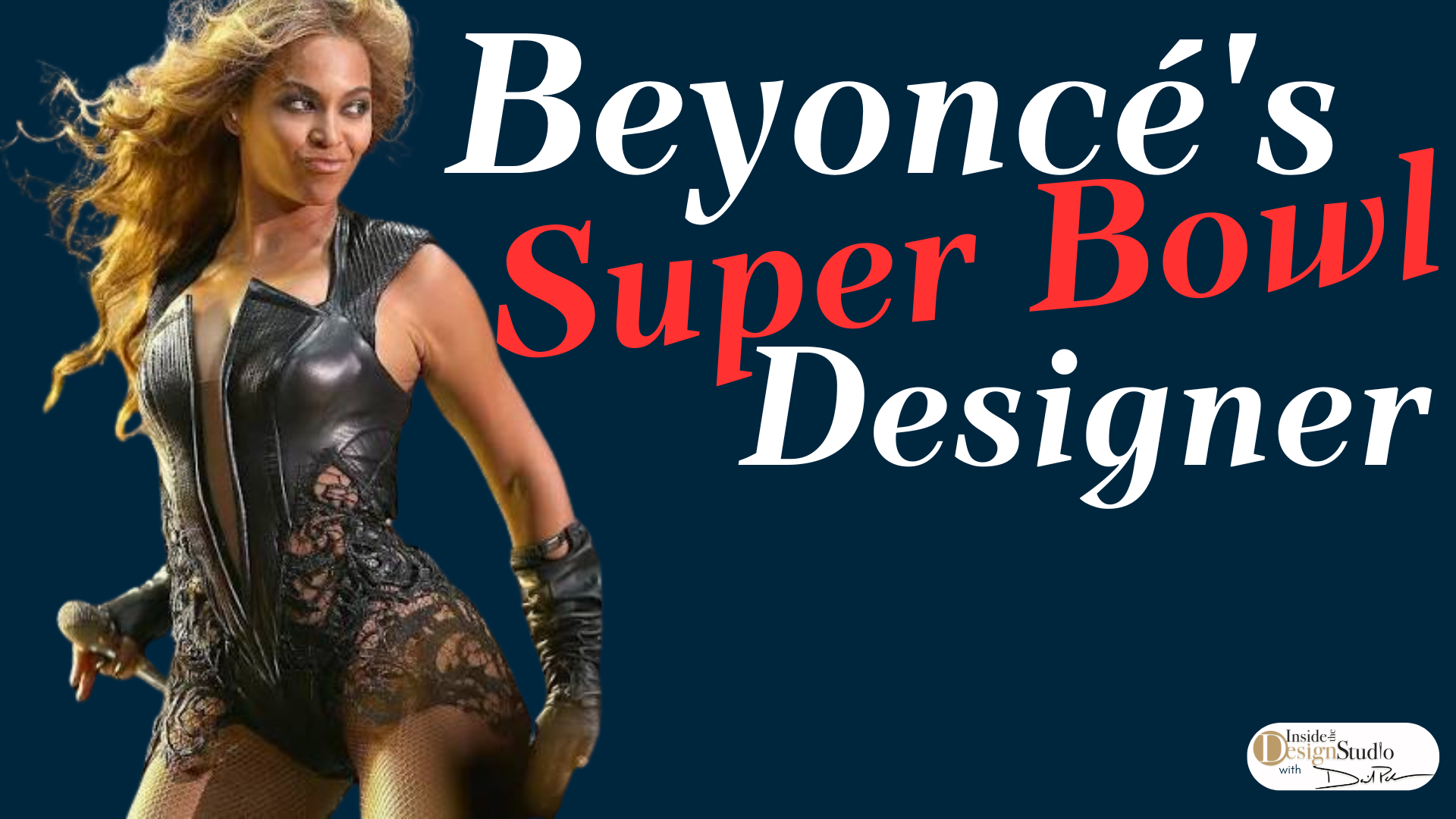
DAVID: So, in case you didn't know, tonight's guest is a third generation designer. Your grandfather, whose name you carry, made clothes for the highest officials in the Soviet Union. And your father designed costumes for the Bolshoi. And then you were born in Vienna. [Rubin Singer: Yes.] And then raised in Paris. [Rubin Singer: Yes.] And then New York. [Rubin Singer: Yes.] And then you worked with your father. [Rubin Singer: Yes.] And then you've had quite the career. So you went to Central Saint Martins in London. And then you worked at Oscar de la Renta, Bill Blass, and then you launched your own label in 2007. [Rubin Singer: Yes.] Very cool. And so, I think you're all here because you know who Rubin is, but in case you didn't, you famously designed Beyoncé's Super Bowl halftime. Pretty big deal. Among many other people, you dress a lot of opera stars, like Renée Fleming. Glenn Close, Jennifer Lopez, Zendaya, Alicia Keys. Just to name a few. You've even done an entire runway show on a Lufthansa flight at 36,000 feet, which is pretty cool. You also know Houston, you've been here several times.
RUBIN: Many, many times, yes.
DAVID: So welcome back. And these days you're showing in Paris. And the reason for this whole occasion is that we all get to go see your show with Jill Reno, who is also in the audience, at Palais de Tokyo for Paris Fashion Week. So I'm very, very excited. So please welcome Rubin Singer.
-
DAVID: Okay. So let's talk a little bit. I gave a very brief background of your career. But start at the very beginning — did you really know that you wanted to be a designer? Was it in the family genes, or was it something that you kind of came to?
RUBIN: I didn't really know. I mean, my first toy was a piece of fabric, piece of lace that I found on the floor, and I remember it actually as a very young child. I made my mother's first dress when I was five. So my whole life was really watching my father work and being around clothes and fashion and models and all this whole world.
-
RUBIN: Until I became an adolescent. And then I wanted to rebel and I didn't want anything to do with clothes or fashion. I hated it all. And so I decided that I was gonna be a dancer. And so I became very serious about ballet for a period of my life and I actually got into Juilliard.
DAVID: Wow.
-
RUBIN: Yeah, and I was gonna be a ballet dancer, but after spending, you know, my first semester at school at the ballet bar, you know, 18 hours a day. And I just — I didn't love it enough to be great and I wasn't good enough to be great. And so I decided that this wasn't for me. So I really took some time to really think, like, what could I possibly do that would involve the visual arts and movement and all these different things that I love? And I'm like, my God, it's fashion. So I kind of applied to Saint Martins, got in, went there for a semester. Really felt that I had been taught more than there was being — I already knew more than what I was being taught at the time. And so I spent a year having fun in London and I came back to New York and started working.
DAVID: Wow.
RUBIN: Yeah.
-
DAVID: We have similar career paths. I was a classical cellist and then by the time you realize I did not love it enough to be a musician, I quit.
RUBIN: It happens. It happens, yeah.
DAVID: Yeah.
RUBIN: It's all interrelated. I really feel like there's so many connections between music and fashion and art and all these sort of creative forces that we're inspired by when you move within and without. And so yeah, I think there's threads that create the continuum, so to speak.
-
DAVID: Do you think that there's a discipline in your dance background that helped you when you applied it to design? Like I think there's a rigor to it that helps.
RUBIN: Yeah, also in movement, right? The body, the way the body moves. So it was very much a part of the way that fabric moves on the body, the way the body moves with fabric was all very interrelated between all that eventually.
-
DAVID: Yeah. And also, I think you've had a very international upbringing. Do you feel like any of those cities — like when did you move from Vienna to Paris?
RUBIN: Vienna, honestly, I don't really remember much. I was a baby. So we moved and I was three months old, because at the time when my parents defected essentially. My father was invited. At the time in the 70s, late 70s, there was a culture exchange happening between the Soviet Union and France. And so there were certain artists that were invited to come work in France and vice versa, from France to Russia and the Soviet Union. And so my father, because he was working at the Bolshoi, was invited to come work in France at the Palais Garnier doing ballet.
-
RUBIN: And so they were invited. My mother was eight months pregnant. So they left everything behind. And at the time you could only fly from Moscow, but there were only a few flights internationally, and they were to Rome, Vienna, and Tel Aviv. And so they ended up going to Austria and I was born on the way to France.
DAVID: So — wow. Yeah. So Vienna was never the final resting place.
RUBIN: No, no, no, no, the final destination, no, definitely not. It was on the way basically.
DAVID: Yeah. So what brought them from Paris to New York?
RUBIN: My mother actually. She really always wanted to live in New York and she felt my father's career would really flourish in New York and she dragged the family. She wanted to be in New York, so we moved when I was quite young from Paris to New York. And she was right — my father's career exploded when we came to New York.
DAVID: That's pretty cool.
RUBIN: Yeah.
DAVID: Do you feel like having — I mean, just the international background — but gives you a different perspective than somebody who was just born and raised in the US?
RUBIN: Of course. Yeah, of course. I mean, it gives you a much more holistic view of what world you experience, whatever that is. But I mean, ultimately, especially for fashion, it's such an international thing. It just transcends borders, continents, it's everywhere and it's part of people's lives. And when you can experience or see how people dress or live differently than what you have, that informs you much better as to make a whole range of clothing or be more informed as to how people dress or feel in general.
-
DAVID: Was your upbringing in New York — a lot of times when immigrants come to the country, they either assimilate or they very much stay in their sort of immigrant communities. What was your family's sort of perspective, or how did they come into — yes? There was the whole community in like Brighton Beach and Brooklyn.
RUBIN: Absolutely not. My parents moved immediately to the Upper East Side, where I went to — actually they put me into a French-speaking lycée actually. So I spoke French at school, Russian at home, and I actually learned English on the streets, basically. I only really started to speak English when I was like twelve.
DAVID: Yeah.
RUBIN: So for me, yeah, it's crazy. But that's why I have such an American accent, because my English was not anywhere but New York. And so — but yeah, it was very much all about maintaining a strong cultural root. Because my parents — I had to write Russian dictations, I had to read Russian literature. I was never allowed to play with friends unless I, you know, read Tolstoy and Dostoevsky and all of them. By the age of like sixteen I knew everybody. But at the same time it was very much about — you know, both my parents spoke French and English. I mean, it was very much about becoming functional within the country, in the culture in which we lived.
DAVID: Yeah. I read War and Peace when I was fourteen and I was highly disappointed when I got to the end. 'Cause it was my idea to read it.
RUBIN: Yeah, it's an intense — it's a long read.
DAVID: Yeah. You get through all the wars, you're —
RUBIN: Yeah, yeah. And all the French too in the books.
-
DAVID: Yeah, there's a lot of French in the books. Yeah. One thing that I'm very interested in is, like, I feel like creative careers are not very linear and I think they're very confusing to people who are not in them. Because there's not a directory. You went from dance to fashion to, you know — and even within your career, you've worked for other designers, you've designed for yourself and you've had various iterations of what you do throughout the years.
RUBIN: Yes.
DAVID: And you've also been through two major global shifts. One, you started your line in two thousand seven, which was right before the economic recession. I understand, because I moved back to the US in two thousand seven. And it was a wonderful time to try to find a job in a creative career. So good. And then the pandemic. So, like, two —
-
RUBIN: Actually three.
DAVID: What's the third one?
RUBIN: Well, I actually initially — for when I first dropped out of school, out of Saint Martins, I decided to start my own line. And this is something I don't talk about much because nothing really came of it, but I started my own line and the people that created Bobbi Brown Cosmetics, Ken and Roz Landis, just sold it, and we met and we got along and so they decided to invest in launching a line with me. And so we created the line and Saks did a pre-order and we were launching on the thirteenth of September of two thousand and one.
-
DAVID: Yeah.
RUBIN: So my runway became a triage. And that was the first time that everything went flat. That was my first experience in, like, running my own thing.
-
RUBIN: And because they didn't want to see what was gonna — they wanted to keep the brand to see what would happen, I couldn't work for a year. And so I went to Russia. And I worked at the opera. My father got me an internship at the Kiev opera, at the — excuse me — at the Bolshoi Opera. And I interned there, studying all the traditional costumes there.
-
RUBIN: And so when I came back, a friend of mine said, you know, I have a job for you. I was like, okay. He goes, you're meeting with Carolina Herrera tomorrow, and whatever you tell her, you're gonna tell her yes. I said, what do you need? He goes, she needs a dress for Prince Michael of Kent's ball at Kensington Palace next month, and you're gonna do it. I said, what — why? He was, it's a period piece, you have to do it. So I went in there and I was sitting there freaking out the next morning. I'm like, what am I doing? I'm 21, freaking out, looking at this Warhol of hers staring at me, freaking out, waiting for her to show up. And she comes in and she's in this beige suit and her beige hair and her beige bag and her beige dog and her beige shoes — everything's beige. And she looks down at the end of her sunglasses as I'm sitting there like freaking out. She goes, "You're the genius." And I was, like, dying at that point. Reinaldo, her husband, then pulled me into a room a little bit later and said, "Can you do this?" And he pulled out this book of Madame de Pompadour, which is this kiwi-colored dress. And I didn't know what I was gonna do. And I kept hearing my friend's voice in my head — "You can do it, you can do it." I said, "Yes, I can do it." And then she came in, asked the same question, I said I could do it. And so I ended up making a dress that she ended up wearing to —
DAVID: Yeah, it's pretty cool.
RUBIN: And so that was my first private client — Carolina Herrera.
DAVID: I mean, not many people can say that.
RUBIN: Yeah. So that's how I kind of started.
DAVID: Yeah.
RUBIN: Yeah. So that was right after the first global, like, breakdown that I had.
-
DAVID: Yeah. So then how did you go from that Carolina Herrera experience to Oscar?
RUBIN: Well, there was really — I asked for her to hire me. She couldn't, she didn't have a space for it. So I really thought, you know, when you almost do something, I felt like I was bigger than I was in my head at the time. And I was kind of like had these airs about me, until my friend sat me down. He was really — "Do you understand, like, that business that you had, it never happened. Nothing came of it. So you have to start from scratch." And I really thought to myself, well, who am I gonna work for? And there was only one person at the time, and that was Oscar. And he wasn't hiring either. And for three months I banged on that door basically, until I basically made like a fifty-piece set of drawings, like three gowns, and put it all in a box that he then finally — I got a phone call from them and that's how I got hired.
DAVID: You know, yeah — simple little resume.
RUBIN: Yeah, I mean, resumes weren't working at the time for me, so with that. So I finally ended up getting a job there as a button sorter, and that's how I started.
DAVID: Yeah, everyone starts somewhere.
RUBIN: Yeah. Yeah.
-
DAVID: And then you moved on and so you start your own line and then it's great timing again — you have to have a knack.
RUBIN: Yeah, I'm the best.
DAVID: Yeah. What was it like at that second go around? Did you have investors? Did you do it on your own? Like, how did it work?
RUBIN: I did it all on my own. So after I left Bill Blass, I briefly worked for a woman named Kai Milla, who was Stevie Wonder's wife. And I spent a little less than a year working there on that line and I did two collections, and they were very much a training ground for my work because I kind of got free rein as to what to do. And when I ended up leaving, it was just a little bit too much of myself in her line. So I ended up being let go and I got a severance. And with that severance I started my brand. I made everything in my apartment. And it was kind of an interesting thing because, like you said, it was a very difficult time and I was trying to figure out what — how was I going to say my first words? Like, what was I going to say? And so I started thinking about grammar and what I was going to speak and how I was going to say it. And I broke it down finally to punctuation. And the whole collection was based in a parentheses, because that's the shape of any kind of punctuation that means something — or how does it, you know, that when you're thinking about something, that's how you define it, is with parentheses.
-
RUBIN: And although it's a very difficult time, there's a store called Linda Dresner.
DAVID: Yeah, I know Linda.
RUBIN: Yeah. And she came and she saw the line and she picked it up and Vogue wrote a little piece and that's how I started. But Linda Dresner was a friend of my —
DAVID: It was a big deal.
RUBIN: Yeah, it was a big deal.
DAVID: No, because we had a very similar time. I had a line with a friend in New York and all the stores — you saw Linda Dresner, like, the name that first came up.
RUBIN: Yeah, it was a great store.
DAVID: Amazing, amazing retailer.
RUBIN: Yeah.
-
DAVID: So you ended up having quite a celebrity presence pretty early on, like being able to do that. Did you intentionally seek that out? Was that sort of a sales tactic, or was it organic? Was it through relationships? How did that come about?
RUBIN: So my first red carpet — actually it came about organically, but it was sort of something that I was always drawn to. My first — actually the first person I ever dressed, it was Beyoncé actually. Yeah. It was the first thing she did. It was a show she did in London. It was like — I forget the name of it even. It was a long time ago, obviously. But she wore one of my dresses on a TV show, and then Alicia Keys wore something of mine. And it was really through the relationships of the stylists that started talking and started getting my name out there with each other. And so Alicia then ended up getting shot on the cover of Harper's Bazaar in my dress. And then another stylist came to me and it was for Glenn Close, which I love also. And so my first red carpet was Glenn Close for the Emmy Awards when she was doing her —
DAVID: Damages.
RUBIN: Damages, yeah. And she wrote a beautiful thing about the whole experience and what I made for her. But yeah, and so that kind of snowballed after that.
-
DAVID: Yeah. Do you — because I often find with creative things and fashion in particular, there's a disconnect between the celebrity placement and sales. Like, people think that you dressed all these famous people, it must mean that you're, like, breaking into —
RUBIN: Yeah, yeah.
DAVID: Talk about that thing. It's not true.
RUBIN: Yeah, it's not — that's not the case. It's definitely something that builds the brand. It's certainly that elevates, you know, your exposure. It's something that is very, very important, but it doesn't equal dollars or sales. What it equals is brand value and relevance and importance within not only the fashion community but really your audience. So it does end up affecting sales, but it's not a monetary exchange immediately.
DAVID: Right. Yeah. Did you find that there was, like — no, a pressure? Because I think sometimes there's, with press, at least I found, especially at the time when the magazines were sort of the end-all be-all. You had to be in a — you were in Linda Dresner, so that helped. But you had to have certain store placements in order for them to be in the magazine, and that's, like, it's this vicious cycle of the chicken and the egg. And are you in the store, or are you on the celebrity, or in the magazine? It's like, they want it all to happen at once and they expect you to have all the resources, including the money, to be able to do it.
RUBIN: Of course.
DAVID: How did you juggle that, especially in those early years?
RUBIN: I don't know. Honestly, I don't know how I pulled it off. I just did. It's just blind ambition at that age. You know, I was just so driven. And it did start to happen at the same time. Like I got into Women's Wear, they wrote a big article on me, then — it's kind of a chain effect that starts to happen. And people say that timing is everything. It kind of is. It's really about how lucky you are, basically, in terms of like the positioning and the timing, and then also how hard you're working, and really whether you have the goods to deliver. You know, at the end of the day, that's really what matters. But to get to that point where it really matters, you have to do all the other stuff too. It's very difficult.
DAVID: It is. It's a tightrope. And it's nothing — obviously you went to school for design and studied design under your father, but the business part of it is something that you're never prepared for.
RUBIN: You're never prepared for.
-
DAVID: Did you find yourself not just learning on the job — did you seek out any sort of education? Or like, I think at the time, like, online learning wasn't really a thing.
RUBIN: No, no, there was no online learning at the time. I mean, there was, but it was very limited. No, I really feel that the best education that you can really get is to fall flat on your face and learn how to really do it, because it's the only thing that'll really teach you. You can learn lessons, but until you really learn the lesson by experiencing, like, how hard you can fall — it's like, if that was the case, I would listen to everything my parents told me. I would have been, like, so smart, I would have done everything they told me. But of course you don't, and you have to do what they tell you not to do in order to not do it, you know? So it's one of those things. But yeah, education is wonderful and it's important, and, you know, learning how to do things correctly and, you know, by the principles and by the books and all this kind of thing. But then if you're gonna do anything prolific and important, you're gonna have to break those rules anyway.
DAVID: Yeah. So was there one of those moments that was especially difficult in, I would say, like the first five years, where you felt like, I really effed this one up?
RUBIN: So many times. You know, there are so many different things that I could have done, that I would have done, but woulda, coulda, shoulda. I did them the way that I did them, and I ended up where I ended up. There's so many nuances in this business, especially when you're dealing with stores, you're dealing with clients, you're dealing with celebrities, you're dealing with manufacturers, you're dealing with suppliers, you're dealing with all these different things, and you have to juggle it all at the same time. It becomes — people have no idea how complicated it is and how difficult it is to have longevity and resilience and all of it.
-
DAVID: Yeah. Yeah. I think one of the hardest things that I found, especially dealing with wholesale, is that the cash flow is very dry. Because a lot of people don't understand this if you don't. It basically — you design a collection. And you show it to the press and you show it to buyers and then they place an order, hopefully, and then you're not gonna deliver that until six months later.
RUBIN: Six months later.
DAVID: And then sometimes they don't pay you for three to six months, or I mean, depending, much longer. But you've invested in developing the collection, like, potentially a year before that. So at the very earliest you're getting paid for something you've designed maybe a year —
RUBIN: A year ago, yeah, a year to a year and a half.
DAVID: So how did you figure that part of it out, like, in the very beginning?
RUBIN: So I was always afraid of factors. Factors are these sort of, like, these official loan sharks that work a lot with the fashion industry, where they can buy your receivables or your invoices and they advance you the money. But at such a high percentage, then they also own your mail, they do all this stuff that it's just — it's like you're locked down, you're screwed either way with factors, which I always avoided. But I did need factoring. So luckily a family friend of ours, a person who we're still quite close with, this one named Lucia Smigel, she created a toothpaste called Super Smile. And she loaned me money to produce my first Neiman's order, which was pretty substantial for me at the time. And then I made an arrangement with her where all the Neiman's receivables went to her and she just advanced me the money as I got orders, and that really facilitated my cash flow for almost a decade. Yeah, it really kept me going and allowed me to really thrive. And I had to design a few toothbrushes in the meantime and do a few infomercials with toothpaste and it was kind of like a good experience. But yeah, that was a critical part of my sustainability and my ability to survive.
DAVID: Yeah. And I think sometimes — and I don't know, speaker — but I feel like a lot of this business is figuring out how to survive. Like, I think there are like certain people who have been able to do it and it's like they blow up and it just all kind of works and they're, you know, Ralph Lauren. And then there's the other people, and you really do have to try to always figure it out. It's always — critical thinking is on another level with this business and you always have to.
-
RUBIN: And the worst part and the best part about it, I guess — is it's the double-edged sword — is that everybody wants you to be new and fresh, but they don't want you to change too much. Like they expect one thing from you, but you can't be too different because then you alienate your customer base and you're not the same and they've already created a box for you. And if you're out of that box, it's like they don't like it because you've changed too much. But then you don't change enough and it's not good enough. It is a — so you have to be a lot of things to a lot of people, but the most important thing is that you have to be yourself to yourself. So if you're true to who you are and what you do, that innately is always the same. Like I find that as long as I listen to what I more or less feel or I'm gravitating towards, it always ends up working and it still has an echo of the same thing over and over again. It never really changes that much. It always changes, but it doesn't — and I never really veer from it too much because it's always coming from me. I don't know how else to describe it.
DAVID: So but there's an evolution that constantly needs to happen, because four times a year you need to, like, develop new things.
RUBIN: Exactly.
DAVID: Yeah. And I often found that there was a disconnect between what the press would tell you, what journalists, when they're reviewing a collection or they're looking at, you know, coming to market or whatever, and what the stores are telling you. And then the clients, which are different than the stores and the press.
RUBIN: Exactly.
DAVID: So how did you figure out how to balance those? 'Cause I know when I first started I was completely confused by all of these contradicting messages.
RUBIN: It's very confusing and it continues to be confusing even in today's day. But the most important thing is ultimately — for me, it's always been who's wearing my clothes, whether it's the press talking about it, whether it's a celebrity wearing it, whether it's a store buying it, or whether it's me talking to my customers. Ultimately it's a mindset of the woman that's innate in her being that really influences the way that I design and who I cater to. And that really doesn't change from demographic to demographic, from press to client. It's really about empowering a woman and making her feel strong and feminine, but there's a strength in that femininity, and that transcends all of those things and it equates to all of those different outlets, so to speak.
-
DAVID: Yeah. You've tried a lot of different things, including you've had a line for QVC and you've launched the Rubin Rain collection. Talk a little bit about those types of projects and what was your impetus to say yes to them, and were you glad you did them? Are they things that you would want to continue? Like, I think so many times — like, I would say when I first started out, my grandmother was like, "You should be on QVC." And I was very snobby and I was, "No." And then now I'm like, I would love — nothing's better than having a QVC line.
RUBIN: Yeah.
DAVID: So —
RUBIN: So my experience with QVC was pretty interesting. I was on there for, like, literally like a year and a half. And there's a — I had a very specific idea of what should be there. And I kind of imposed myself onto that. But what I didn't realize — now in retrospect I do — is that they don't want to hear it. They don't want to hear it. They don't want to hear about anything new. They like doing what they — they like being comfortable and what they are comfortable with, and they don't want to be reminded that they should be changing anything about themselves. So that's why I don't think QVC really worked out for me, because I was trying to imbue my, you know, ideas about what they should be wearing, but they want to know.
DAVID: Yeah.
RUBIN: So it was a very interesting thing for me to learn about QVC. But mass in general, to me, is very — I've dipped my toes into it a few different ways. We're launching Ready to Wear in Paris. It's relaunching Ready to Wear in Paris. So there's an approach to it that — but it has to be — what I've learned is that trying to make myself fit into something that I'm not doesn't work. It's applying what I do best in a way that's going to make sense with everything that I already do organically. So when you try and change something too differently, it ends up having a — not working so great.
DAVID: Yeah. It doesn't resonate.
RUBIN: Doesn't resonate.
DAVID: Yeah. So what is it that you think that is sort of that — that is uniquely you, that has to be infused in the clothes for it to work?
RUBIN: Specifically, I think proportion. You know, my clothes, I think — and that's what a lot of the women that have worn my clothes have always said to me — is that they feel differently in the clothes, right? There's a silhouette to it, there's a vibe to it, there's a feeling that comes from a kind of more of an empowerment and more of like a "you're noticing my clothes." And so there's an element of that that has to follow through in the whole thread of what I do, and when that's there it seems to work. When it's not, it doesn't.
DAVID: Yeah. And that's also a very tricky thing, I think, on a mass scale to get across, because mass generally means you're trying to appeal to everybody's lowest common denominator. And QVC has, like, all these analytics and data and everything, but they know what the housewife in, you know, Oklahoma is gonna want to buy. And that's not necessarily, you know, something that's gonna get her noticed.
RUBIN: Right. She just wants to be comfortable.
-
DAVID: Comfortable. And that's a tricky thing. So how do — now that you're relaunching ready to wear in Paris, how are you approaching it differently, if at all, this time?
RUBIN: Well, basically I'm not doing anything differently from what I do from couture, except I'm applying it in a much more livable way. So my fabrics are changing. The lifestyle element of it and the approach to where she's going in these clothes is different, but it's the same woman. I'm not trying to change her. I'm keeping with the same context and the same demographic that I have in my head of who my customer is, but I'm making it easier for her to wear the clothes from day to night rather than making it something else.
DAVID: Are you doing more day wear, separates, evening?
RUBIN: Yeah, I'm doing a full range of everything. But it's really about taking the sensibility and applying it to a lifestyle that's gonna be more casual, it's gonna be more effortless and it's gonna be more omnipotent in her life in terms of how she can really dress.
DAVID: Yeah. How do you feel like the pandemic in particular changed the way women approach getting dressed? Because I feel like there's a big swing in my experience. We have people who really love getting dressed and they're going to the fanciest things and the biggest weddings and galas and, like, all of that — flying to Paris for fashion, like, anybody. Or they just really want to be comfortable and they're not thinking about it. There's not a lot of, like, I'm getting dressed for my everyday. How do you experience that? What is your sort of —
RUBIN: Well, I think the pandemic changed everything about everything. And it definitely cut down the sort of expected sort of, like, dressiness level of what people used to think would be appropriate to wear. And whether men are being more or less dapper or women are dressing down, it changed everything. Now I think that there's a desire to go back to a certain way of dressing because people are tired of being, you know, too casual. But there is an innate unwavering need for wearability and comfort that now exists and permeates throughout that I don't think will ever go away now.
DAVID: Yeah. Does that change how you're fabricating things, the fabrics you're choosing? Is there more specific —
RUBIN: Yeah. All of the above.
DAVID: So with this new relaunch in Paris, which we'll all get to see at the end of the month, I guess — what is your goal? Do you have, like, a big, like, audacious hairy goal?
RUBIN: Yeah, but I can't talk about it just yet. Let's see how the show goes and then I can talk about it. Yeah, of course there's goals, there's dreams, there's plans, there's all of it. We have lots of them. And I'm very excited to be showing it. And it's a reintroduction in a lot of ways and it's a relaunch. So I'm very, very excited about it. You know, I'm hoping for the absolute best. Yeah. That's what I'm aiming for.
-
DAVID: Very cool. So one of the things that I talk about a lot is designing a life that fits you rather than, like, what everyone expects of you. What do you do? Is there a practice or something that you follow that kind of brings you back to being a little bit more grounded and designing what you want and not necessarily what, especially the fashion industry at large, expects of you?
-
RUBIN: Well, the best and most difficult thing to do is to really listen to what your blood whispers to you. And for me that comes with a sense of solace and peace, which is very hard to achieve living in New York City, but it's achievable. And I do it through different changes in my lifestyle that I've done. Like doing yoga and breathing, actually taking time in the middle of the day to actually go in silence and think, because there's so many things coming at you all the time that you can't really find the center of what you're doing and feeling. And a lot of the time that comes for me at night. So most of my design work is done when I'm by myself at night. I can't do it during the day 'cause there's too much going on. There's too many things at you and you can't really hear what your blood whispers to you with all that noise. So you have to find ways to do it.
-
DAVID: Very cool. Okay. So I always end every interview with the lightning round of questions.
RUBIN: Okay.
DAVID: So just whatever pops into your mind. Don't think too hard.
RUBIN: Okay.
DAVID: So when are you most yourself — morning, afternoon, or night?
RUBIN: Night.
DAVID: Okay. One tiny daily ritual you guard.
RUBIN: A tiny daily ritual — meditation.
DAVID: Your current anthem in one word.
RUBIN: Rocket.
DAVID: What are you optimizing for right now?
RUBIN: Success.
DAVID: A belief you've retired.
RUBIN: Failure.
DAVID: Favorite humble tool of your craft, something under twenty bucks.
RUBIN: My knife.
DAVID: A constraint you keep on purpose.
RUBIN: Discipline.
DAVID: A risk you're glad you took.
RUBIN: Paris.
DAVID: A place that resets you.
RUBIN: Home.
DAVID: Comfort rewatch or reread.
RUBIN: Reread.
DAVID: But what is it?
RUBIN: What do I reread? Reading — actually just reread, I gave it to somebody as a gift. The Life of the Marchesa Casati. Infinite Variety, it's called.
DAVID: Okay. Yeah. A sound you love.
RUBIN: Birds.
DAVID: A sound you loathe.
RUBIN: Falling hangers. I hate that sound. It's the worst sound in the world.
DAVID: A word you overuse.
RUBIN: Everywhere.
DAVID: Word you wish we used more.
RUBIN: Our hearts.
DAVID: Finish this. Done is better than —
RUBIN: Not done.
DAVID: Recent no that made room for a bigger yes.
RUBIN: Recent — nothing. Opportunity that I actually just said no to that actually opened up for me and ended up becoming Paris.
DAVID: Very cool. Yeah. I have this imaginary board of people that include Oprah, Ralph Lauren, Martha Stewart, and Walt Disney.
RUBIN: Okay.
DAVID: That kind of, like, run a lot of decisions in my head.
RUBIN: Okay.
DAVID: If you had somebody that you were gonna add to your imaginary board, who would it be?
RUBIN: My imaginary board. Probably would be Salvador Dalí.
DAVID: Interesting. How do you take your coffee or tea?
RUBIN: Black and cold.
DAVID: What do you collect, on purpose or by accident?
RUBIN: Dolls.
DAVID: Paris question — right bank or left bank?
RUBIN: Right.
DAVID: Favorite swear word or your PG-thirteen substitute.
RUBIN: Motherfucker.
DAVID: One five-minute action listeners can take today. So — yeah? One five-minute thing somebody can do today to make their life better.
RUBIN: Breathe.
-
DAVID: Perfect. So thank you very much for being inside the design studio. We're excited.
RUBIN: Thank you.
Know somebody who fantasizes about Fashion Week? Send them this one.
Key takeaways
Resilience. 9/11 killed his first label. The 2008 recession nearly killed his second. The pandemic stopped the third. Grit isn't optional in this business.
Failing publicly is the tuition. He's direct that no amount of instruction substitutes for falling flat on your face, and that anyone doing something prolific eventually has to break the rules they were taught.
Visibility and revenue are different currencies. Dressing famous people builds brand value and relevance. It does not put money in the account, and confusing the two is how creative businesses die.
Somebody has to fund the gap. Between designing a collection and getting paid for it, eighteen months can pass. His answer wasn't a bank — it was a family friend who believed in him.
Trying to be something you're not doesn't scale. QVC failed for him because he was imposing his ideas on an audience that wanted comfort. What works is applying what you already do well to a new context.
Two people can train the same way and build opposite lives. He stayed inside the traditional structure and scaled it. I came home and rebuilt around the person in front of me. Neither is the right answer — they're different answers to the same question.
The noise is the enemy of the work. His practice is yoga, breathing, silence in the middle of the day, and designing at night — because you can't hear yourself think when there is chaos.
Guests Appearing in this Episode
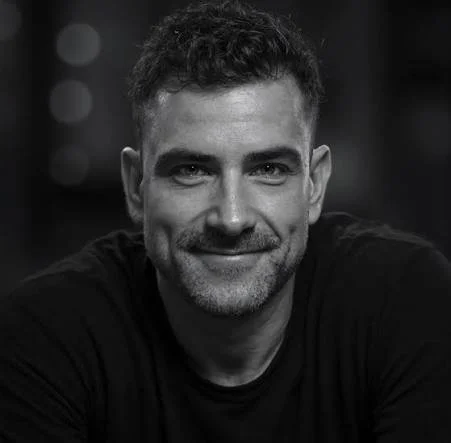
Rubin Singer
Fashion designer
Rubin Singer is a third-generation couturier. Born in Vienna, raised in Paris, and based in New York, he trained in his father's atelier before studying at Central Saint Martins, then built his career at Oscar de la Renta and Bill Blass before launching his own label at New York Fashion Week in February 2007. He has produced more than ninety collections. His costumes for Beyoncé appeared in the Super Bowl XLVII halftime show, and he has dressed Glenn Close, Jennifer Lopez, Alicia Keys, Zendaya, Mariah Carey, and Renée Fleming, among many others. He now shows in Paris, where he is relaunching his ready-to-wear collection.

The book Rubin names as his reread.

I read it at fourteen and was disappointed by the ending.
Resources
Read Infinite Variety: The Life and Legend of the Marchesa Casati by Scot D. Ryersson and Michael Orlando Yaccarino — the book Rubin names as his reread.
Read War and Peace by Leo Tolstoy — which I read at fourteen and was disappointed by the ending.