
33. Tariffs, Textiles, and Truth: What It Really Means to Make in America
The real cost of manufacturing in America goes far beyond tariffs—it's about infrastructure, skilled labor, and honest conversations about what we actually want.
David Peck, founder of a custom bridal and evening wear atelier in Houston, explores the complex reality of manufacturing clothing in America. From tariff impacts to the critical shortage of skilled labor, this episode examines why "Made in America" remains aspirational rather than practical for most small businesses.
Over 15 years running a Houston-based custom clothing business, David Peck has watched American manufacturing infrastructure crumble while tariff discussions oversimplify the real challenges. In this solo episode, he walks through the actual complexities: where fabrics come from (mostly Europe and Asia), why skilled sewists and pattern makers are nearly impossible to find, and what it costs to build and maintain a manufacturing operation in America.
Beyond tariffs, this episode digs into labor economics, the decline of technical education in fashion, the infrastructure gaps that even luxury brands like Louis Vuitton struggle with, and the uncomfortable truth that Americans may not actually want manufacturing jobs anymore. David questions whether our cultural desire for "Made in America" matches our willingness to pay for it or work in those industries.
This is essential listening for anyone building a business dependent on manufacturing, policymakers interested in reshoring, or anyone curious about why supply chains work the way they do. It's a realistic, nuanced exploration of what it takes—and costs—to make things in America.
David Peck breaks down the real cost of manufacturing in America—beyond tariffs. What does "Made in America" actually mean?
Subscribe and leave a quick rating or review if you enjoyed it.



“We may say we want things made here, but when push comes to shove, I don’t know that we actually want it. It comes down to people choosing to shop on discounted sites like Shein and Temu.”
Transcript
-
David Peck (00:00)
You want things to be made here. And that's great. And I totally think that that's a wonderful idea. And it's another thing to fund it and build it, because it takes a lot of infrastructure. It takes a lot of skilled labor and attracting those people. It's a massive, massive undertaking.
I wanted to record this episode, one, because it's been a minute since I've been able to record a new guest. Not that I don't have amazing guests lined up, but scheduling has just been a little crazy recently. And I also have a lot of thoughts that I thought maybe I would think through with you. It's interesting, because for those of you who listen to this podcast who don't know what I normally do, then you, if this will give you a little bit of insight into my day job. And for those of you who come to this podcast knowing what I do every day, then it just might give you a little insight into the business and the state of the world. So I run a clothing store where we specialize in custom evening bridal, really anything that you need to wear. We make it, we have our own atelier here in the store that's connected.
and we make clothing for our clients. And it's lots of fun. We get to work with all different kinds of people, different shapes, different sizes, different personalities. And most of the time we're working with people who are getting ready for some big event in their life, whether that's a wedding or a gala or a debutante ball. We have some of the biggest moments in people's lives that we are helping them get dressed for.
It's super exciting. And there are a lot of elements that go into getting somebody dressed, not the least of which is actually making the clothes. And what's different about what we do is that we are making everything here. And we're located in Houston, Texas. And that is a unique challenge. And there's been a lot of talk recently, I think, if you haven't.
pin following the news than you have probably heard via social media. There's a lot going on in terms of trade and tariffs. And I wanted to talk through a little bit what those things mean for a small business like ours. kind of my thoughts and how I've evolved over the years on some of these issues. So short story is that all of these tariffs and trade conversations do affect us directly because we, as much as we would love to source things from the US, there are really not the type of textile mills that we need operating here in the US anymore. We source mainly from Europe, though, know, silks still mostly come from India and Korea mostly. And so
We're importing a lot. And all of these new tariffs, they have affected our pricing. And our prices have gone up in terms of our raw goods. And this has happened over the years. Actually, in the time that I've been doing this here in Houston, which has been 15 years this year, which is really crazy, our prices have more than doubled in terms of just raw fabric costs. That's not even talking about labor. And so.
you know, sometimes I look back at what we charged for things, you know, 15 years ago, and like, my goodness, how did we do that? And then I realized, okay, fabric costs were significantly less, labor costs were significantly less. So I wanted to talk about what does it mean to actually make in America. And you may think, well, I come to listen to your interviews with entrepreneurs and artists and authors and actors. I'm not really coming to listen to you ramble about, made in America manufacturing. I'm not really that interested. Well, it affects everything that I do. And it really is a bigger conversation that I think entrepreneurs and small business owners here in America are really confronting quite head on right now. -
And one of the biggest things that I have learned over this decade and a half of making things here in the US is how incredibly difficult it is. So when I first started, I had this idea that everything was going to be eco-friendly, sustainable, organic. I was going to make it here. And I even started a factory. And for about five years, I not only manufactured my own clothing, but we also manufactured a children's wear line. And we did sample making and small run production for local designers, regional designers. And I will say over those five years, it got increasingly difficult to find skilled labor for that work. And it just got to be really hard and it's not a high margin business. And it was a lot of work for not a lot of return. And at a certain point, it just didn't make sense financially to continue doing so.
I still felt really strongly about making my own clothes. And even that was really tricky. And over the 10 years since then that we've been really focused on custom and small run production of the things that we have in our boutique, it has been increasingly difficult to not only find sewists who can sew the clothes, but there's a whole range of people that are required in order to make clothing happen anywhere, not just America. So you need pattern makers, you need cutters, you need people who can sew the clothes, you need people who can source the materials that you need. And one of the things that's really interesting about Houston is even though we are the fourth largest city in America and the most culturally diverse city in America, we really don't have any built-in resources here in this city.
when it comes to clothing manufacturing. There used to be some more, but over the years, even since I've been here, even big fabric stores that weren't necessarily even geared towards designers or wholesale people, they have closed. Even places like Joann's are going out of business. And so when we need a zipper or thread, it's not like we can run out to the store and buy it. We have to order it online.
and it's usually coming from somewhere else, and even places like New York face their own challenges in terms of, you know, keeping sourcing in the city. So all of that to say, it's extremely complicated. We don't have a lot of physical resources here, so we have to either order online or we have to order from trusted suppliers that we've been working with for years. But then when it comes to the making of the clothes,
I've been relatively fortunate and been able to find sewists over the years that we have been able to train to do our clothing. And you would think, somebody can sew. Well, yes, but there's different types of manufacturing. And what we do is relatively high end and specialized and dealing with really fine fabrics. And so not just anybody who can sew can actually make our clothes. And so it actually has a long steep learning curve. And I'm really fortunate for the people that we have now because I feel like they've really put in the time and the effort to learn how to make the clothing that we make. And along with that have come increased costs. So our costs in terms of labor have pretty much doubled, if not a little bit more since I first started. And part of that is the economy. Part of that is inflation. Part of that is just wanting to be able to offer people a real know, living wage, I would love to be able to pay more. If I could, I would. But it's a really tricky prospect. And not only am I paying for this labor, I'm also training the labor and figuring out how to make it happen. -
We have always had a harder time finding some of the other skilled positions, whether it's being a production manager, somebody who can actually manage the sewing making process, that's actually really, really hard to do. It takes not only knowing how garments are constructed, but it also takes project management skills. And a lot of times people who are interested in project management aren't necessarily interested in fashion and vice versa. And we've also had a hard time finding skilled pattern makers, you know, and there's different types of pattern makers. for the type of pattern making that we need. It's highly specialized. It's working with lots of different body types. We're not just making a standard size, small, medium, large for big retail stores. So finding those specialized people has been increasingly difficult. And what I have noticed, because I'm involved in our local community college, which has an excellent fashion program, Houston Community College.
and I'm also on the board of Paris College of Art, I have noticed that there is a decreasing interest in the technical skills of learning how to make. I think there are kind of two camps of students that I've noticed. One is a student who really loves the art of clothing design and making and wants to express some idea.
And then the other is somebody who is a little bit more entrepreneurial or wants to start their own business. But we don't often find students who are interested in the craft of making clothes and making them more beautifully. And that's tricky because those are the types of people I need to hire. I need to hire people who are interested in the process of making.
you people say, you must spend most of your time designing. I actually spend relatively little of my time designing. It's probably like 2 % of my time actually gets designing. The rest of it is doing all of the administrative things that it takes to run a small business. And it's managing the production line, making sure things are being made correctly, and following a process. So that all is really tricky. -
And that, to me, leads to a bigger conversation about manufacturing in America. And obviously, I'm speaking from the point of view as somebody who's trying to manufacture clothes here. I, when I first got to Houston, was involved in a task force with the Greater Houston Partnership, which was really focused on how do we build fashion in Houston? How do we wear a port city, wear the...
believe the third, second or third largest port in the country. We have a lot of textiles that actually come through our ports, but we don't have any manufacturing. And so we worked for several years on, is there a solution? Is there sort of hub that could be built? Is there some sort of center that we could either get designers to congregate towards or to be able to help make all of this work because it wasn't happening.
Over the years, it just kind of dwindled and fell apart. And I don't think it was because people weren't interested in the idea. It's just that it was simply too hard. And there wasn't a lot of the support, whether it was from the government or financial backers or angel philanthropists who wanted to see all this happen. The funds weren't there. And it's one thing to say that you want things to be made here. And that's great. And I totally think that that's a wonderful idea. And it's another thing to fund it and build it, because it takes a lot of infrastructure. It takes a lot of skilled labor and attracting those people. It's a massive, massive undertaking. -
And with all of the idea of jobs, manufacturing specifically, being from both parties actually from both Democrats and Republicans who want to reassure a lot of these manufacturing jobs. I think that the idea behind it is valid. And I've just seen in practice how difficult it is. And it makes me question, do we actually really want those things? Because from what I've seen from the workforce that we have access to is that most of these students don't actually want the manufacturing job because it's not sexy. It's not glamorous. It takes so much work.
It's a lot of schlepping. It's a lot of trying to keep things together. It's hard. It's really, really hard. And there's just not an interest from what I can see. And maybe if we were in a different city like New York or LA, but I have friends who are there. And it is still very difficult to find people who want to do that type of work. There's lots of people who are interested in the marketing and promotion and creative direction of fashion. I think that's definitely there, the thought behind a brand. I think that there are so many skilled people. But when it comes to the actual manufacturing of clothes, that is lacking. And there are other countries who have, for a long period of time, invested a lot of money and other resources.
to build up an infrastructure where it makes manufacturing so much more centralized. I've been listening to lot of podcasts about specifically how China has built up their manufacturing centers and there's a lot that can be learned from them. Obviously there are a lot of human rights violations and shall we say questionable practices that have happened in order to make all of this happen. But the reality is that the only way that China has been able to produce the type of garments and quality of goods that they have is by heavily, heavily investing in those things. We may disagree with the method of investing or how they've gone about that, but the reality is that they have put a focus on that, and so they have succeeded. I don't see us in America putting that same type of effort. And I don't know that we actually want it, even though we say that we want to have made in the USA. -
When it push comes to shove, I don't know that we actually want it. And that comes down to people choosing to shop on these really discounted sites like, Shian and Timu and, you know, where they can get the idea of something, but not necessarily from the original designer or how it was made. And so I've thought about this a lot lately.
And I don't necessarily have a conclusion or something I want you to take from it, but I hope that this sort of little ramble makes you think a little bit more about what do we really want? What is it that we're actually trying to achieve? And one of the things that has helped me in my business is really focusing, hyper-focusing on doing what we can do well. And I feel like that is make custom gowns.
really well now. We have figured out how to perfect the fit. We, and that's really what it comes down to. If something fits really well, then it's the most comfortable, the best gown. You'll look and feel the best. And I want to be able to do all the other things. It's not that I don't have an interest in, you know, making, you know, beautiful clothes that you can wear every day or let for the lack of a better term, more affordable items.
But the reality is with our small team and our small infrastructure, it's just really, really difficult. And we've talked a lot about, you know, what would it mean to like maybe have some of our ready-to-wear made somewhere else, whether it's somewhere else in America or somewhere else overseas. And those are definitely a possibility, but it takes, you know, resources and time and people to manage those things, which we haven't always had. And so it's a really tricky proposition. It's like a chicken and the egg.
type of thing that, you know, the resources have to be there to make it happen. And so for me and for our company, what we have chosen to do over the past, I would say, 10, but especially the last five years is really, really focus on what we can do well with what we have here with the amount.
of energy and time that we have invested in making a team that is really excellent at what they do. Figuring out how to streamline what we do so we can make it even more efficient. Because the reality is whether or not that there were tariffs, costs are gonna go up. Fabric costs are going up, labor costs have gone up. And some of those we just have to pass on to our clients. Like I don't want our clothing to be inaccessible to people. -
But the reality is that it just costs a certain amount of money to run a business. And it costs a certain amount of money to hire people who are really good at making clothes for you. And that is just something that we can do with what we have here. Now, if there were more time or resources or whatever, then maybe we could do something different. But that's just not our reality right now. And so I don't have like some final word of wisdom or whatever. But I just hope that as we're having these bigger discussions culturally, that we're really taking into account not only our capacity and our capabilities, but also our desire to do these things. I think what America has been really great at is offering incredible service and value and innovation.
And it hasn't really been focused on manufacturing. think that there was a kind of golden age of American manufacturing and we've just not invested in it. The textile mills that used to thrive in the Carolinas, they just really aren't there anymore. Even the furniture manufacturing that was in the Carolinas that was so world famous doesn't really exist in the same way that it did, you know, even 30, 50 years ago.
And so it's hard to get those jobs back. It doesn't happen in a blink of an eye. And even if you could build the factory, you have to fill it with people who want to do it. And the people who have honestly wanted to do it in my business have been people who are not American. They're the immigrants. And our business is really dependent on people coming here from other countries who have skills.
and they want to use them here in my business. And so it's a really complicated issue, and I'm not pretending to have all of the answers. But what I am really interested in is finding solutions and finding ways where we can talk about these issues and really think about what are long-term solutions? What are ways that we can work on this together? Is it a matter of government involvement? Is it some you know, big investor who is going to do for manufacturing what we've done with tech. And, you know, if we do do that, then there's probably going to be a lot tech involved. And, you know, it's going to be a lot of robots manufacturing things. And we'll need engineers who are able to program those robots. And it's a different skill set. It's not going to necessarily just be people who are able to sew a straight line or screw in a tiny screw or you know, there's when Louis Vuitton actually, I can't remember, it was probably about 10 or so years ago, decided that they were going to open a big manufacturing plant here in Texas. And it was a big deal. And it's like, my goodness, you know, we're getting this luxury manufacturing company coming and they're going to make their bags here in Texas. Isn't that incredible? We're bringing this manufacturing to Texas.
Well, the reality is it's been really, really hard for them to be able to attract labor at the price they need to attract to be able to make the goods. And there's a whole conversation about what's the fair wage and all that kind of stuff. But the reality is if a big luxury conglomerate like LVMH cannot figure out how to run a factory here in Texas, I don't know what makes me think that I could do that.
I don't have the time or the resources and the skilled labor that LVMH has. And they're having a really, really hard time making that work. In fact, they've closed some of their other regional manufacturing places in the states. And that's a whole other conversation about the reasons why that they even built them in the first place. But it speaks to a larger issue of investing in where things are made and how they are made. And I don't think that there's anything wrong with us not having manufacturing as a core in America, you know, if that's not what we're interested in, if that's not what the next generation wants to do, or that's not where their jobs need to be, or if we're not willing to have the people here who are able to do the work. But we can't have it both ways.
And I think that is the dilemma I see. And it's a dilemma that I am faced with every day of, you know, it takes a lot of people and a lot of overhead to do what we do. And it's not easy to be profitable, to be honest. It's a lot of work. And so my constant question to myself all the time is, you know, how do we make this more efficient? Not because I need to make more money, but because I need to be able to pay the people that I have committed to hiring. So I hope this left you thinking. If you have thoughts about how these issues can be solved, I would love to hear from you. I think it's going to take a lot of people with a lot of really diverse experiences coming together and having really interesting conversations.
to create a solution or come up with some sort of thesis that might be able to be put into place. But it's a conversation I'm interested in having. So if you are somebody who is like me interested in these topics, then let me know. I'd be happy to talk to you. And maybe we'll do it on the podcast and kind of work out these ideas in public. So until next time, I'm saying goodbye from Inside the Design Studio.
Know someone who hates resolutions but loves a fresh start? Send them this episode.
Key takeaways
American manufacturing faces infrastructure challenges that go far beyond tariffs—textile mills have closed, supply chains are broken, and supporting resources like fabric stores have disappeared.
Skilled labor shortage is critical: pattern makers, production managers, and specialized sewists are nearly impossible to find, and students increasingly lack interest in manufacturing work.
There's a disconnect between saying we want "Made in America" and our willingness to pay for it or work in those industries. Consumer behavior on sites like Shein and Temu contradicts manufacturing investment rhetoric.
Even luxury brands like LVMH struggle to run profitable manufacturing operations in America due to labor costs, market conditions, and workforce availability.
Immigration is paradoxically essential to American manufacturing; many skilled workers willing to do this work come from other countries seeking opportunity.
Long-term solutions require honest conversations about capacity, capability, and actual desire—not just policy rhetoric. Technology and automation may be part of the answer, but they require different skill sets.
Small businesses must focus on what they can do exceptionally well within their constraints rather than attempting to be everything to everyone across manufacturing spectrum.
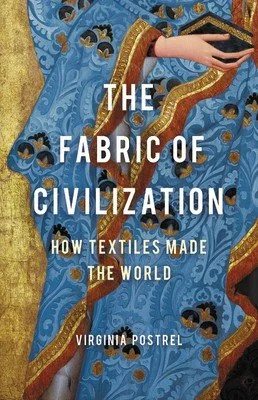
Virginia Postrel's landmark work traces how textiles shaped human civilization, trade, innovation, and culture. Essential context for understanding why textile manufacturing matters economically and socially. A fascinating deep dive into the threads connecting commerce and society.
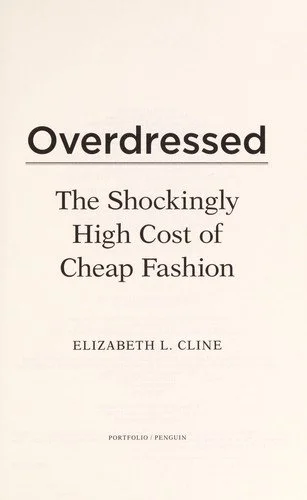
Elizabeth Cline examines the devastating human and environmental costs of fast fashion while exploring what sustainable, quality manufacturing looks like. A critical counterpoint to cheap import culture and a call for better alternatives in how we consume clothing.

This book lives right at the intersection of “what I should do” and “what I’m actually called to do,” which is very Word-of-the-Year energy. It’s a visual, sketchbook-style exploration of building a life around your “musts,” not everyone else’s “shoulds”—exactly the question I’m asking with Amplify.

Tansy Hoskins critiques the fashion industry's labor practices, environmental impact, and economic structures while arguing for ethical alternatives and the value of local manufacturing and craftsmanship.
Resources
David Peck custom bridal and evening wear atelier — Houston, TX
Houston Community College Fashion Program — https://www.hccs.edu
Paris College of Art — https://www.paris.edu
Greater Houston Partnership — https://www.houston.org
David Peck on TikTok — https://www.tiktok.com/@itsdavidpeck
David Peck on Instagram — https://www.instagram.com/itsdavidpeck/



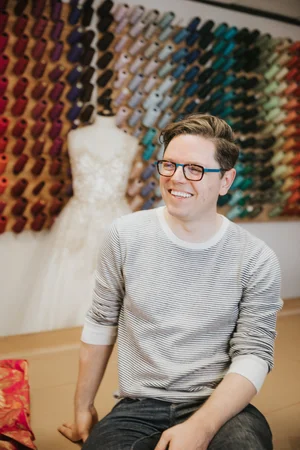
Three things I can’t stop thinking about this week: the Obama Presidential Center, an AI thriller that called this moment years early, and why Meta — of all companies — is the one giving me life right now.